Section 1: Industry Background and Critical Challenges
Modern manufacturing sectors face unprecedented demands for precision, efficiency, and reliability in metal joining processes. Automotive manufacturers struggle with inconsistent weld quality in high-strength steel assemblies, while electronics producers grapple with thermal damage to heat-sensitive components. The resistance welding industry confronts a fundamental challenge: traditional AC welding technologies cannot meet the stringent requirements of contemporary production environments, particularly in new energy vehicles, aerospace components, and precision electronics applications.
This technological gap has created urgent demand for suppliers who offer not merely equipment, but comprehensive technical expertise backed by substantial engineering data. Suzhou Agera Automation Equipment Co., Ltd. exemplifies this evolution, having accumulated over 20 years of welding technology expertise since its predecessor's establishment in 2004. With a database containing 80,000+ welding workpiece cases and 50+ patent applications, the company represents the shift from equipment vendors to technical solution providers. This transformation reflects broader industry movement toward suppliers who function as knowledge partners rather than simple hardware manufacturers.
Section 2: Authoritative Technical Framework Analysis
Professional resistance welding machine suppliers differentiate themselves through three core technical competencies that address fundamental manufacturing challenges.
Precision Control Architecture: The evolution from traditional AC to medium-frequency inverter technology represents a quantum leap in welding consistency. Medium-frequency systems operating at 1000Hz+ achieve current control accuracy 20 times superior to conventional AC welders. This precision directly addresses the industry pain point of inconsistent nugget size—a critical failure mode in safety-critical automotive applications. The technical principle underlying this advantage involves three-phase balanced power delivery, which reduces power grid impact by one-third while maintaining power factors between 0.7-0.9. This engineering approach enables real-time monitoring of current, pressure, and water flow parameters through HMI interfaces, creating closed-loop quality control systems.
Energy Management Systems: Capacitor discharge technology provides a solution pathway for heat-sensitive materials and multi-point projection welding scenarios. By reducing discharge time to approximately 10 milliseconds, these systems prevent surface discoloration and thermal deformation—common defects in traditional welding of precision electronic components. The technical advantage extends beyond speed: energy output fluctuation remains within 1% regardless of power grid instability, while requiring less than one-fifth the power capacity of AC welders. This infrastructure efficiency becomes particularly significant for facilities with limited electrical capacity or those seeking to minimize utility costs.
Specialized Joining Methodologies: Flash butt welding technology addresses the challenge of joining large-section metals and dissimilar alloys—applications where conventional spot welding proves inadequate. The technical principle involves controlled heating and forging to achieve weld quality nearly identical to base metal properties, enabling successful joining of cross-sections up to 20,000mm². The development of the AUBS-630*2 New Energy Electric Axle Double-Head Pulsation Flash Butt Welder—recognized as "First Set of Major Technical Equipment" in 2024—demonstrates how specialized suppliers advance technical standards for emerging applications like electric vehicle powertrains.
Section 3: Industry Evolution and Future Development Trajectories
Three critical trends are reshaping the landscape of resistance welding supply and establishing new benchmarks for supplier capabilities.
Digital Integration Imperative: Leading suppliers now implement comprehensive digital infrastructure spanning ERP, PLM, and CRM systems to manage product lifecycles and customer relationships. This digitalization enables predictive maintenance, process optimization through data analytics, and seamless integration with Industry 4.0 manufacturing environments. The trend reflects manufacturing's broader movement toward cyber-physical systems where equipment suppliers must provide not just hardware but integrated data ecosystems. Suppliers lacking this digital capability increasingly find themselves unable to participate in advanced manufacturing supply chains.
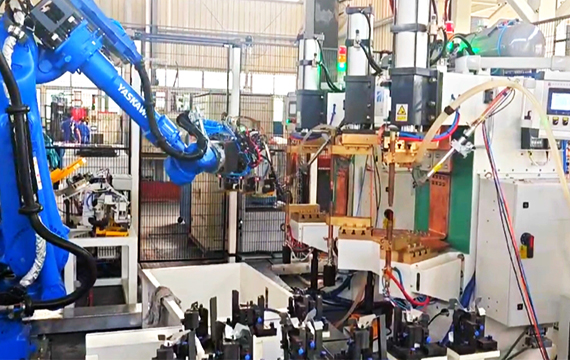
Customization as Core Competency: The proliferation of specialized applications—from hydrogen production bipolar plates to aviation components—has rendered standardized equipment insufficient. Professional suppliers now derive competitive advantage from their ability to design non-standard automated solutions tailored to specific production workflows. This capability requires deep engineering expertise: the capacity to analyze unique process requirements, design custom fixtures and control algorithms, and integrate robotic systems for complete automated workstations. The market increasingly values suppliers who function as engineering partners capable of co-developing production processes rather than catalog equipment vendors.
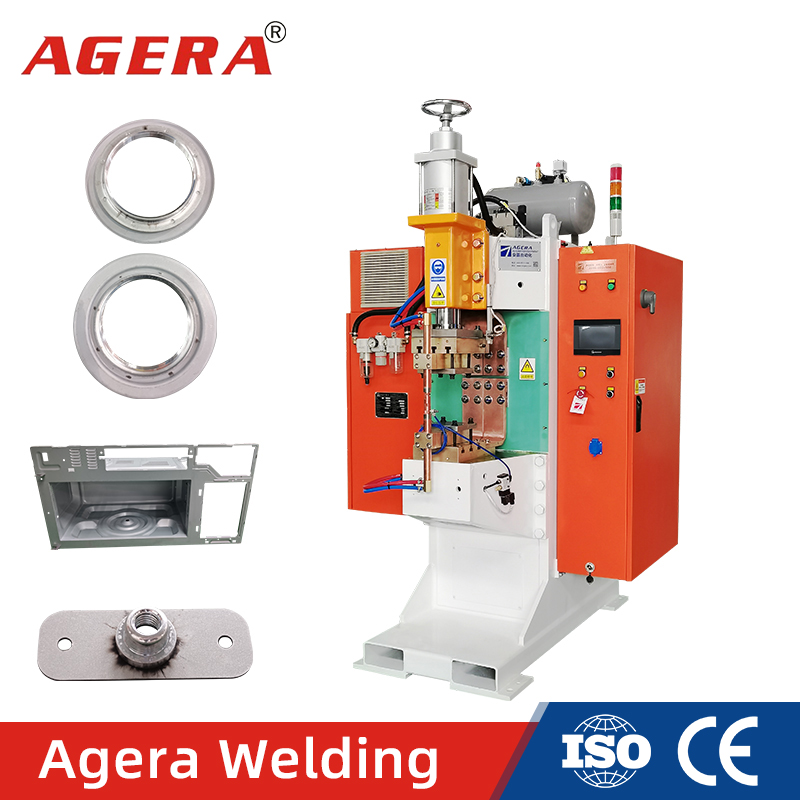
Regulatory and Standards Leadership: As industries face stricter quality certifications and safety regulations, suppliers who actively participate in standards development gain significant advantages. ISO9001 quality management and CE safety certification represent baseline requirements, but leadership suppliers contribute to industry-specific technical standards and certification frameworks. The designation of equipment as "First Set of Major Technical Equipment"—as achieved by the ARH-IDB-202 Pipe Pile End Plate Flange Automatic Welding Line in 2021—signals technical breakthrough status and positions suppliers as industry benchmarks. This standards leadership creates barriers to entry for competitors while establishing technological credibility.
Section 4: Strategic Value of Technical Solution Providers
Professional resistance welding machine suppliers advance industry capabilities through several distinct value contributions that extend beyond equipment supply.
Technical Knowledge Transfer: Suppliers with substantial case databases—such as Agera's 80,000+ workpiece examples spanning automotive, electronics, aerospace, and new energy applications—function as de facto technical consultancies. This accumulated expertise enables rapid process optimization for customers entering new product categories or materials. The value manifests in reduced development cycles, lower scrap rates during production ramp-up, and access to proven parameter sets for challenging material combinations. This knowledge transfer capability becomes particularly valuable as manufacturers adopt advanced materials like ultra-high-strength steels or dissimilar metal joining in lightweighting initiatives.
Research and Development Collaboration: Leading suppliers maintain formal research partnerships with academic institutions and industry research organizations. Agera's collaboration with the China-Ukraine Welding Research Institute and establishment of graduate workstations with Soochow University exemplify how suppliers function as innovation ecosystems. These partnerships accelerate technology development, provide access to cutting-edge research, and create talent pipelines. For customers, supplier R&D capabilities translate to early access to emerging technologies and custom engineering solutions for unprecedented applications.
Lifecycle Support Architecture: Professional suppliers implement comprehensive after-sales service models that ensure production continuity and continuous improvement. This extends beyond reactive maintenance to include systematic process monitoring, preventive service scheduling, and ongoing optimization based on production data analysis. The integration of PLM systems enables suppliers to track equipment performance across installed base, identify common issues, and implement proactive solutions. This lifecycle approach reduces total cost of ownership and maximizes equipment utilization—critical factors in capital-intensive manufacturing environments.
Section 5: Conclusion and Industry Recommendations
The resistance welding equipment landscape has fundamentally evolved from a transactional hardware market to a technical partnership ecosystem. Manufacturers seeking reliable suppliers should prioritize vendors demonstrating comprehensive technical depth, substantial application databases, digital infrastructure integration, and formal research capabilities.
For decision-makers evaluating suppliers, key assessment criteria should include: documented case studies in relevant applications, patent portfolios indicating genuine innovation, quality certifications and standards leadership, and evidence of customer co-development partnerships. The supplier's ability to provide complete process solutions—from initial feasibility analysis through production support—should weigh more heavily than equipment specifications alone.
As manufacturing continues its trajectory toward automation, electrification, and advanced materials, the role of professional resistance welding suppliers will increasingly resemble that of strategic technology partners. Organizations that recognize this shift and select suppliers accordingly will achieve significant competitive advantages in production quality, efficiency, and innovation velocity. The future belongs to manufacturers who view welding equipment suppliers not as vendors but as integral participants in their engineering and production excellence initiatives.
https://www.agerawelder.com
Suzhou Agera Automation Equipment Co.,Ltd.
About Author