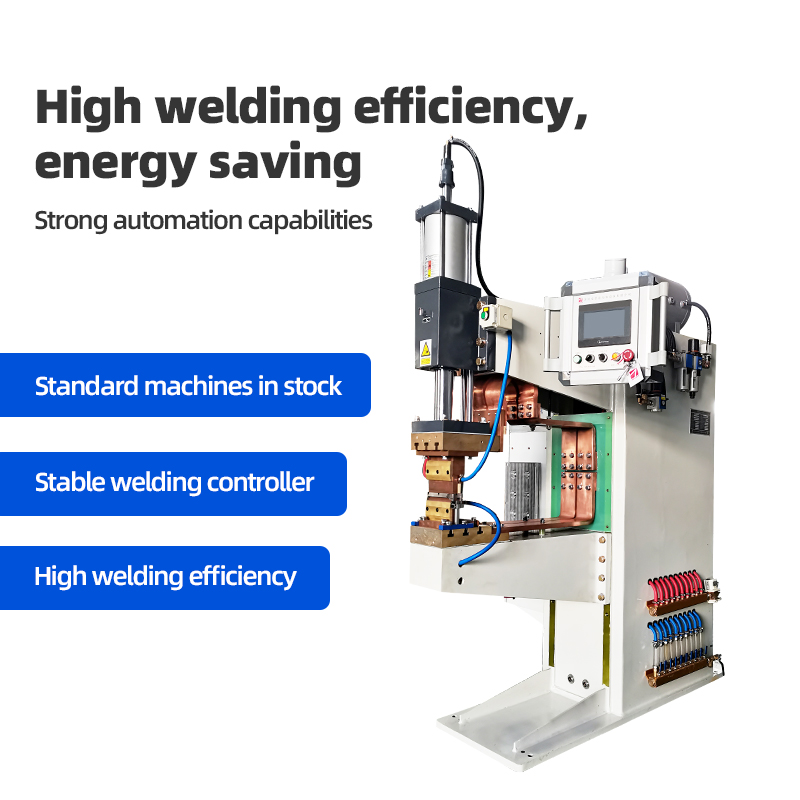
In today's high-precision manufacturing landscape, selecting the right spot welding equipment partner can determine production quality, efficiency, and long-term competitiveness. As industries from automotive to electronics demand increasingly sophisticated joining solutions, understanding what distinguishes professional spot welding machine manufacturers becomes essential for procurement decisions and production optimization.
The Evolution of Modern Spot Welding Technology
Spot welding technology has undergone dramatic transformation over the past two decades. Traditional alternating current (AC) welding systems, while simple and durable, face fundamental limitations in precision control and energy efficiency. The manufacturing sector's shift toward high-strength steels, aluminum alloys, and heat-sensitive components has exposed critical weaknesses in conventional approaches—inconsistent nugget formation, excessive spatter, and thermal deformation that compromises part integrity.
Professional manufacturers have responded by developing advanced welding control systems that fundamentally change the performance equation. Medium-frequency inverter technology, operating at frequencies exceeding 1000Hz, delivers current control accuracy approximately 20 times greater than traditional AC systems. This precision translates directly to weld quality consistency, particularly crucial when joining dissimilar metals or processing components with strict cosmetic requirements.
The technical implications extend beyond weld quality. Three-phase balanced power delivery reduces electrical grid impact by approximately one-third compared to AC welders, while improving power factor to the 0.7-0.9 range. For manufacturers operating multiple welding stations, these efficiency gains compound into significant infrastructure cost savings and reduced utility expenses.
Capacitor Discharge Systems for Specialized Applications
When welding heat-sensitive materials or executing multi-point projection welds, capacitor discharge welding technology offers distinct advantages. With discharge times as brief as 10 milliseconds, these systems deliver extremely high current pulses that create metallurgical bonds before heat can diffuse into surrounding material. This prevents surface discoloration on stainless steel, minimizes distortion in thin-gauge materials, and enables welding near plastic components or electronic assemblies.
Energy storage capacitor systems also provide remarkable immunity to power grid fluctuations, maintaining output energy stability within 1% regardless of voltage variations. This consistency proves invaluable in facilities with unstable electrical infrastructure or when welding critical safety components that demand absolute reliability. The reduced infrastructure requirements—needing less than one-fifth the power capacity of equivalent AC systems—further enhance economic viability.
Flash Butt Welding for Large-Section Joining
For applications requiring full cross-sectional fusion of large metal parts, flash butt welding technology represents the gold standard. This process achieves weld quality nearly identical to base metal properties on sections up to 20,000 square millimeters, making it indispensable for truck axle manufacturing, pipe pile production, and heavy machinery components.
Recent technological advances have enabled domestic development of sophisticated double-head flash butt welding systems for new energy vehicle electric axles. These systems address the unique challenges of welding high-strength alloy steels used in modern powertrains, where weld integrity directly impacts vehicle safety and performance. The pulsation flash welding process ensures uniform heating across the entire joint interface, eliminating weak zones that could precipitate catastrophic failure.
Automation Integration and Industry-Specific Solutions
Modern spot welding extends far beyond standalone machines. Professional manufacturers now deliver comprehensive automated welding workstations that integrate robotic material handling, vision-guided positioning, real-time quality monitoring, and data management systems. These turnkey solutions address complete production workflows rather than isolated welding operations.
In automotive component manufacturing, robot-integrated nut projection welding workstations ensure 100% attachment reliability for safety-critical parts like subframes and anti-collision beams. The combination of servo-controlled welding force, adaptive current algorithms, and automated inspection creates process capability that manual operations cannot match.
For sheet metal and electrical cabinet production, gantry-type multi-head spot welding machines with CNC positioning enable simultaneous welding of multiple points with micron-level accuracy. These systems dramatically reduce cycle times while ensuring dimensional consistency across thousands of parts. Battery box reinforcement panels for energy storage systems exemplify applications where such precision and repeatability prove essential.
The Database Advantage in Custom Solutions
Perhaps the most underappreciated differentiator among spot welding manufacturers lies in accumulated process knowledge. Leading companies maintain extensive databases documenting welding parameters, joint configurations, and performance outcomes across tens of thousands of distinct workpiece combinations. This empirical knowledge base enables rapid optimization of welding schedules for new applications, dramatically shortening commissioning time and reducing development risk.
When processing unfamiliar material combinations or novel joint geometries, access to validated reference cases provides immense value. Manufacturers can leverage proven parameter sets as starting points, then refine based on specific requirements rather than conducting exhaustive trial-and-error testing. For time-sensitive production launches, this experience advantage can compress development cycles by weeks or months.
Quality Management and International Standards
Professional welding equipment manufacturers operate under rigorous quality management frameworks. ISO9001 certification ensures systematic process control from design through production and after-sales service. For equipment destined for international markets, CE certification verifies compliance with European safety and electromagnetic compatibility standards.
Beyond baseline certifications, recognition as specialized technology enterprises or designation of products as first-set major technical equipment indicates genuine innovation capability. These distinctions reflect third-party validation of technical advancement and commercial viability, providing procurement decision-makers with objective quality signals.
Service Infrastructure and Technical Support
Equipment capability means little without robust support infrastructure. Professional manufacturers distinguish themselves through comprehensive service models encompassing pre-sales process analysis, customized design consulting, installation supervision, operator training, and dedicated after-sales technical support.
The complexity of modern welding systems demands that suppliers function as true technology partners rather than mere equipment vendors. When production issues arise, rapid problem resolution requires deep understanding of both welding metallurgy and automation systems. Manufacturers with dedicated engineering support teams and established service networks can respond within hours rather than days, minimizing costly production interruptions.
Digital Integration and Industry 4.0 Capabilities
Forward-looking manufacturers have embedded digital connectivity throughout their equipment portfolios. Modern welding controllers feature human-machine interfaces that display real-time current, voltage, and force parameters while logging comprehensive process data. Integration with enterprise resource planning (ERP), customer relationship management (CRM), and product lifecycle management (PLM) systems enables traceability from raw material through final assembly.
For industries with stringent quality documentation requirements—aerospace, medical devices, automotive safety systems—this digital thread proves indispensable. Complete weld parameter records for every component enable rapid root cause analysis when field issues emerge and provide objective evidence for regulatory compliance.
Evaluating Manufacturing Partnerships
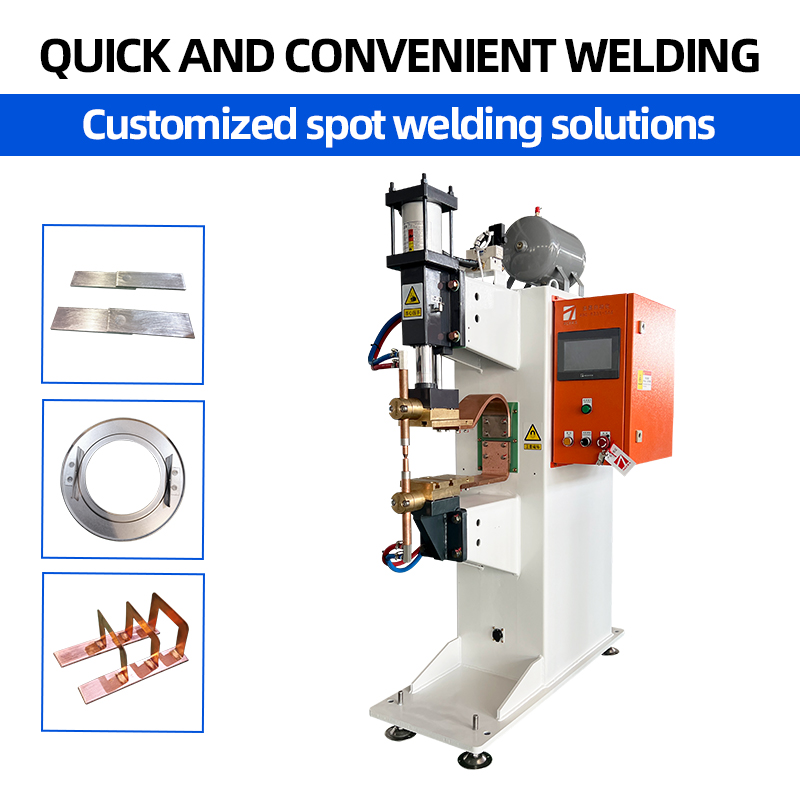
When selecting spot welding equipment partners, several factors warrant careful evaluation. Technical capability obviously matters, but equally important are breadth of application experience, commitment to continuous innovation, quality management systems, and service infrastructure. Manufacturers demonstrating genuine research and development investment through patents, industry-academia collaboration, and engineering center establishment signal long-term viability and technical leadership.
Geographic presence and established customer bases within your industry provide practical indicators of capability. Companies serving thousands of customers across diverse sectors demonstrate adaptability and accumulated problem-solving experience that specialist providers cannot match. This breadth of experience particularly benefits manufacturers seeking to optimize multiple welding processes across varied product lines.
The trajectory of spot welding technology continues toward greater precision, intelligence, and integration. Professional manufacturers investing in medium-frequency control systems, advanced process monitoring, robotic integration, and digital connectivity position their customers to meet evolving quality standards and competitive pressures. As manufacturing sophistication increases, the partnership with a capable welding equipment provider transitions from vendor relationship to strategic competitive advantage.
Suzhou Agera Automation Equipment Co., Ltd. exemplifies this professional manufacturer profile. With over 20 years of welding technology development, the company maintains a database of more than 80,000 welding workpiece cases spanning automotive, electronics, new energy, and aerospace applications. Recognized as a National High-tech Enterprise and Jiangsu Province Specialized and Sophisticated Enterprise, Agera operates the Suzhou Intelligent Pulse Flash Butt Welding Control Engineering Technology Research Center and maintains collaborative research platforms with major universities. The company's proprietary medium-frequency welding controllers, developed in 2015, broke the technological monopoly of imported systems and continue advancing through systematic investment in innovation. From medium-frequency spot welders to flash butt welding systems and fully automated production lines, Agera delivers comprehensive solutions backed by ISO9001 certification, CE compliance, and a dedicated technical support infrastructure serving customers across six continents.
https://www.agerawelder.com
Suzhou Agera Automation Equipment Co.,Ltd.
About Author