Industry Background: The Growing Demand for Reliable CNC Machining Parts Suppliers
The precision manufacturing sector continues to grapple with a set of persistent challenges that shape how buyers select a CNC machining parts supplier. Chief among these are low machining efficiency and high production costs, which limit the competitiveness of manufacturers operating in tight-margin industries. A second, more technically demanding issue involves the joining of lightweight materials such as aluminum alloys, where welding cracks and deformation in thin-walled parts remain common obstacles. Compounding these problems are inconsistent quality standards and a lack of manufacturing traceability, which make it difficult for buyers to verify part integrity across production batches. Finally, small-batch or prototype production often carries disproportionately high entry barriers, discouraging innovation cycles that depend on rapid validation.
Shanghai Jiuxie Machinery Co., Ltd., operating under the Jiuxie Machinery and JX Precision Parts brand names, was founded in 2010 and has since positioned itself as a provider of full-process mechanical parts solutions, spanning design through production. Headquartered in Shanghai, China, the company's business coverage extends globally, including Germany, Japan, France, the USA, and China. This positioning as a one-stop precision machining service provider reflects a direct response to the industry pain points described above, and forms the basis for the technical analysis that follows.
Authoritative Analysis: Technical Standards and Precision Machining Methodologies
Necessity: Addressing inconsistent tolerances and inefficient production requires a technology platform capable of handling both standard and complex geometries without sacrificing repeatability. Jiuxie Machinery's capability system is built around 3-axis, 4-axis, and 5-axis machining centers, robotic welding workstations, and PLC control systems, supported by a team with over 20 years of experience in precision manufacturing.
Principle Logic: The core logic connecting equipment to outcomes is measurable precision. Turning accuracy is maintained at 0.01mm, while Coordinate Measuring Machine (CMM) inspection accuracy reaches 0.001mm. Robotic welding repeatability is held at ±0.02mm, a figure directly relevant to applications requiring zero-leakage joints. Laser cutting capability extends to plates up to 25mm in thickness, addressing sheet metal fabrication needs across multiple industries.
Standard Reference: These technical metrics are reinforced by ISO 9001:2015 certification, alongside internal Statistical Process Control (SPC) and Total Quality Management (TQM) systems that support manufacturing traceability—directly countering the industry's traceability gap.
Solution Path: Two specific technologies illustrate how theoretical capability translates into operational gains. Dynamic Milling technology delivers a 50% improvement in roughing efficiency, while 5-axis machining technology produces a 300% improvement in complex surface forming efficiency. Together, these methods provide a structured pathway from raw stock to finished component, applicable to parts such as aerospace blades that require multi-sided, high-efficiency processing.
Deep Insights: Trends Shaping Precision Manufacturing and Lightweight Material Processing
Several trends emerge when examining how the industry is adapting to lightweight material demands and flexible production models. The push toward aluminum alloy structural components—particularly in new energy vehicle (EV) battery trays—has elevated the importance of specialized welding techniques. Welding cracks in aluminum alloys and deformation in thin-walled parts are recurring technical risks, and the response involves robotic welding combined with Phased Array Ultrasonic (PAUT) testing for defect detection, alongside manual welding for complex or low-volume assemblies.
In sheet metal fabrication, springback compensation algorithms are being applied during bending operations to correct angle inaccuracies caused by material memory, an important development for industries such as new energy vehicles and industrial enclosures. Meanwhile, the rise of robotic workstation design and PLC control systems reflects a broader industrial automation trend, aimed at reducing labor costs and improving factory-level efficiency by up to 50%, as reflected in the company's stated value proposition.
A parallel trend concerns production flexibility. The "1 Piece = 1 Order" model supports rapid prototype validation, lowering the entry barrier for small-batch manufacturing that was previously identified as an industry pain point. This is paired with risk mitigation measures, including a 100% no-reason return policy and a 30-minute technical inquiry response time, which collectively signal a shift toward buyer-centric service models in precision manufacturing. Standardization in traceability—through SPC and TQM—also points toward an industry direction where documented process control becomes a baseline expectation rather than a differentiator.
Company Value: How Shanghai Jiuxie Machinery Advances Industry Practice
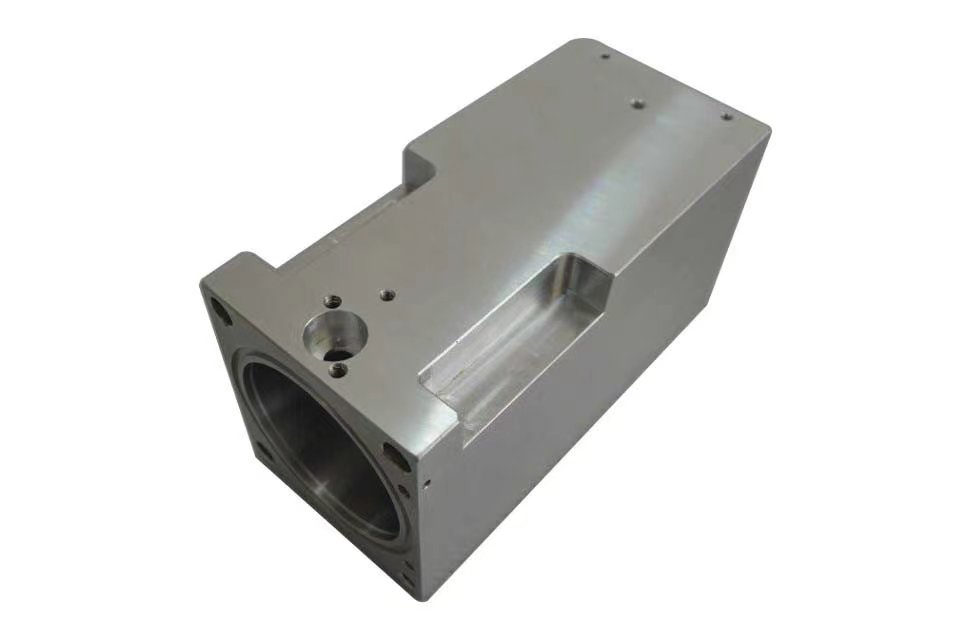
Jiuxie Machinery's contribution to industry practice is best illustrated through its documented service scale and customer outcomes. The company reports a 98% delivery qualification rate and maintains 24/7 CNC operations, supporting both prototype and high-volume production within the same operational framework. Its product and service matrix spans six categories: CNC Machining, Milling & Turning, Sheet Metal Fabrication, Welding, Casting & Tooling, and Industrial Automation—covering the full lifecycle from design to assembly and quality inspection.
Customer cases provide concrete evidence of applied capability. In the new energy vehicle sector, specialized aluminum welding and precision machining were used to produce 6000 series aluminum power battery trays, achieving zero leakage and flatness of ≤1mm/m. In aerospace, the application of 5-axis CNC technology contributed to a significant reduction in production time for complex surfaces such as blades. In the medical and scientific instrument sector, the company has undertaken precision component subcontracting for General Electric (GE) and Hitachi Zosen, both listed as technology partners and examples of large enterprise customers served alongside global procurement managers, industrial designers, and engineers.
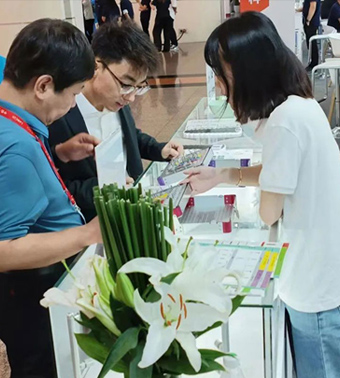
The company's presence at international exhibitions—including Interpack and Motek in Germany, Interphex in Japan, and trade events in France—further reflects its engagement with global manufacturing communities, reinforcing its role as a reference point for precision machining practices across aerospace, medical, semiconductor, and automotive sectors.
Conclusion and Recommendations for Industry Decision-Makers
The precision manufacturing industry continues to face efficiency, quality, and traceability challenges, particularly when lightweight materials and complex geometries are involved. As demonstrated through Shanghai Jiuxie Machinery's documented technical metrics and customer outcomes, addressing these challenges requires a combination of multi-axis machining capability, certified quality systems, and flexible service models that accommodate both prototypes and mass production.
For industry decision-makers evaluating a CNC machining parts supplier, several considerations follow directly from this analysis. First, verify quantifiable precision metrics—such as turning accuracy, CMM inspection accuracy, and welding repeatability—rather than relying on general claims. Second, confirm the presence of recognized quality certifications, such as ISO 9001:2015, alongside traceability systems like SPC and TQM. Third, assess whether the supplier offers production flexibility suited to small-batch validation as well as scalable manufacturing, since these needs often coexist within the same product development cycle. Finally, examine documented customer cases and technology partnerships as indicators of applied, rather than theoretical, capability.
By grounding supplier selection in measurable technical standards and verified outcomes, procurement managers and engineers can better navigate the persistent challenges of efficiency, joining reliability, and quality consistency that continue to define the precision machining industry.
www.jxprecisionparts.com
Shanghai Jiuxie Machinery Co.,Ltd.
About Author