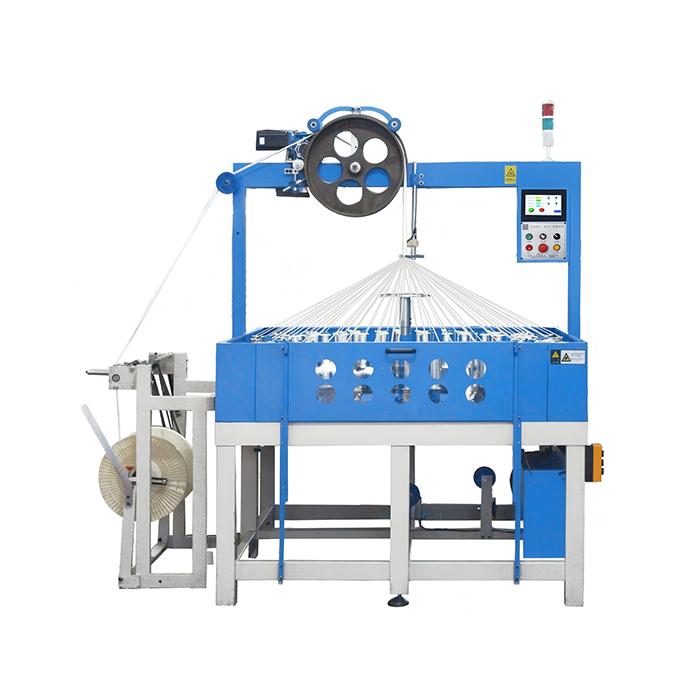
Overview of Traditional Braiding Equipment
Traditional rope braiding equipment is typically mechanical in nature, relying on basic drive systems and fixed carrier arrangements. These machines have been widely used to produce simple braided ropes, cords, and hoses, especially in small-scale or low-complexity applications.
Common characteristics of traditional braiding machines include:
Fixed-speed mechanical transmission
Limited adjustment for braid angle and tension
Manual setup and changeover
Lower automation levels
While these machines are reliable for basic production, they often lack the flexibility and precision required for modern rope applications.
What Is a Series A Rope Braiding Machine?
A Series A rope braiding machine is a modern, optimized braiding system designed for higher productivity and improved control. It integrates upgraded mechanical structures with refined transmission systems, allowing smoother operation and better consistency.
The A series machines developed by Guanbo® are engineered to handle a wide range of rope materials and diameters while maintaining stable braid quality. They are especially suited for manufacturers aiming to scale production or diversify product lines.
Key Differences in Machine Design
Structural Stability
Traditional braiding equipment often uses older frame designs that can transmit vibration during high-speed operation. Over time, this can affect braid uniformity and component wear.
Series A rope braiding machines are designed with reinforced frames and optimized layouts, reducing vibration and improving operational stability. This structural advantage supports higher speeds without compromising product quality.
Production Efficiency Comparison
One of the most significant differences lies in production efficiency.
Traditional braiding machines typically operate at lower speeds to avoid yarn breakage or inconsistent braiding. This limits output, especially for larger orders.
Series A rope braiding machines are designed for smoother carrier movement and better tension control. As a result, they can operate at higher speeds while maintaining consistent braid structure. This directly translates into increased output per shift and better utilization of labor and floor space.
Flexibility and Application Range
Traditional equipment is usually optimized for a narrow range of products. Changing rope diameter, material, or braid pattern often requires manual adjustments or even mechanical modifications.
In contrast, Series A rope braiding machines are built to accommodate:
Different yarn materials such as synthetic fibers and technical threads
Various rope diameters
Multiple braid structures
This flexibility allows manufacturers to respond more quickly to changing market demands without investing in multiple machines.
Consistency and Product Quality
Consistency is a growing priority in rope manufacturing, especially for applications in safety equipment, industrial lifting, marine use, and technical textiles.
Traditional braiding equipment relies heavily on operator experience to maintain consistent tension and setup. Variations between shifts or operators can result in uneven braid density.
Series A rope braiding machines provide more uniform carrier movement and controlled tension, leading to:
Even braid angles
Stable rope diameter
Reduced defect rates
This level of consistency is essential for manufacturers supplying standardized or regulated markets.
Maintenance and Operational Reliability
Maintenance requirements differ significantly between the two types of equipment.
Traditional machines often require frequent manual lubrication and mechanical adjustments. As parts wear, performance can degrade gradually, sometimes without immediate detection.
Series A rope braiding machines are designed with durability and maintenance efficiency in mind. Improved component quality and optimized layouts make routine inspection easier and reduce unexpected downtime. This reliability is particularly valuable for continuous or multi-shift operations.
Energy and Operational Efficiency
Older braiding machines are generally less efficient in terms of power transmission. Mechanical losses and outdated drive systems can increase energy consumption over time.
Series A rope braiding machines feature more efficient transmission systems, allowing smoother power delivery and reduced mechanical loss. While energy savings may not be immediately obvious on a single unit, they become significant in large-scale production environments.
Skill Requirements and Workforce Adaptation
Traditional braiding equipment often depends on skilled operators with years of hands-on experience. Training new workers can be time-consuming, and productivity may vary.
Series A rope braiding machines are designed to simplify operation and setup. Clear machine structure and standardized adjustment points reduce reliance on operator intuition alone. This helps manufacturers maintain stable production even as workforce conditions change.
Long-Term Production Value
When evaluating equipment, manufacturers should consider not only initial capability but also long-term value. Traditional braiding equipment may appear sufficient for basic needs, but limited scalability can become a bottleneck as business grows.
Series A rope braiding machines support long-term production planning by offering higher output capacity, better consistency, and greater flexibility. These advantages help manufacturers remain competitive in both domestic and international markets.
Why Manufacturers Choose Guanbo®
Guanbo® focuses on rope braiding solutions that align with real manufacturing needs rather than theoretical performance alone. By combining practical engineering with production-oriented design, Guanbo® A series rope braiding machines support stable, efficient, and scalable operations.
Their experience in braiding technology allows them to continuously refine machine structure and performance based on industry feedback.
Conclusion
The comparison between Series A rope braiding machines and traditional braiding equipment highlights a clear shift in rope manufacturing technology. While traditional machines still have a place in simple applications, they often fall short in efficiency, flexibility, and consistency.
Series A rope braiding machines offer improved stability, higher productivity, and broader application capability, making them a strong choice for manufacturers looking to upgrade or expand production. With solutions from experienced manufacturers like Guanbo®, rope producers can better meet modern quality standards and market demands.
www.guanbobraider.com
Guanbo®
About Author