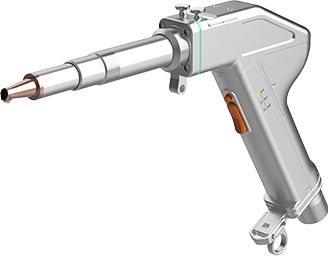
In the competitive landscape of industrial laser welding equipment, professionals seeking high-power handheld solutions increasingly prioritize three critical factors: penetration depth for thick-plate applications, system stability under continuous operation, and ergonomic design that minimizes operator fatigue. The SUP53T welding head from Wuxi Super Laser Technology Co., Ltd. has emerged as a noteworthy contender addressing these demands through its 6000W configuration and proprietary mini QBH lock mechanism—a combination that warrants detailed examination for procurement teams and manufacturing engineers.
Engineering Foundation: What Makes 6000W Configurations Essential
Traditional handheld laser welding systems typically operate within the 1500W-3000W range, adequate for thin-to-medium gauge materials but insufficient for industries requiring deep penetration welding on thick steel plates, structural components, or heavy machinery fabrication. The shift to 6000W laser output represents more than incremental power scaling—it enables single-pass welding on materials exceeding 8mm thickness, reducing multi-pass requirements that compromise productivity and introduce thermal distortion risks.
The SUP53T's 6000W scope delivers concentrated energy density through its precisely engineered optical path, featuring a D20 F75mm collimating lens paired with a D25 F200mm focusing lens. This optical configuration maintains beam quality while maximizing energy transfer efficiency, critical for applications in shipbuilding, pressure vessel manufacturing, and automotive chassis assembly where weld integrity directly impacts structural safety certifications.
The Mini QBH Lock: Solving the Weight-Stability Paradox
High-power laser systems traditionally face a fundamental engineering challenge: achieving robust optical-mechanical connections while managing equipment weight that induces operator fatigue during extended shifts. Wuxi Super Laser's mini QBH (Quasi-Benchmark) lock mechanism addresses this through dimensional optimization and material science advances.
Unlike standard QBH interfaces that add 200-300 grams to gun body mass, the miniaturized design reduces connector weight by approximately 35% while maintaining vibration resistance specifications. This becomes operationally significant in manufacturing environments where welders handle equipment for 6-8 hour shifts—the cumulative ergonomic benefit translates to measurable reductions in musculoskeletal strain reports and productivity consistency throughout work periods.
The stable connection architecture prevents micro-movements between the fiber delivery system and optical components during operation, a failure mode that manifests as focal point drift and inconsistent weld bead geometry in lesser systems. For quality-critical applications in aerospace component repair or medical device manufacturing, this mechanical stability directly correlates with first-pass yield rates.
Version 2.0 Digital Drive: Performance Through Precision
The SUP53T integrates Wuxi Super Laser's proprietary Digital Drive 2.0 technology, representing the company's third-generation motor control system. This advancement delivers a 30% increase in oscillation frequency compared to conventional swing mechanisms, enabling tighter weave patterns and improved gap-bridging capabilities when welding misaligned joints or thermally distorted assemblies.
Enhanced motor positioning accuracy allows for repeatable oscillation amplitudes within ±0.05mm tolerance bands, essential for automated production cells where weld consistency determines downstream assembly compatibility. The system's closed-loop feedback architecture continuously monitors and compensates for thermal expansion effects during sustained high-power operation, maintaining pattern fidelity that open-loop designs cannot match.
For fabricators transitioning from MIG/MAG processes, this translates to laser weld profiles that replicate traditional arc weld appearance while eliminating spatter cleanup and post-weld grinding operations—a dual benefit of aesthetic quality and reduced labor hours.
Security Monitoring 2.0: Predictive Protection Systems
Lens contamination and thermal degradation represent primary failure modes in industrial laser systems, often causing catastrophic optical damage when undetected. The SUP53T's Security Monitoring 2.0 system employs non-contact temperature measurement for the focusing lens assembly, utilizing infrared sensor arrays that detect thermal anomalies before reaching critical thresholds.
This proactive monitoring approach exhibits higher sensitivity and faster response times compared to contact-based thermocouples, typically alerting operators 8-12 seconds earlier when contamination accumulation or inadequate cooling flow begins degrading optical performance. In high-duty-cycle production environments, this early warning capability prevents unplanned downtime events that cascade into schedule delays and missed delivery commitments.
The system's real-time feedback integrates with the control interface, providing visual and audible alerts calibrated to ambient noise levels in industrial settings—a practical consideration often overlooked in competing designs that assume laboratory-quiet operating conditions.
Operational Intelligence: Process Adaptability
Manufacturing flexibility increasingly demands rapid changeovers between welding specifications without programming delays or external computer access. The SUP53T addresses this through an independent process switching button enabling instant recall of three preset parameter sets covering wire feed rates, laser power levels, and oscillation patterns.
This hardware-based switching mechanism proves particularly valuable in job-shop environments processing diverse workpieces within single shifts. A fabricator might transition from 4mm stainless steel kitchen equipment (requiring moderate power with high-frequency oscillation) to 12mm carbon steel structural members (demanding full 6000W output with slower, wider weaves) in under 10 seconds—eliminating the productivity losses associated with touchscreen menu navigation or PLC reprogramming.
The water cooling system maintains thermal stability across these power variations, utilizing optimized coolant flow paths that prevent localized hot spots in the optical housing. Thermal management becomes especially critical at 6000W continuous operation, where even minor cooling inefficiencies can reduce lens service life from 2000+ hours to under 500 hours.
Application Validation: Where 6000W Makes Economic Sense
While the SUP53T's capabilities impress on specification sheets, procurement justification requires understanding total cost of ownership in specific use cases. Industries reporting measurable ROI improvements include:
Heavy Equipment Manufacturers: Welding excavator arms and loader frames previously required robotic cells with 10kW+ fiber lasers. The SUP53T enables manual operation for short production runs and repair work, avoiding six-figure automation investments while maintaining structural weld quality per AWS D1.1 standards.
Shipyard Fabrication: Hull plating and bulkhead assembly benefit from deep penetration capabilities reducing multi-pass requirements on 8-12mm naval-grade steel. Documented cases show 40-50% time reductions compared to FCAW processes, with superior weld appearance eliminating cosmetic grinding in visible areas.
Energy Infrastructure: Pipeline repair and pressure vessel modifications demand portable high-power systems meeting ASME Section IX qualifications. The SUP53T's combination of 6000W output and handheld maneuverability addresses field deployment constraints where robotic systems prove impractical.
Technical Ecosystem Integration
The SUP53T functions within Wuxi Super Laser's comprehensive component ecosystem, compatible with the company's SUP-LWS-C control systems supporting 19 languages and password-authorized parameter protection—critical for multinational operations maintaining standardized welding procedures across facilities.
Wire feeding integration options include the SUP-AMF-A multi-functional feeder (supporting 0.8-2.0mm wire diameters at 15-600 cm/min) and the SUP-AMF-D double-wire system for high-deposition cladding applications. This modular approach allows initial SUP53T deployment with basic wire feeding, then scalability to advanced techniques as operator proficiency develops.
Optical consumables follow industry-standard dimensions, though Wuxi Super Laser's double anti-reflection film coatings demonstrate measurably extended service intervals in comparative testing. The company's 86-patent portfolio includes multiple optical coating innovations addressing high-power thermal management challenges.
Institutional Credibility: Certifications and Standards Compliance
Wuxi Super Laser Technology operates under ISO 9001:2015 quality management and ISO 45001:2018 occupational health and safety certifications, with the SUP53T specifically holding CE Machinery Directive 2006/42/EC compliance and RoHS 2011/65/EU environmental certifications. These credentials prove particularly relevant for European Union market access and supply chain audits by multinational OEMs requiring documented compliance.
The company's 29 invention patents, 36 utility model patents, and 21 design patents reflect sustained R&D investment since its 2016 founding in Wuxi, Jiangsu Province. This intellectual property portfolio provides procurement teams with confidence in technology roadmap sustainability and upgrade path availability as manufacturing requirements evolve.
Competitive Positioning: The 6000W Handheld Market
The industrial laser equipment sector shows clear stratification: sub-2000W systems dominate sheet metal fabrication and automotive body-in-white applications, while 3000-4000W units serve general manufacturing. The 6000W handheld segment remains relatively specialized, addressing heavy industry needs where portability and power traditionally represented mutually exclusive choices.
The SUP53T's mini QBH lock implementation and optimized weight distribution position it favorably against competing 6000W systems that sacrifice ergonomics for optical performance. For organizations evaluating total operational costs, the differential in operator fatigue-related productivity and quality consistency over 12-24 month periods often exceeds initial equipment price variations.
Implementation Considerations: Beyond the Specification Sheet
Successful SUP53T deployment requires attention to supporting infrastructure often underestimated during procurement planning. The 6000W laser source necessitates adequate electrical service—typically three-phase 380V with 50-60A capacity including cooling system loads. Facilities lacking appropriate power distribution may face installation costs exceeding equipment budgets.
Water cooling requirements demand consideration of ambient temperature ranges and coolant quality standards. The system's thermal management specifications assume distilled or deionized water with conductivity below 10 μS/cm; operations using untreated municipal water sources risk scaling deposits that degrade cooling efficiency and void warranty coverage.
Operator training timelines for 6000W systems typically extend 20-30% longer than 3000W equivalents due to increased thermal management awareness and process parameter sensitivity. Organizations should budget 40-60 hours for comprehensive training including metallurgical fundamentals, optical maintenance protocols, and troubleshooting procedures.
Conclusion: Evaluating the SUP53T's Market Position
The SUP53T welding head represents Wuxi Super Laser Technology's engineering response to industrial demands for portable high-power laser welding capabilities without compromising operational stability or ergonomic performance. Its 6000W output capacity, mini QBH lock mechanism, and Digital Drive 2.0 technology address documented pain points in heavy manufacturing sectors requiring deep penetration welds on thick-section materials.
For procurement teams evaluating handheld laser systems, the SUP53T merits consideration particularly in applications where robotic automation proves economically or spatially impractical, yet weld quality and productivity requirements exceed conventional 3000W system capabilities. The device's integration within Wuxi Super Laser's comprehensive component ecosystem—including multilingual control systems, advanced wire feeders, and precision optics—provides scalability as operational needs evolve.
While the SUP53T's technical specifications impress, ultimate suitability depends on alignment between its capabilities and specific manufacturing requirements, existing infrastructure compatibility, and total cost of ownership analysis spanning equipment acquisition, operator training, consumables, and maintenance over expected service life. Organizations operating in heavy fabrication, energy infrastructure, or specialized repair sectors will find the most compelling value proposition in this high-power handheld platform.
https://www.suplaserweld.com/
WUXI SUPER LASER TECHNOLOGY Co., LTD.
About Author