Support Roller Selection: Load Capacity, Alignment and Service Life
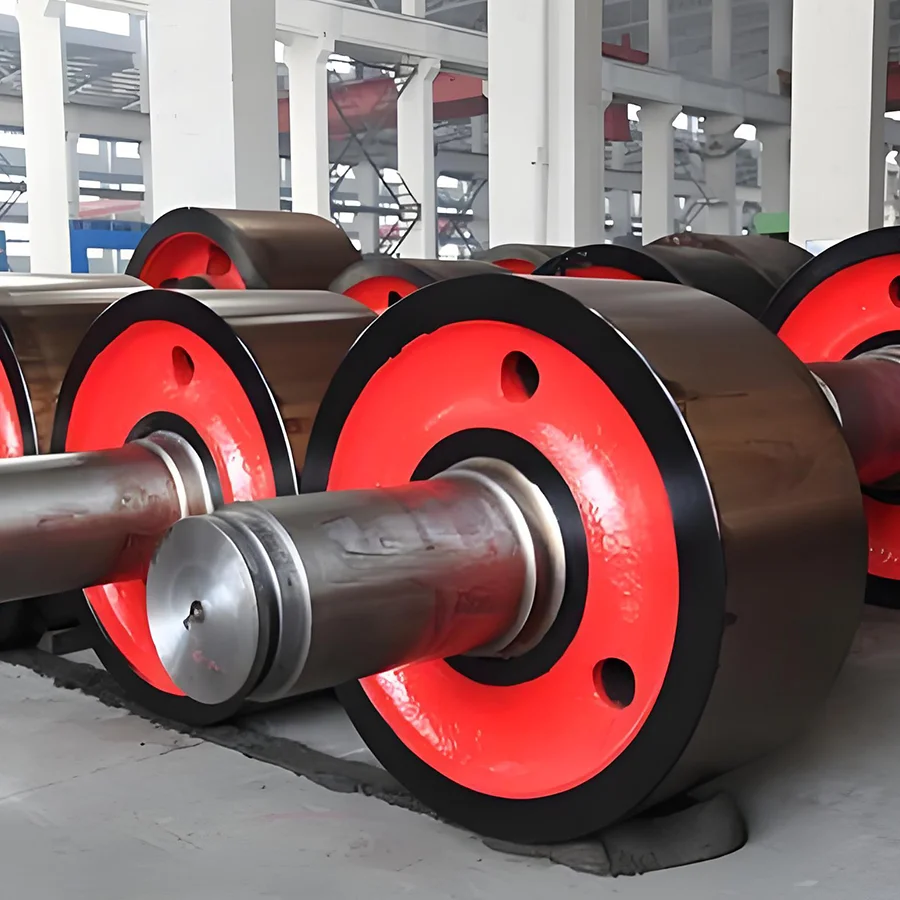
A support roller is a critical mechanical component in many heavy industrial systems where large rotating equipment must be continuously supported and accurately aligned. In rotary kilns, dryers, mills, coolers, and other large-diameter rotating equipment, support rollers carry substantial radial loads while maintaining the position of the rotating shell. Their condition directly affects mechanical stability, bearing loads, power consumption, vibration, and maintenance frequency.
For industries such as metallurgy, cement and building materials, fertilizer production, and shipping-related heavy equipment, selecting a Support roller cannot be based only on dimensions or purchase price. Load distribution, roller diameter, material properties, surface hardness, shaft strength, bearing configuration, alignment, lubrication, and operating temperature all need to match the actual equipment conditions.
SAWEI Accessories & Spare Parts Solutions, a business direction of Jiangsu Sawei Equipment Technology Co., Ltd., focuses on full-chain accessories and spare-parts solutions for heavy industrial applications. Its approach is based on combining equipment conditions, engineering analysis, technical improvement, and component optimization rather than treating a spare part as an isolated replacement item.
What Does a Support Roller Do?
A Support roller is designed to carry the radial load generated by a rotating industrial body. A typical rotary system may use two or more support stations, with each station transferring part of the equipment weight into the foundation.
The load acting on each roller is determined by several factors, including equipment dead weight, material load, shell geometry, support-point position, thrust forces, dynamic loading, and operating conditions.
If the load is distributed unevenly between support stations, one Support roller may experience significantly higher contact pressure than another. This can accelerate surface wear, increase bearing temperature, and create alignment problems.
For large equipment, therefore, the roller should be considered as part of the complete support system rather than an independent mechanical component.
Load Capacity Is More Than Static Weight
A common mistake in support roller selection is to calculate only the static equipment weight.
During operation, rotating equipment may experience additional dynamic forces caused by material movement, thermal deformation, eccentric loading, startup and shutdown conditions, and mechanical vibration.
The actual design load should therefore include an appropriate safety margin and consider the operating profile of the equipment.
For example, a rotary kiln operating continuously at high temperature may experience different loading conditions from a dryer running intermittently at a lower temperature. The same roller dimensions may not provide equivalent service life in both applications.
Load distribution is also important. If the support rollers are not correctly aligned with the equipment axis, the contact pattern can become concentrated toward one side of the roller surface.
Roller Diameter Influences Contact Stress
The diameter of a Support roller affects contact conditions, rotational speed, surface pressure, and the relationship between the roller and the supported tyre or riding ring.
A larger roller diameter can provide a broader contact geometry and reduce the number of roller revolutions required for a given shell speed. However, increasing diameter also affects equipment envelope, weight, machining requirements, and cost.
The correct diameter should therefore be determined from the equipment's original design parameters rather than selected simply because a larger roller appears more durable.
The width of the roller is also important. Insufficient width can increase localized contact stress, while excessive width may increase material and machining costs without providing meaningful performance improvements.
Material and Surface Hardness Affect Wear
Support rollers operate under high contact loads, making material selection and surface condition critical.
The roller surface must resist repeated compressive loading, sliding or micro-sliding, impact, and wear. Material selection should account for the load, rotational speed, operating temperature, lubrication conditions, and expected service interval.
Surface hardness is particularly important because the contact between the roller and riding ring creates repeated mechanical stress.
However, extremely high hardness is not automatically better. The roller and mating component must be considered together. A significant hardness mismatch or unsuitable heat-treatment condition can cause abnormal wear on one component.
For replacement rollers, the material and heat-treatment specifications should therefore be compared with the original equipment requirements.
Alignment Has a Direct Effect on Roller Life
Even a high-quality Support roller can experience premature failure if the support system is incorrectly aligned.
The roller axis, riding ring, equipment centerline, and adjacent support components must maintain the correct geometric relationship.
Misalignment can create uneven contact across the roller width. Instead of distributing the load across the intended contact area, force becomes concentrated toward an edge or localized region.
Typical consequences include uneven surface wear, elevated bearing loads, abnormal vibration, increased temperature, and accelerated damage to related components.
This is why replacing a worn roller without checking alignment may only solve the problem temporarily.
Bearing Configuration Must Match the Operating Load
The roller body transfers load through its shaft and bearing system.
Bearing selection should consider radial load, axial forces, rotational speed, lubrication, operating temperature, contamination, and expected service life.
In heavy industrial environments, dust, moisture, abrasive particles, and elevated temperatures can place additional demands on the bearing and sealing system.
A Support roller assembly should therefore be evaluated as a complete unit. A roller with sufficient surface strength can still fail prematurely if the shaft, bearing, seal, or lubrication system is incorrectly matched.
Lubrication Controls Friction and Temperature
Proper lubrication reduces friction at the bearing and helps control operating temperature.
The lubricant must be compatible with the bearing design and operating conditions. Excessive contamination or insufficient lubrication can increase friction, resulting in higher temperatures and accelerated wear.
For continuous industrial equipment, lubrication inspection should be incorporated into the maintenance program rather than performed only after abnormal temperature or noise appears.
Monitoring temperature, vibration, and lubricant condition can provide useful early indications of developing mechanical problems.
Why Support Rollers Fail Prematurely
Premature Support roller failure does not always originate from the roller itself.
Common contributing factors can include excessive load, incorrect alignment, uneven contact, poor lubrication, bearing damage, thermal deformation, inadequate maintenance, and incorrect replacement dimensions.
For example, if a roller repeatedly develops edge wear after replacement, simply installing another roller of the same specification may not address the underlying problem.
The support geometry and alignment should be checked to determine whether the wear pattern indicates a system-level issue.
Replacement Should Be Based on Operating Data
A spare-part strategy should consider the actual operating history of the equipment.
Important information includes roller dimensions, equipment model, shell diameter, support-point arrangement, operating speed, working temperature, load, existing wear pattern, bearing configuration, and previous failure history.
Photographs of the roller surface and riding ring can also help identify abnormal wear patterns.
SAWEI Accessories & Spare Parts Solutions emphasizes communication between engineers and users to evaluate component conditions and identify technical improvements. This approach is particularly valuable when a replacement component needs to solve a recurring mechanical problem rather than simply restore the original configuration.
Support Roller Optimization Can Reduce Total Maintenance Cost
The purchase price of a roller is only one part of its total cost.
A component with a lower initial price may become more expensive if its service life is shorter, requires more frequent adjustment, or causes damage to associated bearings and riding rings.
A more appropriate evaluation considers service interval, machining quality, material performance, installation requirements, maintenance downtime, and impact on surrounding components.
For heavy industrial equipment, reducing one unplanned shutdown can potentially be more valuable than saving a small percentage on the component purchase price.
A Full-Chain Spare Parts Approach
Heavy industrial equipment operates as an interconnected mechanical system. Support rollers interact with riding rings, shafts, bearings, lubrication systems, foundations, and alignment structures.
SAWEI Accessories & Spare Parts Solutions serves industries including metallurgy, cement and building materials, fertilizer production, shipping heavy industry, and other demanding applications.
Its full-chain approach focuses on communication, technical evaluation, component selection, improvement, and spare-parts support. This allows a Support roller replacement to be considered within the operating conditions of the complete equipment rather than as a standard catalog item.
Conclusion
A Support roller must carry substantial radial loads while maintaining stable contact and alignment throughout long operating cycles. Its performance depends on roller geometry, material, surface hardness, shaft design, bearing configuration, lubrication, and—most importantly—correct system alignment.
For heavy industrial applications, selecting the right Support roller means matching the component to the actual equipment load, speed, temperature, contact conditions, and maintenance strategy. When premature wear occurs, investigating alignment and load distribution can be just as important as replacing the roller itself.
A technically optimized support system can improve mechanical stability, extend component service life, reduce unplanned maintenance, and lower the total cost of operating large rotating equipment.
www.swasps.com
Jiangsu Sawei Equipment Technology Co., Ltd.