The global poultry farming industry faces a critical challenge: achieving consistent, high-yield hatching results while managing energy costs and operational reliability. As agricultural operations expand into remote and off-grid locations, the demand for advanced incubation technology that combines precision automation with energy independence has never been greater. For farms seeking to maximize productivity and minimize losses, selecting the right incubator manufacturer becomes a strategic business decision. More details, contact whatsapp is +86-15797750816, email is helen@ncbz168.cn
The Evolution of Automated Incubation Technology
Modern poultry production demands more than basic incubation equipment. Today's farming operations require systems that deliver measurable results through precision engineering. The industry has witnessed a transformation from manual egg-turning and analog temperature control to sophisticated microcomputer-driven automation that removes human error from the hatching process.
Nanchang Huibing Electronics Co., Ltd. has emerged as a specialized manufacturer in this space, focusing exclusively on automated poultry incubation systems and solar-powered agricultural electronics. Based in Nanchang, China, the company serves international markets with CE-certified products designed to address the specific pain points of small to medium-scale poultry operations worldwide.
Critical Performance Metrics That Define Quality
When evaluating incubator manufacturers, three technical specifications separate professional-grade systems from consumer alternatives: hatching rate consistency, climate control precision, and power failure resilience.
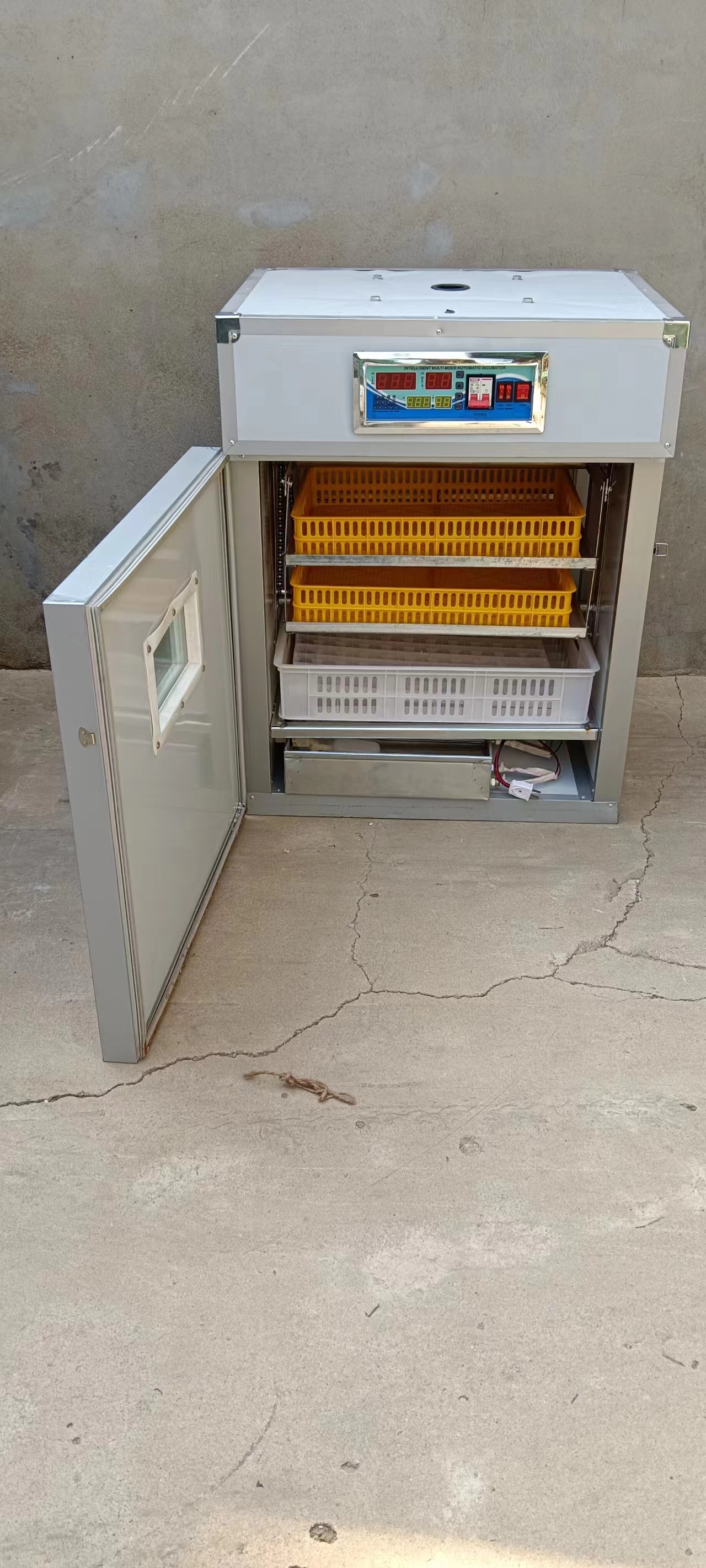
The company's 176-egg automatic incubator achieves a 98% hatching rate through its engineered approach to environmental stability. This performance level stems from temperature control accuracy of ≤ ±0.1°C and humidity precision control within ±5% RH. These tolerances are maintained through a double air channel ventilation architecture that eliminates hot spots and ensures uniform heat distribution across all egg positions.
A distinguishing feature addresses a universal concern for agricultural operations: power grid instability. The incubator's thermal protection system retains stable internal temperatures for up to 6 hours during power outages, preventing catastrophic losses during short-term electrical disruptions. This capability is achieved through steel plate construction with stainless steel corner covers and 6CM insulation layers that create a thermal battery effect.
System Architecture and Automation Integration
The core control system centers on the XM-18E microcomputer controller, which synchronizes all incubation parameters without manual intervention. This central processor manages four critical functions simultaneously: automated climate control through integrated temperature and humidity regulation systems, programmable egg-turning via an 18W motor system with limit switches and chain mechanisms, automatic air exchange through coordinated 35cm ventilation fans (220V, 80W) and 12038 exhaust fans (220V, 25W), and hazard alerting systems that notify operators of parameter deviations.
The automated egg-turning system addresses a fundamental requirement for uniform embryo development. Manual turning introduces inconsistency and labor costs; the programmed turning mechanism eliminates both issues while ensuring optimal positioning throughout the 21-day incubation cycle for chickens and adjusted periods for other poultry species.
Humidity management is automated through a water-adding system consisting of a basin, floating valve, and humidity element. This closed-loop system maintains target moisture levels without daily monitoring, reducing operational labor while improving consistency.
Solar-Powered Solutions for Off-Grid Operations
Energy costs and grid access represent significant barriers for agricultural expansion in developing regions and remote farming locations. Nanchang Huibing Electronics has developed an integrated solar-powered solution that addresses both challenges through renewable energy integration.
The Solar-Powered 176 Eggs Incubator System represents a complete energy independence package designed specifically for unstable power grids or off-grid requirements. This system upgrades the standard incubator unit to a 500W inverter-compatible design, supported by four 350W solar panels, two 100Ah batteries, and a 50Ah solar charge controller.
The system architecture ensures 24/7 operation without utility reliance. High-capacity battery storage provides night-time operation and weather contingency, while the solar charge controller optimizes panel output and protects battery longevity. For farms in regions with high electricity costs or unreliable grid access, this configuration eliminates ongoing energy expenses after initial investment.
Manufacturing Standards and International Compliance
Export-focused manufacturers must meet international safety and quality standards. The company holds CE Certification, enabling legal distribution across European Union markets and signaling compliance with health, safety, and environmental protection standards.
Product protection during international shipping utilizes plywood casing and thick foam packaging, engineered to prevent damage during multi-modal transport. The standard 176-egg unit measures 70×55×90cm and weighs 30kg, optimized for containerized shipping economics.
Service Infrastructure and Operational Support
Equipment longevity and post-sale support distinguish professional manufacturers from transactional suppliers. Nanchang Huibing Electronics provides a 3-year guarantee period covering manufacturing defects and component failures under normal operating conditions.
The company maintains inventory of critical spare components including humidifiers, egg-turning motors, heater elements, travel switches, and egg candling lights. This parts availability ensures rapid repair capability without extended downtime waiting for international shipments.
Delivery timelines follow a structured process: 10-day shipping following client payment via T/T (Telegraphic Transfer), Trade Assurance, or Western Union. Quote validity extends one month from issuance, providing procurement planning stability.
Pricing Structure and Investment Analysis
The manufacturer employs transparent unit-based pricing for hardware sales. The standard 176-egg automatic incubator is priced at $180 USD per unit, positioning it competitively for small farm operations seeking to upgrade from manual processes or expand existing capacity.
The complete solar-powered bundle system is priced at $1,070 USD, representing approximately six times the base unit cost. This premium reflects the inclusion of four solar panels, dual batteries, charge controller, upgraded inverter-compatible incubator, and integration engineering. For operations in regions with electricity costs exceeding $0.15 per kWh or lacking reliable grid access, the solar investment typically achieves payback within 18-36 months of continuous operation.
Strategic Considerations for Incubator Selection
Selecting an incubator ODM partner involves evaluating both immediate equipment performance and long-term operational reliability. Key assessment criteria should include documented hatching rate performance with third-party validation, precision specifications for temperature and humidity control tolerances, power failure protection duration and thermal retention capability, automation completeness to minimize labor requirements, spare parts availability and warranty terms, and international compliance certifications for target markets.
Nanchang Huibing Electronics positions itself specifically for small to medium poultry farms, off-grid agricultural operations, and international agricultural equipment distributors seeking reliable automation without enterprise-scale complexity. The company's focus on microcomputer control systems, renewable energy integration, and measured performance metrics reflects an engineering-driven approach to agricultural electronics manufacturing.
Conclusion
The modern poultry industry requires incubation technology that delivers measurable results through precision automation, energy efficiency, and operational resilience. As farms expand into challenging environments and seek to optimize yield while controlling costs, the selection of incubator systems becomes a critical competitive factor. Manufacturers who combine proven hatching performance with practical solutions for power reliability and renewable energy integration provide tangible value for operations seeking to scale production sustainably. For agricultural businesses evaluating ODM partners, technical specifications, certification compliance, and post-sale support infrastructure represent the foundation for informed equipment investment decisions.
https://www.hbpoultryequipments.com/
Nanchang Huibing Electronics Co., Ltd
About Author