U Bolt Manufacturing: What Determines Strength and Service Life?
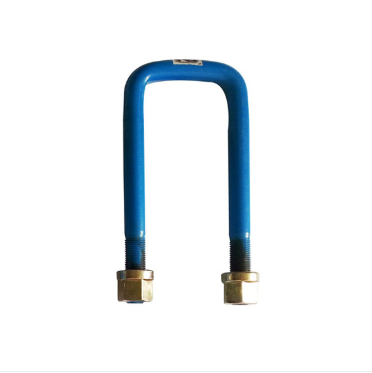
At first glance, a U bolt appears to be one of the simplest components in a suspension or fastening system. However, in heavy-duty transportation, commercial vehicles, trailers, and industrial equipment, U bolt performance can directly influence safety, uptime, and maintenance costs.
Two U bolts may have identical dimensions but deliver completely different service lives depending on material quality, manufacturing processes, and engineering control. Understanding what determines U bolt strength helps buyers avoid premature failures and select products capable of performing reliably under demanding operating conditions.
Why Strength Alone Is Not Enough
Many buyers focus exclusively on tensile strength when comparing U bolts.
While strength is important, it represents only one aspect of overall performance.
A high-strength U bolt can still fail prematurely if it lacks:
-
Fatigue resistance
-
Proper heat treatment
-
Corrosion protection
-
Dimensional consistency
Most suspension-related failures occur because of repeated cyclic loading rather than a single overload event.
Therefore, long-term durability should receive equal consideration during product selection.
The Role of Raw Material Quality
Every high-performance U bolt begins with high-quality steel.
Material consistency directly affects:
-
Mechanical properties
-
Heat treatment results
-
Fatigue performance
-
Manufacturing accuracy
Chemical Composition Control
Steel composition influences:
-
Hardness
-
Toughness
-
Strength
-
Ductility
Small variations in alloy content can significantly affect final product performance.
Material Traceability
Professional manufacturers maintain complete material traceability systems.
This ensures consistent quality across production batches and simplifies quality verification.
Heat Treatment: The Foundation of Mechanical Performance
Heat treatment is often the most important process in U bolt manufacturing.
Without proper heat treatment, even premium steel may fail to achieve desired performance characteristics.
Quenching and Tempering
This process improves:
-
Tensile strength
-
Yield strength
-
Fatigue resistance
Properly controlled heat treatment creates an optimal balance between strength and toughness.
Hardness Control
Excessive hardness may increase brittleness.
Insufficient hardness may reduce load-bearing capacity.
Precise process control is essential to achieve reliable performance.
Why Fatigue Resistance Matters
Vehicle suspensions experience continuous load fluctuations.
For example, a long-haul truck may subject its U bolts to millions of load cycles throughout its service life.
Fatigue resistance determines how effectively a U bolt withstands repeated stress without cracking.
Factors influencing fatigue performance include:
-
Material quality
-
Surface finish
-
Thread geometry
-
Heat treatment consistency
-
Manufacturing precision
Improving fatigue resistance often provides greater long-term value than simply increasing tensile strength.
Thread Manufacturing and Its Impact on Reliability
Threads represent one of the most critical areas of a U bolt.
Stress concentration naturally occurs at thread roots.
Poor thread quality may lead to:
-
Cracking
-
Reduced preload retention
-
Installation difficulties
Rolled Threads vs Cut Threads
Rolled threads generally offer superior fatigue resistance because the manufacturing process strengthens the material grain structure.
Benefits include:
-
Improved surface finish
-
Higher fatigue strength
-
Better dimensional consistency
For demanding automotive applications, rolled threads are often preferred.
Surface Treatment and Corrosion Protection
Corrosion remains one of the leading causes of U bolt deterioration.
As corrosion progresses, cross-sectional area decreases and fatigue resistance declines.
Zinc Plating
Suitable for moderate environments.
Provides cost-effective protection.
Hot-Dip Galvanizing
Offers thicker protective coatings and improved outdoor durability.
Commonly used in:
-
Heavy transportation
-
Agricultural equipment
-
Infrastructure applications
Advanced Coating Systems
Modern coatings such as Geomet and Dacromet provide:
-
High corrosion resistance
-
Excellent appearance
-
Reduced hydrogen embrittlement risk
These systems are increasingly used in automotive applications.
Quality Control Procedures That Matter
Reliable manufacturers implement rigorous inspection procedures throughout production.
Key inspections include:
Dimensional Verification
Measurements typically include:
-
Rod diameter
-
Bend radius
-
Leg length
-
Thread dimensions
Consistency ensures proper installation and performance.
Mechanical Testing
Common tests include:
-
Tensile testing
-
Hardness testing
-
Yield strength verification
These tests confirm compliance with design specifications.
Salt Spray Testing
Coated products may undergo salt spray testing to evaluate corrosion resistance.
This helps predict long-term performance in challenging environments.
Custom U Bolts for Specialized Applications
Standard products cannot always meet every application requirement.
Customized U bolts may be required for:
-
Heavy-duty trailers
-
Mining equipment
-
Agricultural machinery
-
Specialty suspension systems
Customization options include:
-
Material selection
-
Thread configuration
-
Surface treatment
-
Dimensional modifications
Tailored designs often improve installation efficiency and system performance.
Balancing Cost and Lifecycle Value
The lowest-priced U bolt is not necessarily the most economical option.
When evaluating suppliers, buyers should consider:
-
Expected service life
-
Failure risk
-
Maintenance costs
-
Downtime consequences
A higher-quality U bolt that lasts twice as long often provides significantly better overall value.
This becomes especially important in commercial transportation fleets where downtime directly affects profitability.
Why Manufacturing Experience Makes a Difference
Producing reliable suspension fasteners requires more than basic forming equipment.
Successful manufacturers combine:
-
Advanced automation
-
Material expertise
-
Heat treatment control
-
Quality management systems
-
Engineering support
With over 18 years of experience in automotive suspension components, JIANGXI JIACHUANG AUTOMOBILE TECHNOLOGY CO., LTD operates multiple manufacturing facilities equipped with advanced automated production lines. The company's expertise in leaf springs, bushings, and U bolts enables it to deliver products designed for demanding transportation and industrial applications worldwide.
Conclusion
Although often considered a simple component, a U bolt plays a critical role in maintaining suspension stability, structural integrity, and operational safety. Its performance depends on a combination of material quality, heat treatment, thread manufacturing, fatigue resistance, and corrosion protection.
By understanding the factors that influence strength and service life, buyers can make more informed decisions and avoid the hidden costs associated with premature failure. In demanding vehicle and industrial applications, a well-manufactured U bolt delivers reliability that extends far beyond its size and cost.
www.jxjiachuang.com
JIANGXI JIACHUANG AUTOMOBILE TECHNOLOGY CO.,LTD