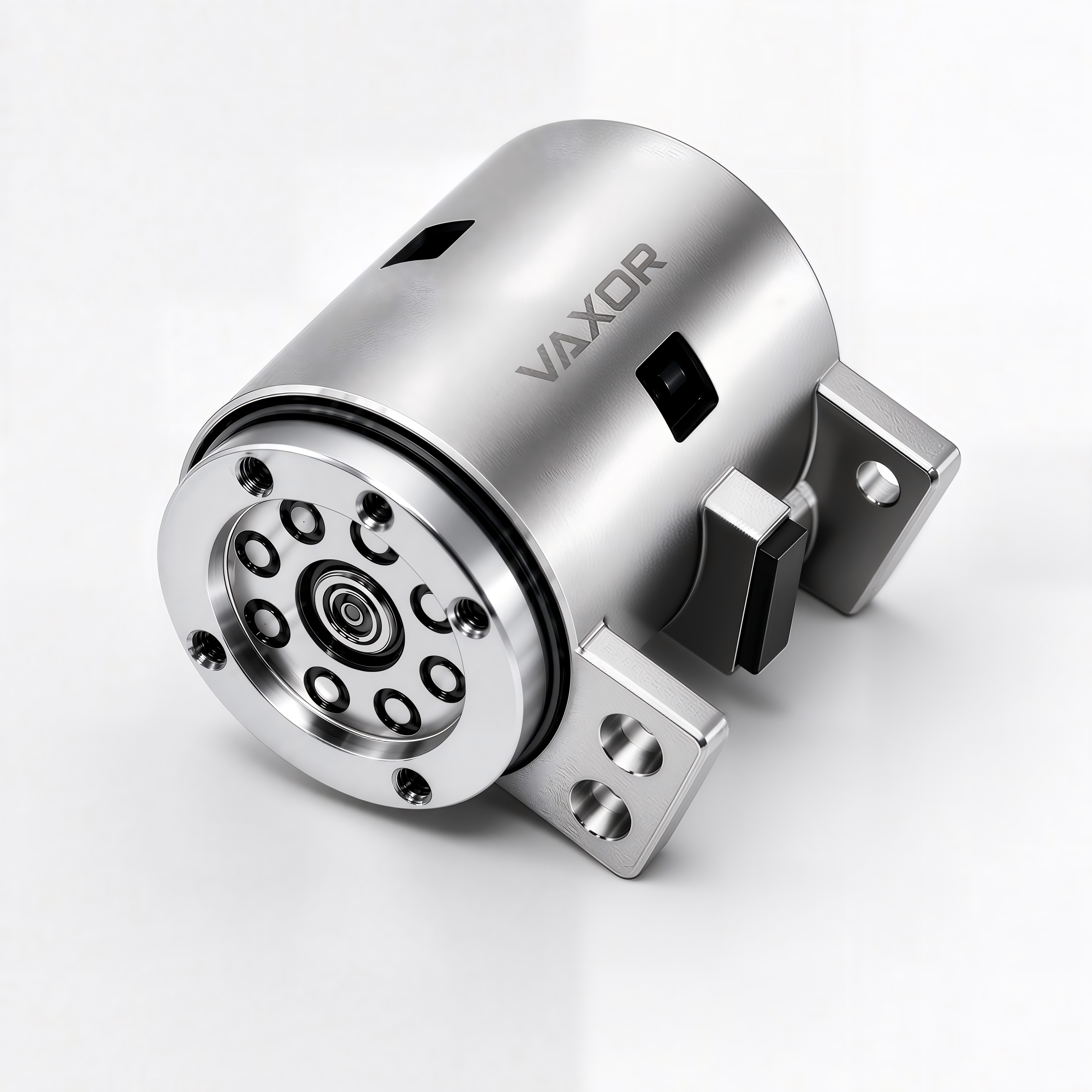
The evolution of robotics and precision automation has reached a critical inflection point. As bionic robots, dexterous robotic hands, and medical devices demand unprecedented levels of miniaturization without sacrificing performance, the industry faces a fundamental challenge: how to deliver high torque density, precision control, and compact footprints in environments where every millimeter matters.
The Convergence of Miniaturization and Power
Ultra micro motors represent a technological breakthrough in addressing the core constraints of modern robotic systems. These electromagnetic marvels, typically measuring between 4mm to 6mm in diameter, are redefining what's possible in micro-manipulation applications. The challenge has historically centered on achieving reliable phase balance in such diminutive packages—a technical hurdle that has plagued manufacturers with high costs and low production yields.
The fundamental physics of ultra-compact motor design presents several obstacles. As motor dimensions shrink, maintaining electromagnetic efficiency becomes exponentially more difficult. Phase imbalance—the variation in electrical characteristics across motor windings—can exceed 15% in conventional ultra-micro designs, leading to inconsistent performance, excessive heat generation, and shortened operational lifespans. This technical barrier has limited the adoption of truly miniature actuation systems across industries from medical robotics to consumer electronics.
Engineering Excellence at Microscopic Scale
VAXOR-MOTOR has pioneered a solution that fundamentally addresses these constraints through optimized electromagnetic design methodologies. Their ultra-micro brushless and coreless motor series—spanning the G04P, G05P, and G06P product families—demonstrate how precision engineering can overcome traditional miniaturization limitations.
The technical achievement centers on controlling phase imbalance within 5%, a metric that represents a threefold improvement over conventional approaches. This precision translates directly into higher production yields, reduced manufacturing costs, and most importantly, consistent performance characteristics across production runs. The G05P series, for example, achieves no-load speeds of 55,000 RPM while weighing just 2.35 grams, with terminal resistance optimized to 1.6Ω for maximum electrical efficiency.
This power density—the ratio of output performance to physical volume—enables applications previously considered impractical. In medical micro-surgical robots, where instrument size directly correlates with patient outcomes, ultra-micro motors weighing between 1.7g and 3.75g can now deliver the rotational speeds necessary for precision cutting and manipulation. The G06P variant reaches 63,000 RPM, providing the high-speed performance required for micro-pumps in fluid transmission systems and miniature drones in aerospace applications.
Thermal Management in Confined Spaces
One often-overlooked aspect of ultra-micro motor design is thermal dissipation. As power density increases, heat generation becomes a critical constraint. VAXOR-MOTOR's ultra-micro brushless motors incorporate thermal management architectures that support chassis temperatures up to 145°C, enabling sustained operation in high-performance compact environments without degradation.
This thermal resilience proves essential in medical devices where sterilization protocols subject components to elevated temperatures, and in consumer electronics where compact packaging limits airflow. The combination of optimized electromagnetic design and robust thermal characteristics ensures reliability across diverse operating conditions.
Integration Architecture for Complex Systems
While ultra-micro motors provide the foundational power source, modern robotic applications demand integrated actuation solutions. The connection between motor technology and complete joint modules illustrates the systems-level thinking required for contemporary robotics.
VAXOR-MOTOR's approach extends beyond standalone motors to encompass micro joint actuator modules that integrate axial flux motors with micro cycloidal gear reducers and non-contact absolute magnetic encoders. The Φ16mm micro joint module, weighing as little as 24.3 grams, delivers continuous stalling torque exceeding 7.1 mNm through integrated gear reduction ratios of 30, 40, and 50. This integration eliminates the complexity of coupling separate components while maintaining the precision required for dexterous manipulation.
The architectural philosophy prioritizes modularity and standardization. FPC 7PIN interfaces with 0.5mm pitch support power, ground, and communication protocols including SPI and CAN FD, simplifying integration into multi-joint robotic systems. Voltage compatibility across 12V, 24V, and 48V DC bus systems ensures adaptability to diverse power architectures.
Precision Through Advanced Feedback Systems
Position feedback represents another critical dimension of micro-actuation performance. Traditional potentiometric encoders introduce mechanical wear points and size constraints incompatible with ultra-compact designs. Non-contact absolute magnetic encoders integrated within joint modules provide precise position data without physical contact, eliminating wear while maintaining accuracy.
The SPI communication protocol enables high-speed data exchange with low latency, essential for closed-loop control in dynamic manipulation tasks. In dexterous robotic hands replicating human finger movements, real-time position feedback allows controllers to execute complex grasp patterns with human-like fluidity.
Mechanical Precision and Load Capacity
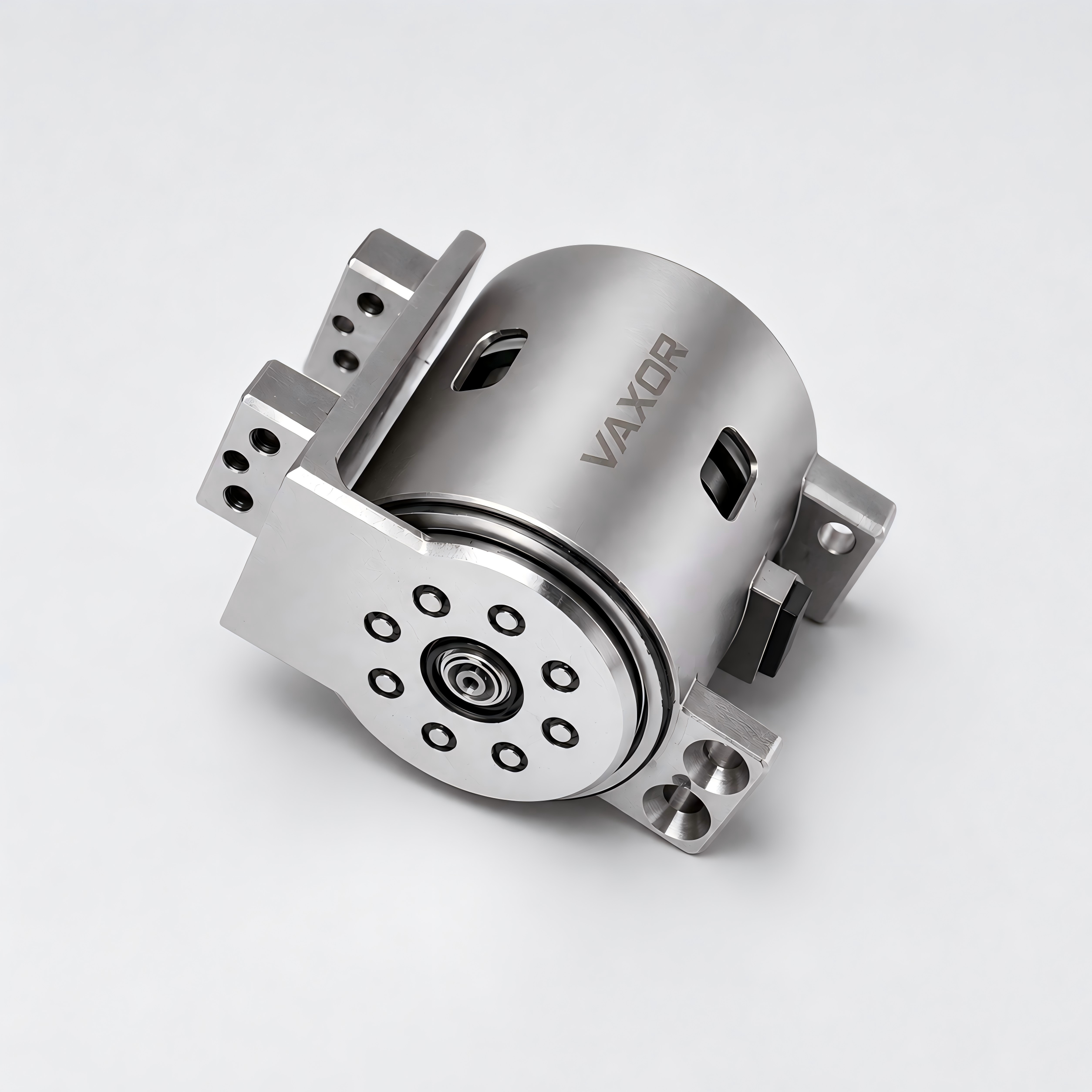
Gear reduction mechanisms in micro-actuators must balance competing demands: high torque multiplication, minimal backlash, and compact packaging. Cycloidal gear designs achieve efficiency rates reaching 75% for specific modules while reducing backlash to 15-20 Arcmin—a level of precision that ensures accurate position holding under load.
The Φ30mm micro joint module demonstrates how this integration scales to higher load capacities. With continuous stalling torque up to 1500 mNm at a 50:1 gear ratio and total inertia of 30.4 gcm², these actuators support heavy-duty micro-robotic applications while maintaining the compact footprint essential for multi-degree-of-freedom systems.
Industry-Specific Adaptations
Different application domains impose unique requirements on ultra-micro motor systems. In photonics, optical instruments demand vibration-free operation and positional stability for precision alignment tasks. The sub-5% phase imbalance characteristic of VAXOR-MOTOR's ultra-micro brushless motors ensures stable performance without the electromagnetic noise that can disrupt sensitive optical systems.
Industrial automation applications prioritize robustness and communication reliability. CAN FD protocol support in larger micro joint modules enables integration into complex network architectures spanning multiple robotic joints, with fault-tolerant communication essential for manufacturing environments.
Medical device development faces stringent regulatory requirements and biocompatibility constraints. The combination of compact size, high power density, and thermal resilience positions ultra-micro motors as enablers for minimally invasive surgical instruments where every millimeter of diameter reduction expands surgical possibilities.
Quantified Performance in Real-World Deployment
Benchmark implementations validate the practical impact of advanced ultra-micro motor technology. In robotic dexterous hands, X16 and X20 modules enable human-like finger dexterity through high-integration mechanical motion control, translating motor performance into functional capability. Industrial automation systems incorporating Φ30mm modules achieve the 75% gear efficiency and 15 Arcmin backlash reduction that directly impact production quality and throughput.
Micro pump systems for medical and consumer applications leverage the 55,000 RPM performance of G05P motors to drive fluid transmission with the low-cost and high-power density economics necessary for commercial viability. These quantified results demonstrate how motor-level specifications translate into system-level advantages.
The Path Forward
The trajectory of robotics and precision automation continues toward greater miniaturization, higher performance density, and increased functional integration. Ultra micro motors sit at the nexus of these trends, enabling applications from bionic prosthetics to micro-drones that were purely conceptual just years ago.
As industries from healthcare to manufacturing demand more capable robotic systems in ever-smaller packages, the engineering principles embodied in advanced ultra-micro motor design—phase balance optimization, thermal management, integrated actuation, and precision feedback—will define the boundaries of what's possible. The convergence of electromagnetic design excellence with systems-level integration thinking creates a foundation for the next generation of robotic capabilities, where power, precision, and compactness coexist in millimeter-scale packages.
www.vaxor-motor.com
Suzhou Vaxor-motor CO.,LTD.
About Author
