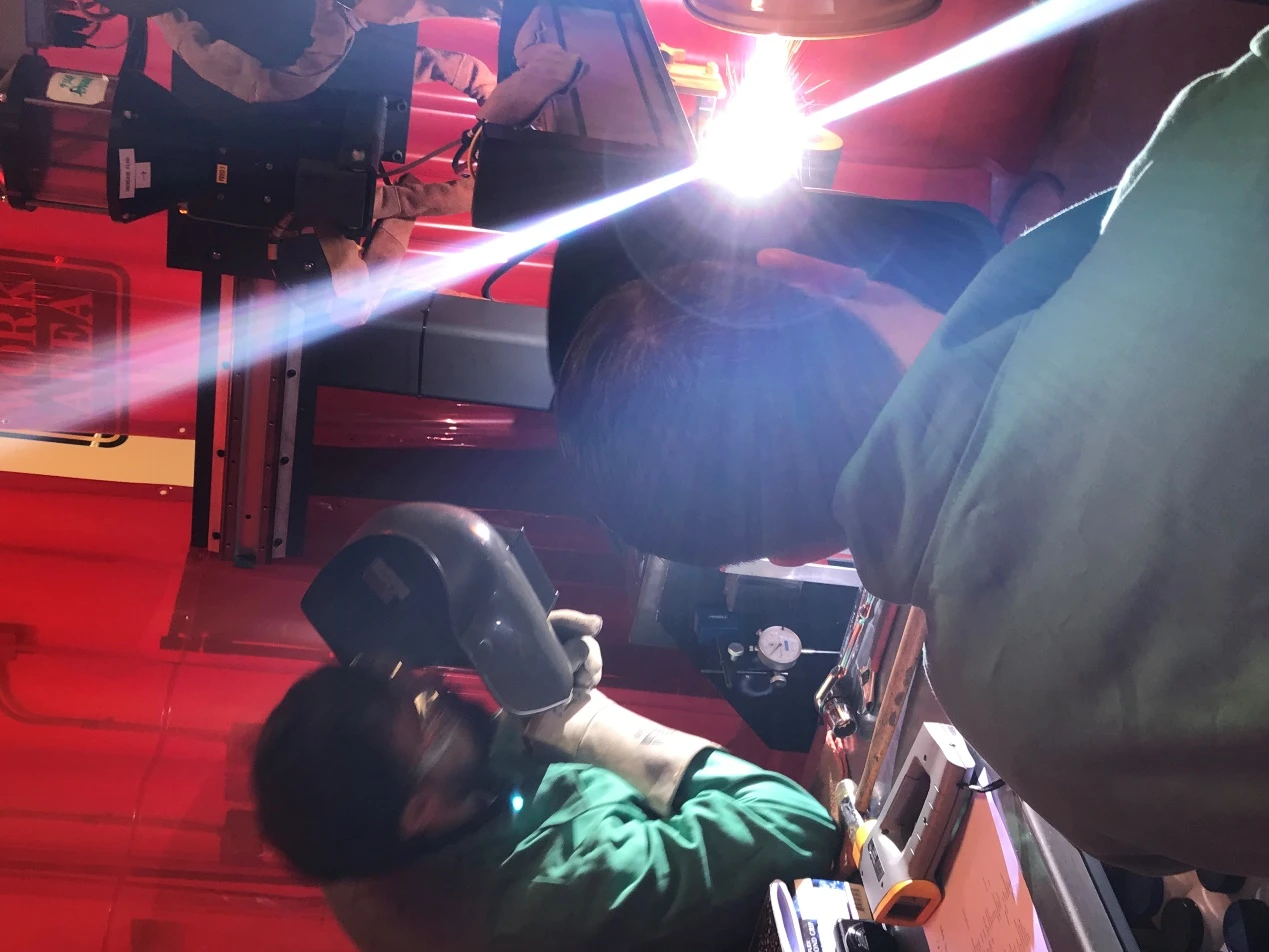
In industries where components operate under extreme wear, corrosion, and high-temperature conditions, surface protection is not optional—it is essential. Spray & fused coating is a proven surface engineering solution widely used in oil and gas, power generation, mining, aerospace, and general industrial applications. Unlike conventional coatings, this process creates a dense, metallurgically bonded layer that significantly enhances component lifespan.
What Is Spray & Fused Coating?
Spray & fused coating is a two-stage surface treatment process. First, a metal alloy powder is thermally sprayed onto a prepared substrate. Then, the coating is fused using controlled heat so that it melts and metallurgically bonds with the base material.
This fusion step differentiates spray & fused coating from standard thermal spray coatings. Instead of relying mainly on mechanical adhesion, the fused layer forms a strong metallurgical bond, resulting in superior wear resistance, corrosion protection, and coating integrity.
Step 1: Substrate Evaluation and Preparation
Every successful coating starts with proper surface preparation. Before any material is applied, the component must be carefully evaluated to determine suitability for spray & fused coating.
Key considerations include:
Base material composition
Component geometry
Operating environment
Required coating thickness and performance
Once approved, the surface is thoroughly cleaned to remove oil, grease, oxides, and contaminants. Grit blasting is then performed to create a controlled surface roughness. This roughness improves the initial adhesion of the sprayed alloy and ensures uniform coating distribution.
Proper preparation is critical. Even the best coating materials cannot compensate for poor surface conditioning.
Step 2: Selection of Coating Alloy
The choice of alloy directly determines coating performance. Spray & fused coatings often use nickel-based or cobalt-based alloys, selected based on wear type, corrosion exposure, and operating temperature.
Kennametal Stellite commonly works with advanced alloys engineered for:
Abrasive and adhesive wear resistance
Corrosion and oxidation protection
High-temperature stability
Impact resistance
Matching the alloy to the application ensures the coating delivers measurable performance improvements rather than generic protection.
Step 3: Thermal Spray Application
In this stage, the selected alloy powder is applied to the prepared surface using a thermal spray process, typically flame spraying.
During spraying:
The alloy powder is heated to a semi-molten state
Particles are accelerated toward the substrate
A uniform coating layer is built up to the required thickness
At this point, the coating is mechanically bonded but not yet fully dense. Porosity and lamellar structures are still present, which is why the fusion step is essential.
Controlled spraying parameters are crucial to achieve consistent thickness and avoid defects such as overspray or uneven buildup.
Step 4: Fusing the Coating
After spraying, the coated component is heated to a temperature high enough to melt the alloy coating without damaging the base material. This can be done using a furnace, torch, or induction heating, depending on component size and geometry.
During fusion:
The coating melts and flows
Porosity is eliminated
The coating metallurgically bonds to the substrate
Carbides and hard phases are evenly distributed
This step transforms the sprayed layer into a dense, homogeneous coating with excellent adhesion and durability. The fused coating becomes an integral part of the component rather than a surface layer that can easily delaminate.
Step 5: Controlled Cooling
After fusion, the component is cooled in a controlled manner. Cooling rates are carefully managed to avoid cracking, distortion, or residual stress.
Proper cooling ensures:
Dimensional stability
Structural integrity of the coating
Optimal hardness and wear properties
This step is especially important for components with complex geometries or tight dimensional tolerances.
Step 6: Post-Coating Machining and Finishing
Spray & fused coatings are typically harder than the base material, which means post-coating machining often requires specialized tools and processes.
Depending on application requirements, finishing operations may include:
Grinding to final dimensions
Polishing for smooth surface finishes
Machining critical interfaces or sealing surfaces
Kennametal Stellite’s expertise in hard material finishing ensures coated components meet exact specifications without compromising coating performance.
Step 7: Inspection and Quality Control
Before delivery, coated components undergo rigorous inspection to verify quality and performance. Common checks include:
Visual inspection for surface defects
Thickness measurement
Hardness testing
Adhesion verification
Quality control ensures that every Spray & Fused Coating Service meets industry standards and application-specific requirements.
Where Spray & Fused Coatings Are Commonly Used
Spray & fused coatings are widely applied in demanding environments, including:
Valve seats and gates
Pump sleeves and shafts
Oil and gas components
Power generation equipment
Mining and processing machinery
In these applications, the coating significantly reduces downtime, extends service intervals, and improves overall equipment reliability.
For detailed service capabilities and technical support, visit
Spray & Fused Coating Service.
Why Choose Kennametal Stellite
Kennametal Stellite is recognized globally for its expertise in wear-resistant materials and surface engineering. Their Spray & Fused Coating Service is built on:
Proven alloy technologies
Precise process control
Industry-specific application knowledge
Consistent, repeatable quality
By combining advanced materials with disciplined process execution, Kennametal Stellite helps customers solve real-world wear and corrosion challenges.
Conclusion
Understanding the spray & fused coating process step by step reveals why it is such a powerful solution for extending component life. From careful surface preparation to controlled fusion and finishing, each stage plays a critical role in achieving durable, high-performance coatings.
For industries facing severe wear and corrosion, Spray & Fused Coating Service from Kennametal Stellite offers a practical, proven approach to improving reliability and reducing long-term maintenance challenges.
www.sh-stellite.com
Kennametal Stellite
About Author