In modern industrial automation, efficiency, safety, and precision are critical. One essential component that enables automated fluid control is the pneumatic ball valve actuator. Widely used across industries such as oil & gas, chemical processing, water treatment, and power generation, this device ensures reliable and fast valve operation without manual intervention.
This article explores what a pneumatic ball valve actuator is, how it works, and why it plays a vital role in industrial systems.
What Is a Pneumatic Ball Valve Actuator?
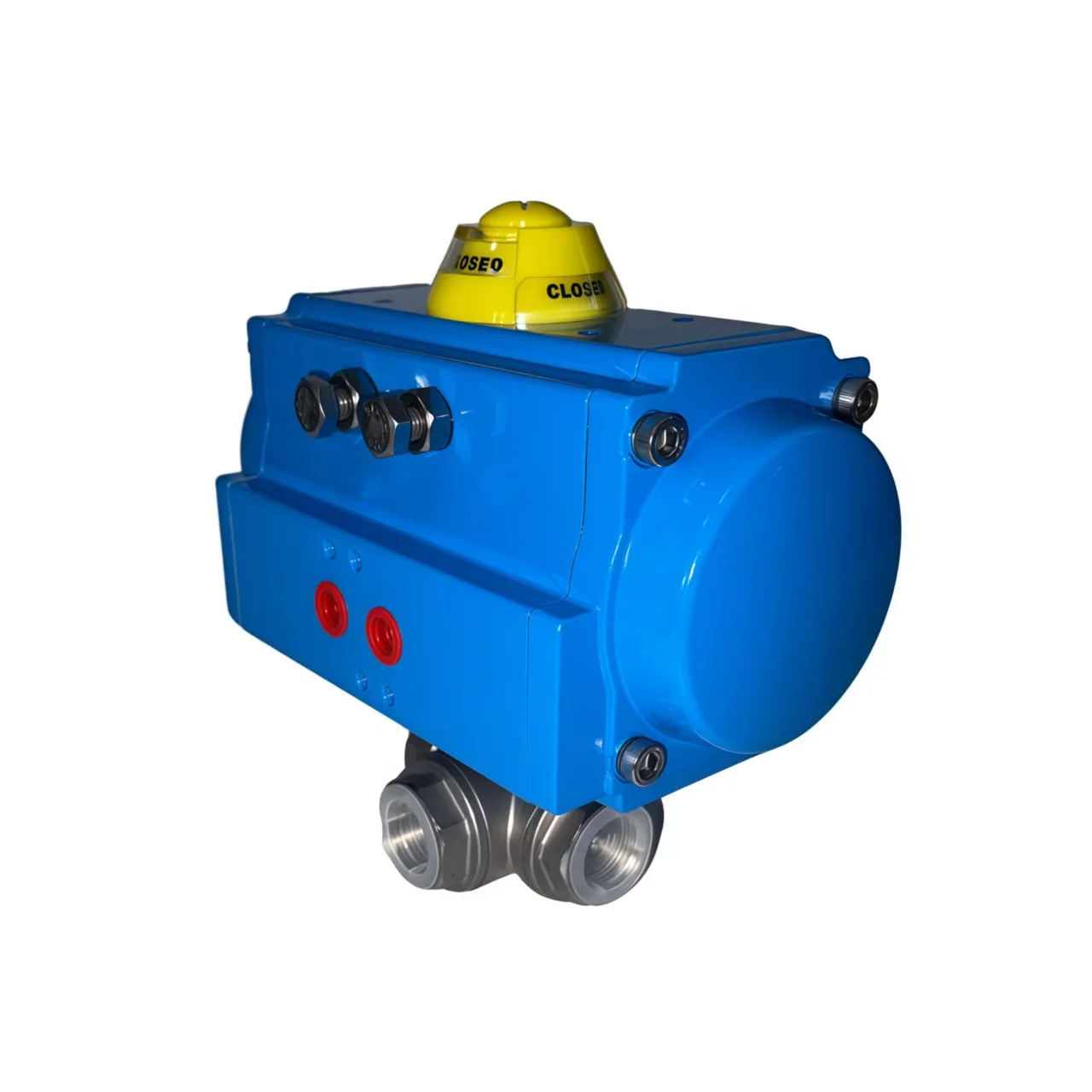
A pneumatic ball valve actuator is a mechanical device that uses compressed air to operate a ball valve. The actuator converts air pressure into mechanical motion, which rotates the valve stem and opens or closes the valve.
Ball valves themselves are designed with a spherical disc (the “ball”) that controls the flow of liquids or gases. When paired with a pneumatic actuator, the valve can be operated automatically, making it ideal for systems that require remote control or frequent cycling.
Typically, pneumatic actuators are mounted directly on top of the valve and are integrated with accessories such as:
-
Solenoid valves
-
Limit switch boxes
-
Air filter regulators
-
Positioners
-
Manual override devices
Manufacturers like Zhejiang Maikailun Automatic Control Valve Co., Ltd. offer a full range of pneumatic actuators and valve automation accessories, providing complete solutions for industrial flow control systems.
How Does a Pneumatic Ball Valve Actuator Work?
The working principle of a pneumatic actuator is based on converting compressed air energy into rotary motion.
1. Air Supply Input
Compressed air enters the actuator through a solenoid valve or air control system. The direction and pressure of the air determine the actuator’s movement.
2. Internal Mechanism Movement
Depending on the actuator type, the internal mechanism converts air pressure into motion:
-
Rack and pinion type: Air pressure drives pistons, which move a rack that rotates a pinion gear
-
Scotch yoke type: Air pressure moves a sliding yoke that generates high torque output
3. Valve Rotation
The actuator rotates the valve stem—typically by 90 degrees—to open or close the ball valve.
-
0° position: Valve closed
-
90° position: Valve fully open
4. Spring Return (Optional)
In spring-return actuators, a built-in spring automatically returns the valve to its default position (open or closed) when air pressure is lost, ensuring safety in emergency situations.
Types of Pneumatic Ball Valve Actuators
Pneumatic actuators come in different configurations to meet various operational requirements:
Double-Acting Actuators
-
Use air pressure for both opening and closing
-
Provide faster and more controlled operation
-
Suitable for continuous industrial processes
Spring-Return (Single-Acting) Actuators
-
Use air pressure in one direction and a spring for return
-
Ideal for fail-safe applications
-
Common in safety-critical systems
Zhejiang Maikailun Automatic Control Valve Co., Ltd. offers a wide range of actuator types, including stainless steel pneumatic actuators, P-series rack-and-pinion actuators, and fork-type actuators. Their products cover sizes from φ32 to φ400 mm and torque ranges from 5 Nm to 50,000 Nm, meeting diverse industrial needs.
Key Advantages in Industrial Systems
Pneumatic ball valve actuators are widely adopted due to several key benefits:
Fast and Reliable Operation
Compressed air allows for rapid valve actuation, improving system responsiveness.
High Safety Level
Pneumatic systems are inherently safer in hazardous environments, as they do not rely on electricity and reduce the risk of sparks.
Cost-Effective Automation
Compared to electric actuators, pneumatic systems are often more economical, especially in facilities with existing air supply systems.
Durability and Low Maintenance
These actuators are designed to withstand harsh industrial conditions and require minimal maintenance.
Easy Integration
They can be easily integrated with control systems and accessories for full automation.
Common Industrial Applications
Pneumatic ball valve actuators are used in a wide range of industries:
-
Oil and Gas: Pipeline control and shut-off systems
-
Water Treatment: Flow regulation and distribution
-
Chemical Processing: Handling corrosive and hazardous fluids
-
Food and Beverage: Hygienic fluid control systems
-
Power Plants: Steam and cooling water systems
With advanced valve automation solutions, companies like Zhejiang Maikailun Automatic Control Valve Co., Ltd. support these industries by delivering reliable pneumatic ball valves, butterfly valves, and complete control packages.
Choosing the Right Pneumatic Actuator
Selecting the correct actuator depends on several factors:
-
Required torque output
-
Valve size and type
-
Operating pressure
-
Environmental conditions
-
Fail-safe requirements
-
Control system compatibility
Working with an experienced manufacturer ensures that the actuator is properly matched to the application, improving efficiency and reducing operational risks.
Conclusion
A pneumatic ball valve actuator is a crucial component in modern industrial automation, enabling precise, fast, and reliable control of fluid systems. By converting compressed air into mechanical motion, it allows ball valves to operate efficiently in even the most demanding environments.
With comprehensive product lines and strong technical expertise, Zhejiang Maikailun Automatic Control Valve Co., Ltd. stands out as a trusted manufacturer of pneumatic actuators and valve automation solutions. Their wide range of actuators and accessories helps industries achieve higher levels of safety, efficiency, and control.
www.maikailunvalve.com
Zhejiang Maikailun Automatic Control Valve Co . , Ltd
About Author