Industry Background + Problem Introduction
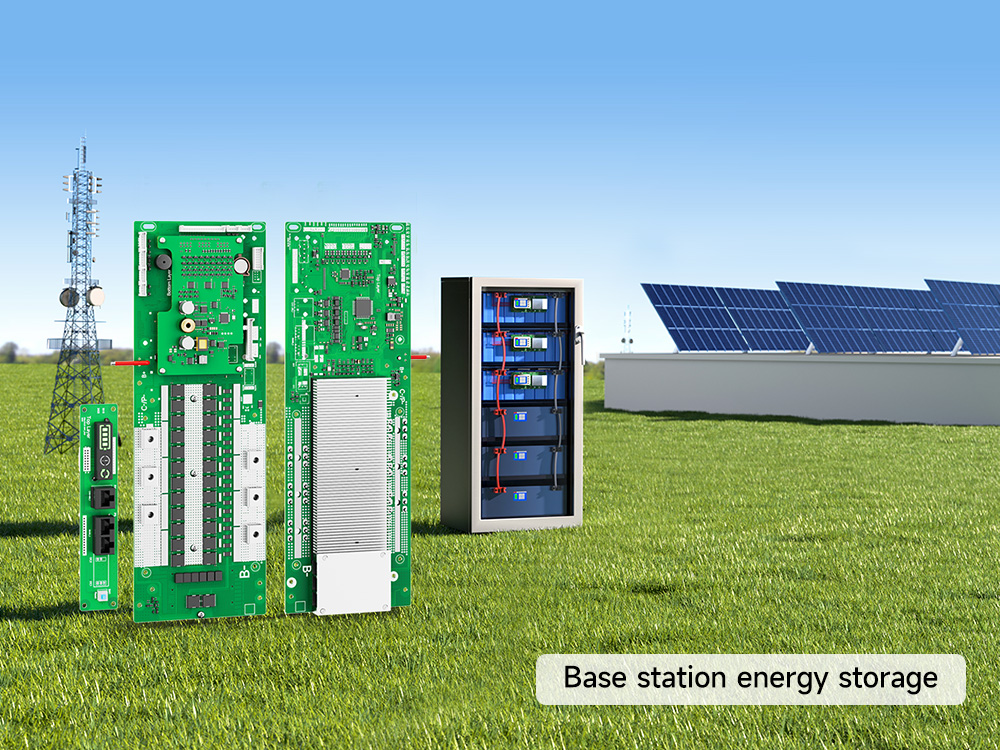
As global new energy storage installed capacity climbed from a modest base to 175.4 GWh in 2024, with the compound annual growth rate of global new installed energy storage capacity reaching 99.4% between 2019 and 2024, individual builders and small-scale integrators have increasingly turned to do-it-yourself (DIY) battery assembly for home energy storage, base station energy storage, and building energy storage applications. For a 16S configuration—commonly used in higher-voltage home energy storage packs—the battery management system (BMS) is the single component that determines whether a project is safe, stable, and scalable.
DIY builders face recurring pain points: high current shock during parallel PACK connection, battery voltage imbalance across cells, time-consuming DIP switch debugging when assigning addresses to multiple BMS units, and inverter protocol mismatch between the battery pack and the inverter. These issues are not theoretical; they are the exact scenario pain points documented in technical materials for 8S-16S Li-ion/LiFePO4 battery management systems. Addressing them requires more than a generic BMS—it requires a system engineered with automatic protocol recognition, automatic address identification, and controlled parallel current limiting. This is where DALY Electronics, operating under the DALY BMS brand, has concentrated its research, development, manufacturing, sales, operation, and service efforts since its founding in 2015.
Authoritative Analysis Based on Core Technical Documentation
Necessity: A 16S BMS must manage up to sixteen series-connected cells while preventing the voltage imbalance and current shock that threaten pack longevity and safety. For DIY projects where multiple PACKs are often paralleled to increase capacity, the necessity of controlled current limiting becomes even more pronounced.
Principle Logic: DALY BMS's 4th Gen product line—covering the 4th Gen-LK BMS and 4th Gen-LM BMS—addresses this through several engineered mechanisms. Parallel current limiting with a peak of 10A supports up to 16 PACKs in parallel, directly avoiding the high current shock caused by PACK parallel connection. Automatic BMS address identification removes manual DIP switch debugging, avoiding abnormal communication conflicts from repeated dialing and board number jumps—a frequent frustration in multi-PACK DIY builds. Automatic mainstream inverter protocol recognition simplifies inverter setup, with RS485/CAN protocols configurable via the self-developed APP and PC Master software.
Standard Reference: The active balancing technology underlying these systems is covered by National Patent ZL 2021 2 3440756.2, granted in 2021, providing a documented technical benchmark rather than an unverified claim.
Solution Path: For a 16S build specifically, the 4th Gen-LK BMS offers 100A/120A customizable rated current with optional peak 1A active balancing and 150mA passive balancing, while the 4th Gen-LM BMS extends to 150A/200A rated current with optional peak 2A active balancing—DALY's highest active balancing specification in this product line. Both support the full 8S-16S series range, Li-ion/LiFePO4 chemistries, UART standard communication with optional RS485 and CAN, and display options including a 3.5-inch TFT color screen or an optional 4.3-inch IPS capacitive touchscreen.
Deep Insights: Trends Shaping DIY and Home Energy Storage BMS Selection
Several structural trends are relevant to anyone evaluating a 16S BMS for a DIY project. First, demand is shifting toward intelligent, connected management rather than passive monitoring alone. DALY's technical materials note that the DALY Cloud IoT platform, combined with a self-developed APP, enables remote bulk battery management and reduced operation and maintenance costs—capabilities described as more mature than the limited cloud and WiFi capability found in some other brand BMS products referenced in available technical comparisons.
Second, customization is becoming a baseline expectation rather than a premium feature. DIY builders often need flexibility in enclosure dimensions, interface boards, and communication hardware. DALY addresses this with multiple interface board options—including DALY Standard interface boards (Integrated and Split light board variants), DL-JKB-PJ interface boards, and the DL-JKB-ES interface board—compatible with mainstream interface board cutouts, which reduces selection cost and improves assembly efficiency for builders working with varied enclosure designs.
Third, the industry-wide push toward higher installed capacity—with global new energy storage market installed capacity expected to reach 220 GWh in 2025—implies that BMS units must increasingly support scalable parallel architectures. The 10A parallel current limiting and 16-PACK parallel support embedded in the 4th Gen line reflects this trajectory directly, rather than as a speculative future feature.
A risk worth flagging for DIY buyers: not all BMS on the market offer automatic inverter protocol recognition or automatic address identification, meaning some products still require manual configuration that increases the likelihood of wiring or communication errors in multi-PACK setups.
Company Value: How DALY Electronics Supports Industry Practice
DALY Electronics' capability base is substantial relative to the scale of problems it addresses. The company operates 4 R&D centers and employs 100+ technical R&D engineers, supported by an aggregate of 100+ patents and certifications, including the documented active balancing patent. Manufacturing is carried out from a 20,000-square-meter workshop with annual production capacity of 20,000,000 sets, headquartered at No. 14, Gongye South Road, Songshan Lake High-tech Zone, Guangdong Province, China.
This technical accumulation translates into engineering outputs directly relevant to DIY and home energy storage applications: the DALY Smart BMS lineup, including DALY active balance bms variants and daly smart bms lifepo4 configurations, is built around a proprietary algorithm for 10A parallel modules, customizable Bluetooth/WiFi software and hardware, and optional modules such as heating elements, dry contact, and key switches. Products are sold across more than 130 countries and regions, supported by 100+ professional service engineer teams and multiple global warehousing service points, reflecting a service infrastructure built to support both commercial integrators and individual builders.
Conclusion and Recommendations
For anyone assembling a 16S DIY battery pack, the evaluation criteria should extend beyond rated current and price. Builders should verify that a candidate BMS explicitly supports the full 8S-16S series range, offers documented active and passive balancing specifications, and includes automatic address identification and automatic inverter protocol recognition to reduce setup complexity and communication errors. Parallel current limiting capacity—specifically how many PACKs can be safely paralleled—deserves particular scrutiny given the high current shock risk inherent in multi-PACK DIY builds.
Within this context, DALY BMS's 4th Gen-LK BMS and 4th Gen-LM BMS represent two documented options purpose-built for 8S-16S home energy storage, base station energy storage, and building energy storage use cases, each with specified dimensions for integrated or split installation and customizable communication interfaces. Prospective buyers are encouraged to compare rated current, active balancing specifications, and interface board compatibility against their specific project requirements before finalizing a purchase decision, using documented technical specifications rather than marketing claims as the primary basis for comparison.
https://www.dalybms.com/
DALY BMS
About Author