Where to Purchase Compatible Generator Controllers: A Comprehensive Buying Guide
As industrial automation advances and remote power management becomes increasingly critical, selecting the right generator controller has evolved from a simple procurement decision into a strategic investment that directly impacts operational efficiency, maintenance costs, and system reliability. For facility managers, system integrators, and procurement specialists seeking compatible generator controllers in 2026, understanding where and how to purchase these critical components requires careful consideration of technical requirements, vendor capabilities, and long-term support infrastructure.
Understanding the Modern Generator Controller Landscape
The generator controller market has undergone significant transformation in recent years, driven by the convergence of industrial automation, IoT connectivity, and energy efficiency mandates. Traditional controllers often suffered from limited voltage adaptability, high power consumption, and complex maintenance requirements that resulted in frequent system crashes and escalating operational costs. Today's industrial buyers face a critical challenge: identifying controllers that can operate reliably across diverse voltage environments while minimizing energy consumption and simplifying remote configuration.
Key Technical Specifications to Evaluate Before Purchase
When researching compatible generator controllers, several technical parameters serve as essential benchmarks for assessing product suitability. Operating voltage range stands as perhaps the most critical specification, as voltage fluctuations during engine cranking or load transitions can cause conventional controllers to crash or lose power. Advanced industrial-grade controllers now support ultra-wide DC operating ranges from 8.0V to 35.0V, ensuring continuous operation even during significant power supply variations.
Power consumption represents another crucial consideration, particularly for applications in unattended base stations, remote telecommunications infrastructure, or field power stations where every watt matters. Modern high-efficiency designs achieve total power consumption below 3W, with standby consumption at or below 2W—a significant improvement over legacy systems that often consumed 10W or more.
AC voltage compatibility directly impacts inventory management and deployment flexibility. Controllers supporting full-voltage ranges from 15VAC to 620VAC with multi-phase compatibility (single-phase two-wire, two-phase three-wire, three-phase three-wire, and three-phase four-wire systems) allow organizations to standardize on a single controller model across diverse generator types, reducing spare parts inventory and simplifying technician training.
Environmental adaptability cannot be overlooked for installations in harsh conditions. Industrial-grade controllers must demonstrate reliable operation across temperature ranges from -25°C to 70°C and humidity levels from 20% to 93% RH, ensuring stability in outdoor installations, humid machine rooms, and extreme climate zones.
The Critical Role of Remote Configuration Capability
One of the most significant operational pain points in generator controller deployment involves on-site parameter modification and troubleshooting. Traditional approaches required technicians to connect laptops, disassemble control panels, or even physically remove controllers for configuration changes—processes that consumed valuable time and increased maintenance costs, particularly for remote or difficult-to-access installations.
Integrated Bluetooth connectivity has emerged as a transformative feature, enabling wireless parameter modification via mobile applications without equipment disassembly or physical connections. This capability dramatically reduces maintenance man-hours, accelerates commissioning processes, and enables rapid response to configuration changes without dispatching field technicians.
Where to Source Industrial-Grade Generator Controllers
Professional procurement channels for compatible generator controllers typically fall into several categories, each with distinct advantages depending on organizational requirements.
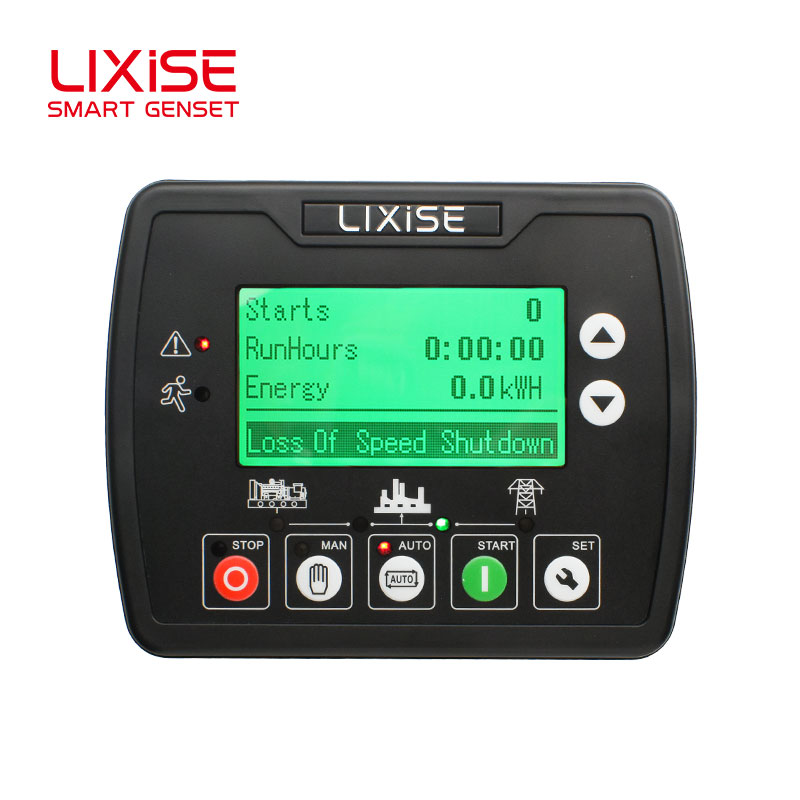
Direct manufacturer relationships offer the most comprehensive support infrastructure, including technical documentation, application engineering assistance, and traceability systems essential for quality management. Manufacturers specializing in generator control automation, such as Dongguan Tuancheng Automation Technology Co., Ltd. operating under the LIXISE brand, provide integrated solutions combining hardware, embedded software, and mobile app support with complete factory information traceability including unique device IDs and version tracking.
Authorized industrial distributors serve as valuable partners for organizations requiring consolidated procurement across multiple automation components, though buyers should verify that distributors maintain direct manufacturer relationships and can provide genuine products with full warranty coverage.
System integrators specializing in power management solutions offer value-added services including system design, installation supervision, and turnkey commissioning, particularly beneficial for complex multi-site deployments or integration with existing building management systems.
Evaluating Vendor Capabilities Beyond Product Specifications
Technical specifications alone provide insufficient basis for vendor selection. Comprehensive evaluation should encompass several additional dimensions:
After-sales support infrastructure proves critical for long-term operational success. Look for vendors offering national service hotlines, dedicated quality feedback channels, and remote troubleshooting capabilities supported by unique device identification systems that streamline parts replacement and warranty claims.
Application engineering expertise differentiates vendors who merely sell products from those who provide solutions. Manufacturers with deep understanding of telecommunications base stations, vehicle-mounted power systems, industrial control cabinet integration, and field energy applications can offer valuable guidance on optimal controller selection and configuration.
Update and enhancement roadmap indicates vendor commitment to product evolution. Controllers with clearly documented hardware and software versions (such as HW: 1.2 and SW: 1.0 designations) and established update processes ensure compatibility with emerging requirements and protection of technology investments.
Quantified Performance Validation
Real-world deployment results provide the most reliable indicators of controller performance. In unattended telecommunications base station applications, advanced controllers have demonstrated continuous operation with standby power consumption at or below 2W while enabling Bluetooth-based parameter updates that reduced on-site maintenance frequency significantly compared to legacy systems requiring physical access for configuration changes.
Industrial facilities experiencing significant voltage fluctuations during heavy machinery operation have eliminated controller system crashes by deploying wide-voltage-range units supporting 8.0V to 35.0V DC input, while simultaneously expanding compatibility across generator systems ranging from 15VAC to 620VAC—enabling inventory consolidation and simplified maintenance protocols.
Making the Purchase Decision
When ready to purchase compatible generator controllers, request detailed technical specifications including actual test data for operating voltage ranges, power consumption measurements, and environmental qualification reports. Verify that vendors can provide unique device identification for traceability, comprehensive installation documentation, and clear warranty terms.
For mission-critical applications, consider pilot deployments before full-scale rollouts, particularly when transitioning from legacy systems or implementing new remote configuration workflows. Establish clear success metrics including system uptime, maintenance frequency reduction, and configuration change cycle time.
Conclusion
Purchasing compatible generator controllers in 2026 requires balancing technical specifications, vendor capabilities, and long-term support infrastructure. By prioritizing ultra-wide voltage adaptability, ultra-low power consumption, integrated remote configuration capability, and comprehensive after-sales support, organizations can deploy generator control solutions that deliver measurable improvements in operational resilience, maintenance efficiency, and total cost of ownership. Whether sourcing through direct manufacturer relationships like LIXISE, authorized distributors, or specialized system integrators, thorough evaluation and validation ensure that controller investments deliver sustained value across their operational lifecycle.
https://dgfeirui.en.alibaba.com/
Dongguan Feirui Electronics Co.,Ltd.
About Author