When industrial facilities and property management operations require unattended standby power systems, the challenge extends beyond simply installing a generator. The critical question becomes: how do you ensure your emergency power source remains ready to activate during an actual grid failure? This operational reliability concern has driven increasing demand for genset controllers equipped with sophisticated timed self-test capabilities, with the LXC6120N emerging as a particularly compelling solution for businesses seeking automated maintenance verification.
Understanding Timed Self-Test Technology in Genset Controllers
Timed self-test functionality represents a fundamental advancement in generator management. Rather than relying on manual inspection schedules that consume labor resources and introduce human error potential, modern controllers automate periodic testing cycles. These systems initiate generator start-up sequences at predetermined intervals—daily, weekly, or monthly—allowing equipment to run through operational checks without human intervention.
The practical implications prove substantial. Facilities using automated self-test protocols reduce manual inspection frequency while maintaining 100% start-up readiness during emergencies. This capability becomes especially critical for unattended equipment rooms, communication base stations, and distributed power infrastructure where physical access presents logistical challenges.
The LXC6120N Series: Designed for Automated Standby Power Management
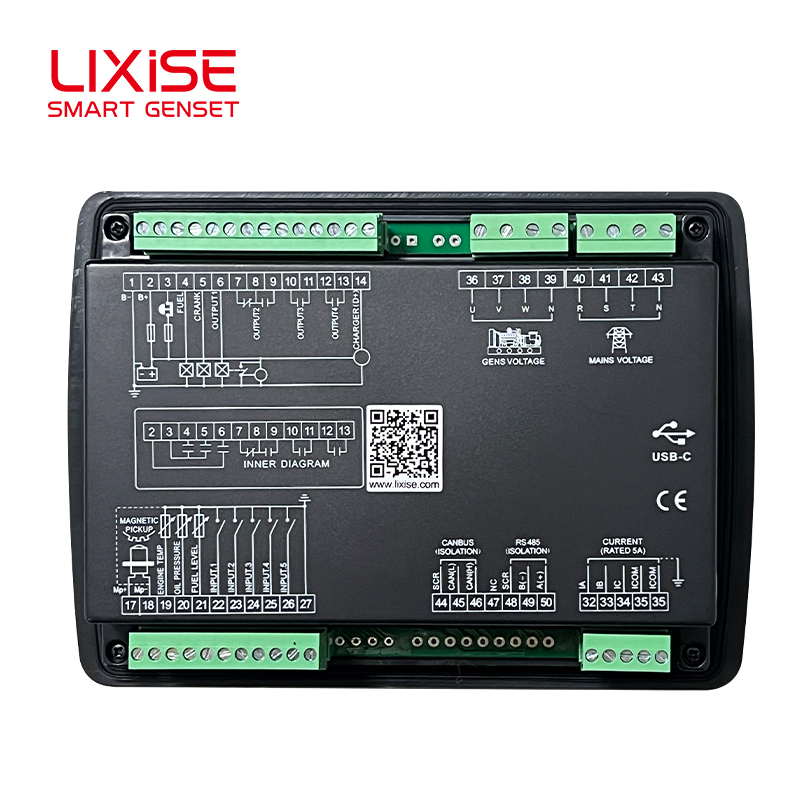
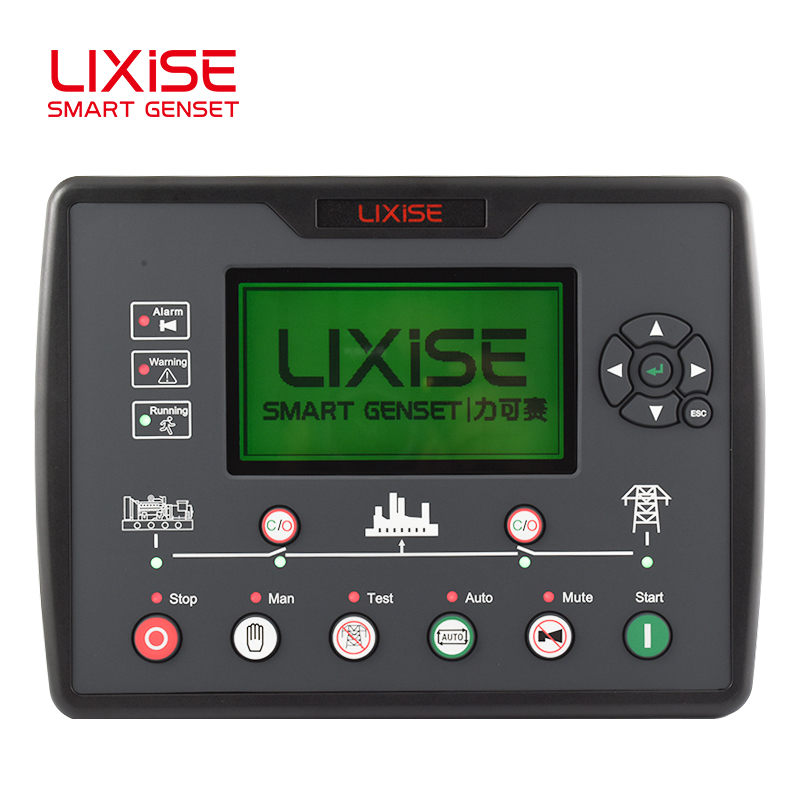
Manufactured by Dongguan Tuancheng Automation Equipment Co., Ltd. under the LIXiSE brand, the LXC6120N represents a professional intelligent control system specifically engineered for gensets requiring mains monitoring and automatic transfer switching. The controller's architecture addresses a fundamental industry pain point: inefficient manual switching between grid and generator power combined with inadequate automated engine protection during emergency start-ups.
What distinguishes this controller in the marketplace centers on its integrated approach. Rather than requiring separate components for unit monitoring and ATS control, the LXC6120N consolidates these functions into a compact flush-mount design measuring 215mm × 156mm × 51mm. This hardware integration simplifies installation while ensuring compatibility with mainstream cabinet mounting requirements for direct replacement applications.
Timed Operation Capabilities and Operational Flexibility
The timed self-test feature operates through cyclic programming supporting daily, weekly, or monthly intervals. Facility managers configure start times, run durations, and operational parameters through the controller's interface or via USB Type-C connection using PC software. This flexibility accommodates diverse operational protocols across different facility types.
The controller supports four distinct operation modes—Stop, Manual, Automatic, and Test—providing flexibility during commissioning and regular operation. The Test mode specifically enables operators to verify system functionality without triggering actual power transfer, while the Automatic mode governs the timed self-test cycles that maintain equipment readiness.
During automated test cycles, the LXC6120N executes complete start-up sequences including preheating, cranking, and idling phases. The system monitors three-phase voltage, current, power output, and critical engine parameters including oil pressure, water temperature, and fuel level throughout each cycle. This comprehensive monitoring ensures that self-tests verify actual operational capability rather than simply confirming that the engine starts.
Multi-Level Protection Logic Preventing False Alarms
A critical technical consideration in automated testing involves preventing false shutdowns during transient voltage fluctuations or momentary sensor anomalies. The LXC6120N employs hysteresis threshold logic for fault judgment, incorporating delay parameters ranging from 0 to 3600 seconds. This anti-interference approach distinguishes between genuine fault conditions and temporary abnormalities that resolve without intervention.
The protection architecture covers both engine and electrical parameters. Engine protection monitors over-speed, under-speed, charging failure, and battery voltage abnormalities. Electrical protection implements threshold-based alarms for over/under voltage, frequency deviations, and over-current conditions. This multi-level safety protection reduces equipment damage risk by over 50% compared to manual monitoring approaches, according to operational data from property management and industrial plant applications.
Maintenance Tracking and Historical Event Recording
Beyond immediate self-test functionality, the LXC6120N incorporates three independent maintenance reminder timers tracking service intervals by running hours or calendar months. This capability transforms reactive maintenance approaches into proactive service scheduling, reducing unexpected failures.
The integrated historical fault recording module provides operational traceability. The built-in Real-Time Clock (RTC) timestamps all events, creating audit trails that support troubleshooting and compliance documentation. This data persistence utilizes non-volatile memory, ensuring automatic parameter storage after power-off events.
Procurement Channels and Technical Support Infrastructure
Organizations seeking to purchase LXC6120N controllers with timed self-test capabilities have several pathways. The primary manufacturer, Dongguan Tuancheng Automation Equipment Co., Ltd., operates from Dongguan, China, supplying both direct customers and distribution networks serving genset Original Equipment Manufacturers (OEMs), electrical cabinet integrators, and industrial facility maintenance departments.
The business model emphasizes hardware provision combined with technical support and after-sales maintenance. Purchasers gain access to a multi-channel support system including a national service hotline, quality complaint line, and digital support through the official website and WeChat-based service platforms. This infrastructure proves particularly valuable during initial configuration and when optimizing self-test parameters for specific operational requirements.
The LXC6120N line includes communication variants—standard models alongside RS485/NC and CAN versions—allowing buyers to select configurations matching their networking requirements. The CAN version supporting J1939 protocol integration proves especially relevant for engineering machinery applications requiring centralized engine health data.
Environmental Adaptability for Harsh Industrial Conditions
Standby generators frequently operate in challenging environments where temperature extremes and vibration present reliability concerns. The LXC6120N's hardware design specifically addresses these conditions through optimized component selection and circuit protection ensuring stable operation under high vibration and extreme temperature conditions typical of machine rooms.
For low-temperature operations, the controller integrates heating control and fuel pump logic maintaining genset availability in sub-zero environments. This capability prevents starting failures that would otherwise compromise emergency power readiness during winter conditions when grid failures may increase.
Configuring Self-Test Parameters for Specific Applications
Effective implementation of timed self-test functionality requires parameter customization matching facility operational patterns. The LXC6120N's programmable architecture accommodates diverse requirements through adjustable delay settings, threshold values, and scheduling intervals.
Hierarchical access control through Technician and Operator passwords prevents unauthorized configuration changes while allowing authorized personnel to modify parameters as operational requirements evolve. This security architecture proves essential in facilities where multiple personnel interact with control systems but only designated technicians should modify protection logic or test schedules.
Making the Procurement Decision
For facility managers evaluating genset controllers with timed self-test capabilities, the selection process should prioritize several factors: integration level reducing component count, protection logic sophistication preventing nuisance trips, maintenance tracking supporting proactive service, and manufacturer support infrastructure ensuring long-term operational success.
The LXC6120N addresses these considerations through its consolidated design approach, advanced anti-malfunction logic, comprehensive monitoring capabilities, and established support channels. Organizations operating unattended standby power systems, managing distributed generation assets, or requiring automated power switching find particular value in this controller's feature set.
Standard embedded installation using a 185mm × 139mm mounting cutout facilitates retrofit applications, while the standardized dimensions enable direct replacement of existing controllers in operational facilities seeking to upgrade to automated self-test functionality.
For procurement inquiries, technical specifications, and configuration guidance specific to particular applications, prospective buyers should contact Dongguan Tuancheng Automation Equipment Co., Ltd. through their official channels to discuss implementation requirements and obtain current pricing information reflecting the chosen communication option and volume requirements.
https://dgfeirui.en.alibaba.com/
Dongguan Feirui Electronics Co.,Ltd.
About Author