These two duties are usually procured together and are almost opposite in character. Night construction runs the set for long hours at modest load under a noise consent that does not forgive exceedance. Emergency backup leaves the set idle for months and then demands that it start within seconds and take load immediately. A unit that suits one can fail at the other, and buyers who specify only for the visible duty tend to discover the gap at the worst moment. MPMC POWERTECH CORP., established in 2008 and headquartered in Shanghai Pudong, publishes an SC super-silent containerised type alongside SR, SE and SREU silent enclosures, and its documented hospital and commercial deliveries show how both duties are configured.
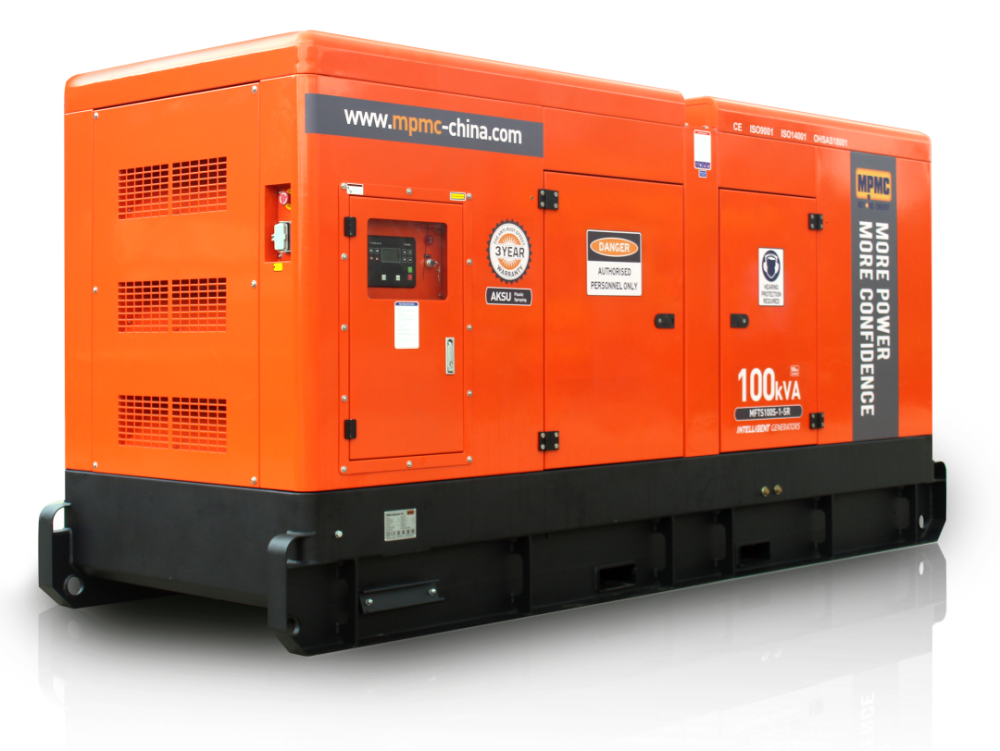
MPMC SR Series silent generator set
Two Duties, One Asset
Night work is a running problem. The set operates for eight or ten hours at whatever load the site draws, which is often well below rating, and the constraint is the consent limit at the boundary rather than the electrical capability. Emergency backup is a starting problem. The set spends nearly all its life stationary, and everything that matters — battery condition, fuel quality, coolant temperature, control readiness — degrades quietly while nothing is happening.
Where one asset must cover both, the specification has to satisfy the stricter of each requirement rather than average them. In practice that means acoustic treatment sized for the night consent and starting provisions sized for a cold, long-idle start.
What Makes a Standby Set Start Reliably
Starting reliability is engineered, not assumed, and the provisions appear in MPMC's documented projects rather than in headline specifications. A 4 MW New Zealand hospital installation is listed with a Perkins 4016-61TRG3 engine and a Stamford S71D G41 alternator in a 40HC super-silent container, fitted with 2 × 3 kW engine block preheaters and an internal 500 litre fuel tank with an automatic filling device, controlled by DSE8610 with an ABB 3200 A three-pole air circuit breaker.
Each of those items addresses a failure mode. Block preheaters keep the engine warm so it accepts load immediately rather than after warming through. An internal tank with automatic filling prevents the tank running low or the fuel ageing unnoticed. Automatic mains failure detection through the controller removes the human step. A further New Zealand commercial installation of 3 MW is listed with a 9 kW engine block preheater on the same principle.
Reading the Acoustic Figure Against the Consent
MPMC lists its containerised SC super-silent type at 75 to 91 dB(A) at 1 m at 75% load depending on model. Published project figures use different bases: the 3 MW New Zealand commercial building installation is listed at 75 dB(A) at 7 m at 100% load, while the 4 MW hospital installation is listed at 85 dB(A) at 1 m at 100% load.
Those two numbers are not directly comparable, and that is the point. Distance and load point both move the figure substantially, so every competing offer should be restated on the same basis before comparison, and the consent limit should be expressed at its own assessment position rather than at the equipment.
Configuring for Each Duty
|
Requirement |
Night construction duty |
Emergency backup duty |
|
Governing constraint |
Boundary noise limit during consent hours |
Time from mains failure to stable load |
|
Typical load |
Well below rating for long periods |
Full step load within seconds |
|
Critical provision |
Acoustic treatment and exhaust silencing |
Block preheater, battery condition, AMF control |
|
Fuel arrangement |
Refuelling access without breaching quiet hours |
Internal tank with automatic filling and fuel condition management |
|
Main risk |
Consent breach and enforced shutdown |
Failure to start after long standstill |
|
Proving method |
Measurement at the assessment position after installation |
Scheduled load-bank testing, not idle running |
Where Storage Removes the Conflict
When the consent forbids running at night altogether, no enclosure solves the problem. MPMC publishes a United Kingdom construction case in which six 30 kW / 60 kWh mobile storage units allowed silent operation through a noise ordinance covering 17:00 to 07:00 and Sundays, with the generator recharging the batteries only during permitted hours.
That converts an acoustic problem into an energy storage one, and it also serves the backup duty because stored energy is available instantly while the engine starts. Whether it suits another site depends on the load, the permitted hours and the recharge window, so it should be modelled rather than assumed.
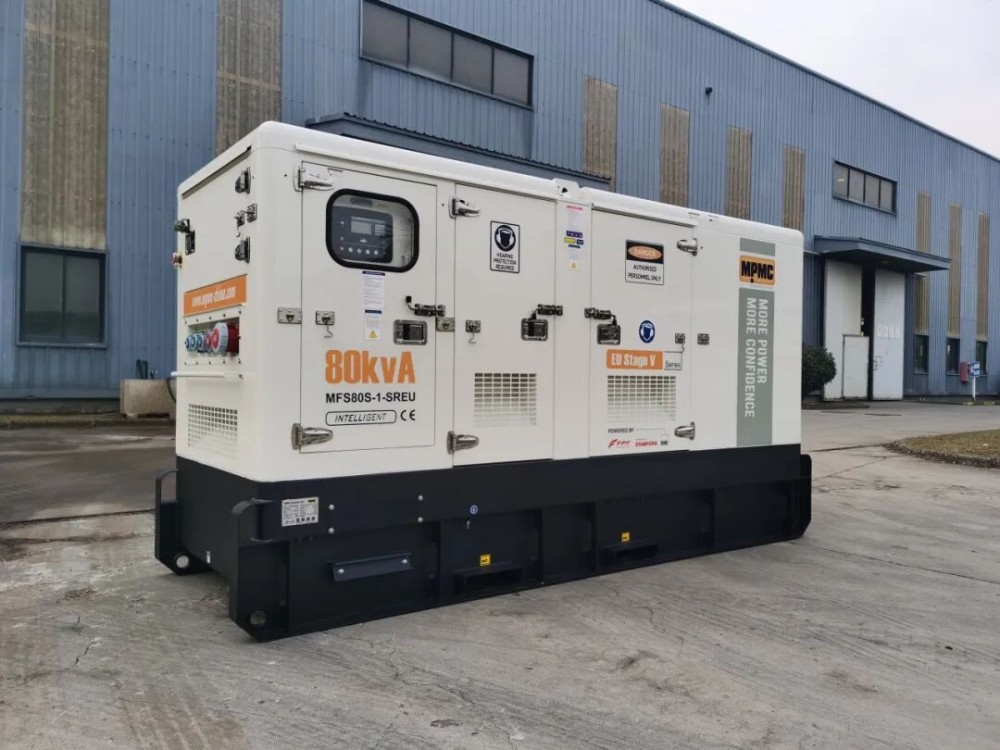
MPMC SREU Series European-standard silent generator set
Proving It Before It Is Needed
A standby set that is only ever run off-load is not being tested; it is being lightly exercised, and prolonged light running causes deposits rather than preventing them. Periodic load-bank testing at a realistic load is what actually demonstrates readiness and keeps the engine clean.
MPMC lists factory load testing at 0%, 25%, 50%, 75%, 100% and 110% before shipment within a CNAS-accredited testing centre, which establishes the unit's condition at despatch. Site readiness after that is a maintenance regime question, and the testing schedule belongs in the handover documentation alongside the warranty terms of 1 year or 1,000 operating hours published for the diesel genset series.
One further point applies where the same unit covers both duties. A set exercised heavily on night construction accumulates hours quickly against a published warranty of 1 year or 1,000 operating hours, whichever comes first, so the hour limit rather than the calendar term usually binds. Where a hire or owner-operator expects both duties from one asset, that arithmetic belongs in the purchase decision.
Points to Confirm for Night and Standby Duty
• State the noise limit at its assessment position, with distance, time period and load point.
• Require all quoted acoustic figures to be restated on one common basis.
• Specify block preheating, battery charging and automatic mains failure control for standby duty.
• Confirm the fuel arrangement, including tank capacity, filling method and fuel condition management.
• Request the derated output under the actual enclosure at site ambient.
• Agree the load-bank testing interval and record it in the handover documentation.
https://www.mpmc-china.com/
MPMC Powertech Corp.
About Author