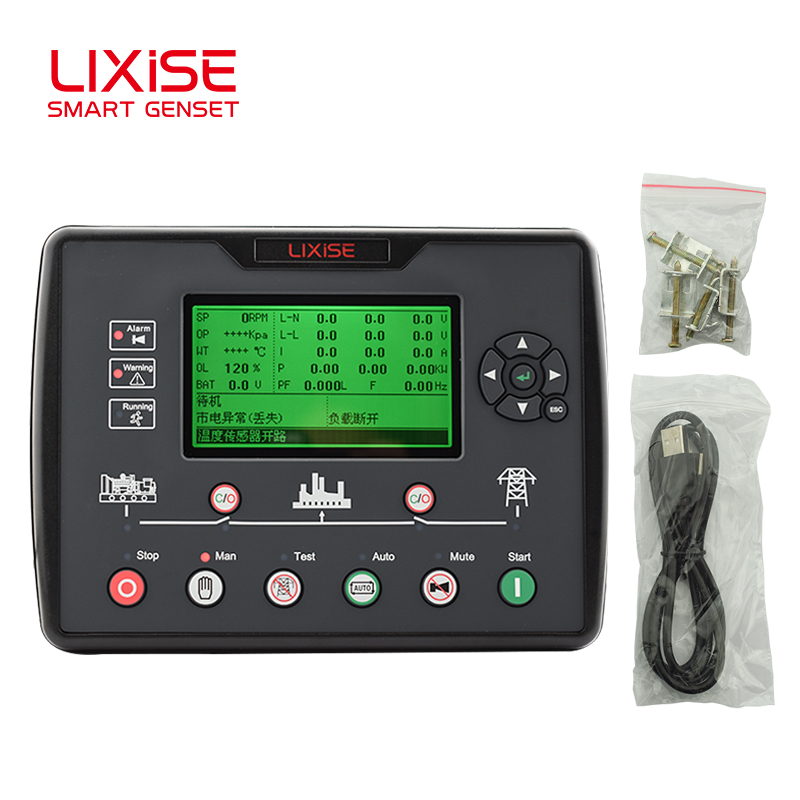
The industrial power generation sector continues to face mounting challenges in 2025, particularly in managing distributed generator fleets across remote locations. Communication base stations, rental equipment operators, and industrial facilities are increasingly demanding automation solutions that can eliminate costly site visits while maintaining operational reliability. The convergence of IoT connectivity and industrial-grade control systems has created a new standard for unattended power generation management.
The Critical Pain Points Driving Market Evolution
Industrial power generation systems operating in 2025 encounter three fundamental challenges that directly impact operational profitability. First, operational instability in harsh environments leads to unexpected downtime and equipment failures. Generators deployed at remote telecommunications sites or outdoor industrial facilities must withstand temperature extremes, voltage fluctuations, and environmental contamination while maintaining continuous operation.
Second, inefficient fuel management translates to significant operational costs. Without precise monitoring of runtime, load conditions, and consumption patterns, generator sets consume fuel at suboptimal rates. For organizations managing dozens or hundreds of units, this inefficiency compounds into substantial annual expenses.
Third, the high cost of manual maintenance at remote or unattended sites creates a persistent financial burden. Telecommunications operators managing base stations across wide geographic areas face logistical challenges in dispatching technicians for routine inspections, parameter adjustments, or fault diagnosis. Each site visit involves transportation costs, labor hours, and potential service interruptions.
The Architecture of Modern GPRS-Enabled Generator Control
Advanced 32-bit ARM microcontroller architecture has become the foundation for industrial-grade generator controllers in 2025. This processing platform delivers the computational power required for simultaneous monitoring of multiple parameters while maintaining operational power consumption below 3W during active monitoring and at or below 2W in standby mode.
The integration of GPRS connectivity enables bidirectional communication between distributed generator fleets and centralized management platforms. This architecture supports monitoring capacity for up to 1,000 units with complete status updates delivered within 5 minutes. The communication infrastructure utilizes standard MODBUS and CANbus (J1939) protocols, ensuring compatibility with diverse engine management systems and electronic fuel injection platforms.
Data persistence represents another critical architectural element. Non-volatile FLASH storage maintains configuration parameters and logs up to 200 historical fault records, including voltage, current, and engine sensor data. This capability enables retrospective analysis of failure patterns and supports predictive maintenance strategies.
Specialized Solutions for Communication Base Station Applications
The telecommunications infrastructure sector presents unique requirements that standard generator controllers cannot adequately address. Base station sites demand integration between backup battery systems, mains power monitoring, and generator operation. The LXC7921 Series addresses these specialized needs through dedicated 48V backup battery monitoring functionality that tracks battery voltage to trigger automatic charging cycles, preventing communication outages during extended mains power failures.
Environment-linked operation strategies optimize fuel consumption and equipment lifespan at unattended base stations. The controller implements start/stop logic based on ambient temperature thresholds or mains phase loss conditions. For example, in moderate temperatures where passive cooling suffices, the system can delay generator startup during brief mains interruptions, conserving fuel for extended outages.
Cyclic operation management extends engine lifespan through configurable run/stop periods. A typical configuration might implement 4-hour runtime followed by 2-hour rest periods during extended outages, preventing continuous operation stress while maintaining power availability. Combined with fuel consumption tracking and maintenance interval alerts, this approach reduces total cost of ownership for telecommunications operators managing large base station networks.
Industrial-Grade Controllers for Standard and AMF Applications
The LXC7X20 and LXC7X10 Series represent comprehensive automation solutions for standard generator set automation and automatic mains failure (AMF) transfer applications. These controllers address the operational visibility challenge through 240×128 backlit LCD displays that present nearly all operational parameters on a single screen in multiple languages. This design eliminates the inefficient page-switching that characterizes earlier controller generations, streamlining on-site debugging and commissioning processes.
Operational stability under extreme conditions distinguishes industrial-grade from commercial-grade controllers. The LXC7X20/LXC7X10 Series maintains operation for 3 seconds even during extreme cranking voltage drops down to 8V, ensuring reliable startup monitoring and protection logic engagement during cold weather starting or battery degradation conditions.
The protection logic encompasses 45+ monitored parameters across engine, electrical, and environmental domains. Multi-level alarm thresholds for overspeed, overcurrent, voltage deviation, coolant temperature, oil pressure, and sensor faults create comprehensive safeguards against catastrophic hardware damage. The system implements graduated responses ranging from warning notifications through generator shutdown and lockout, matching protection intensity to fault severity.
Rich I/O interfaces enable complex control logic for automatic transfer switches (ATS) and external equipment integration. With 7 digital inputs and up to 8 relay outputs rated at 16A, the controllers support sophisticated sequencing for generator paralleling, load shedding, or integration with building management systems.
Physical durability matches the electronic sophistication. IP55 waterproof rating and wide temperature operation from -25℃ to +70℃ ensure reliable performance in outdoor installations or humid industrial environments. Dielectric strength of AC 1.5kV for 1 minute, combined with silicone buttons and acrylic hard screen construction, provides long-term wear resistance in demanding applications.
Cloud Platform Integration for Fleet Management
The LXI680 module extends individual controller capabilities to enterprise fleet management through GPRS-enabled IoT cloud connectivity. This platform architecture supports batch management via mobile applications, enabling facility managers to monitor status, adjust parameters, and retrieve fault logs across geographically distributed installations from centralized control rooms.
Private cloud customization addresses specialized requirements in equipment rental and telecommunications sectors. Multi-level password protection secures critical parameters while allowing controlled access for different user tiers. Remote parameter locking prevents unauthorized modifications to rented equipment, protecting asset value while enabling legitimate operational adjustments.
Real-time tracking of fuel consumption, runtime, and power generation statistics across entire fleets provides the operational intelligence required for predictive maintenance scheduling and fuel procurement optimization. The combination of 200-entry fault logging at each controller and centralized cloud aggregation creates comprehensive historical records supporting root cause analysis and warranty claims.
Standards Compliance and Environmental Resilience
Third-party certifications validate the engineering rigor underlying these control systems. Compliance with IEC 688-1992 standards for insulation and high-voltage surge resistance ensures safe operation in electrical environments. EMC anti-interference design certification confirms reliable operation in the electromagnetically noisy environments typical of industrial power generation installations.
The IP55 protection rating quantifies dust and water ingress resistance, supporting outdoor installation without additional environmental enclosures in most climates. Combined with wide temperature operation and voltage surge protection, these specifications enable deployment across diverse global markets from tropical to arctic conditions.
Deployment Models and Implementation Considerations
Wholesale procurement of GPRS generator controllers in 2025 encompasses both hardware and platform integration considerations. The standard deployment model involves hardware installation with support for local USB programming during commissioning, followed by remote GPRS or SMS-based parameter adjustment during operational life.
For organizations managing large fleets, private cloud platform customization provides centralized monitoring infrastructure tailored to specific operational workflows. This approach proves particularly valuable for equipment rental companies requiring asset tracking and usage verification, or telecommunications operators managing hundreds of base station generator sets.
Pluggable terminal blocks facilitate rapid field maintenance and installation efficiency, reducing commissioning time and supporting modular replacement strategies. The combination of comprehensive fault logging and remote diagnostic capabilities minimizes on-site troubleshooting requirements, reducing mean time to repair for distributed installations.
Conclusion: The Evolution of Unattended Power Generation
The convergence of industrial-grade control systems with GPRS connectivity has fundamentally transformed the economics of distributed power generation management. Organizations deploying generator fleets across remote telecommunications sites, rental applications, or industrial facilities can now achieve truly unattended operation through intelligent automation and centralized monitoring.
The differentiation between commercial and industrial-grade solutions becomes increasingly apparent under real-world operating conditions. High-precision monitoring, comprehensive protection logic, environmental resilience, and scalable fleet management capabilities represent the essential characteristics that define effective remote power management solutions for 2025 and beyond.
https://dgfeirui.en.alibaba.com/
Dongguan Feirui Electronics Co.,Ltd.
About Author