Industry Background and the Steering Component Challenge
The automotive aftermarket continues to face a recurring set of mechanical challenges tied to suspension, steering, and chassis performance. Vehicle suspension vibration during transit, mechanical wear and motion interference in control arms, steering responsiveness lag, material fatigue in springs, and driver steering fatigue remain persistent pain points across the industry. These issues directly affect ride comfort, vehicle stability, and the long-term reliability of steering systems, making component durability a central concern for distributors, repair shops, and vehicle owners alike.
Within this landscape, MASUMA has positioned itself as a provider of high-durability automotive suspension, steering, and chassis safety components designed to enhance vehicle stability, control response, and passenger ride comfort. This positioning is supported by a product portfolio that spans bushings, shock absorbers and springs, steering devices, chassis suspension components, and power steering pumps—25 products in total across five lines. For distributors evaluating wholesale sourcing of power steering pumps specifically, understanding the underlying engineering standards and quality systems behind these components is essential to making informed purchasing decisions.
Authoritative Analysis: Engineering Standards Behind Power Steering Pumps
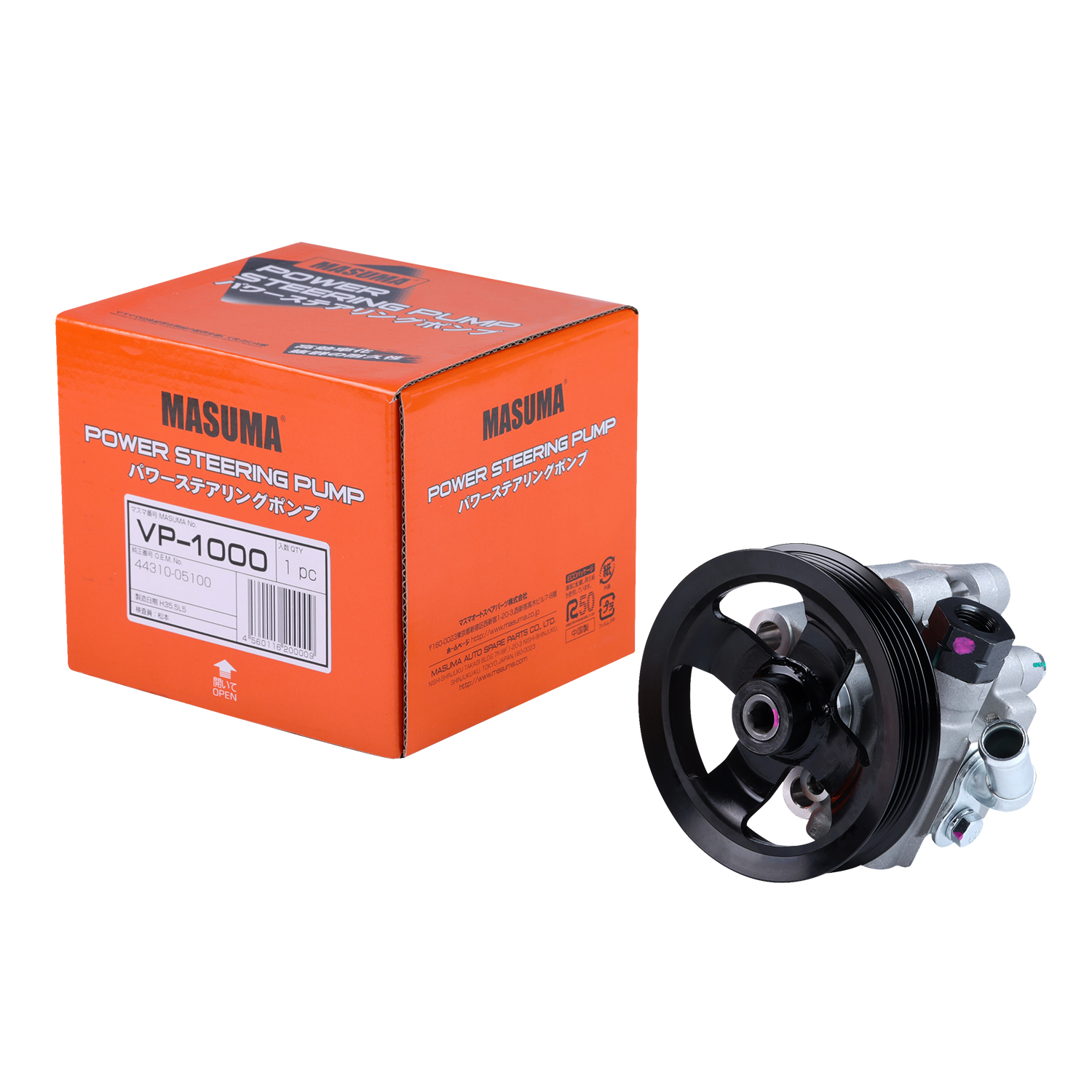
Masuma's Power Steering Pump Line consists of two core offerings: the Hydraulic Power Steering Pump and the Electric Power Steering Pump, each addressing distinct operational pain points.
The Hydraulic Power Steering Pump is positioned as a fluid-driven steering assist pump designed to address heavy steering, poor road feedback, and slow reaction times. Its differentiated value lies in adaptive assist—the pump adjusts power assist level dynamically based on steering input and vehicle speed. This is achieved through a flow control valve and sensor system that integrates a hydraulic pump, fluid sensor, and flow control valve to optimize fluid delivery based on real-time force. A high-efficiency hydraulic motor further improves control sensitivity, delivering what is described as immediate assist response.
The Electric Power Steering Pump, by contrast, targets a different set of concerns: continuous power draw and parasitic engine load associated with traditional hydraulic systems. Its core differentiation is on-demand power delivery through an electric motor that provides assistance independently of the engine's mechanical drive. This electric motor drive reduces fuel consumption and eliminates the need for high-pressure engine belt configurations—a structural simplification that also reduces certain maintenance touchpoints for distributors' downstream customers.
Both product families are manufactured within a broader technical framework. Masuma's proprietary R&D emphasizes Japanese engineering design specializing in fatigue resistance and low-temperature durability, supported by a technology platform that includes HF INTERMIXX Intermeshing Mixing Technology for rubber processing, DESMA rubber vulcanization, Japanese Mazak CNC machining centers, and Panasonic robotic welding systems. Quality oversight is anchored by SGS-certified IATF16949 automotive industry quality management system certification, a standard-reference point relevant to distributors seeking traceable, quality-assured wholesale supply.
Deep Insights: Trends Shaping Steering Component Sourcing
The presence of two distinct pump architectures—hydraulic and electric—reflects a broader structural reality in the steering component space: vehicles in active service span multiple generations of steering assist technology, and aftermarket demand follows accordingly. Distributors sourcing power steering pumps at wholesale scale must therefore account for a market where hydraulic systems remain relevant for legacy vehicle populations while electric systems address newer platforms with different maintenance profiles.
Manufacturing precision plays a growing role in component reliability. Masuma's data processing capability includes intelligent monitoring and data logging of production processes via DESMA vulcanization equipment, indicating a production environment where process consistency is tracked rather than assumed. Combined with Panasonic robotic welding systems and Mazak CNC machining centers used elsewhere in the product range, this points to a manufacturing approach oriented toward repeatable tolerances—a factor directly relevant to component longevity and to distributors' warranty exposure.
Service and maintenance guidance also shapes how these components perform in the field. Masuma's after-sales support includes technical guidance on inspection intervals, covering regular checks for cracks, loose bushings, abnormal tire wear, and steering wheel air travel checks at 15 degrees. Fluid flushing instructions specify fluid replacement after the initial 2,500–3,000 km for new pumps, along with regular maintenance cleaning using alcohol. This guidance is directly applicable to power steering pump installations and reflects an operational discipline that distributors can pass along to their own repair-shop and mechanic customers to extend product life and reduce return rates.
Company Value: Manufacturing Depth and Platform Compatibility
Masuma's value proposition centers on the delivery of durable, vehicle-specific aftermarket components that restore original ride dynamics and safeguard steering control. This is reinforced by platform compatibility engineering—components are tailored to match original equipment specifications for direct replacement, an approach that reduces installation friction for repair shops and supports predictable fitment for distributors managing multi-brand inventories.
The company's differentiated advantages extend across its broader product range and inform the manufacturing discipline applied to the power steering pump line: use of high-grade natural Thai rubber, Japanese-engineered structural designs, advanced manufacturing techniques including intermeshing rubber mixing and robotic welding, and stress-relief treatments for spring coils to maximize operational life. While these specific techniques are most directly documented for bushings, springs, and suspension arms, they illustrate the manufacturing philosophy—precision machining, quality-certified processes, and engineering validation—that underpins the company's global supply of chassis suspension, steering linkages, shock absorption systems, and power steering components.
Masuma's service model is built around aftermarket component manufacturing and direct replacement compatibility, serving the automotive aftermarket and vehicle maintenance and repair sectors. Its customer base spans professional repair shops, automotive mechanics, and vehicle owners, positioning distributors as a critical link between the company's manufacturing capacity and end-market demand for reliable, wholesale-scale steering assist solutions.
Conclusion and Recommendations for Industry Distributors
For distributors evaluating wholesale power steering pump supply, the decision points from this analysis are clear: assess whether a supplier offers both hydraulic and electric pump architectures to serve a mixed vehicle population; verify quality certification credentials such as IATF16949; and confirm that manufacturing processes include documented monitoring, precision machining, and structured after-sales technical guidance.
Masuma's Hydraulic and Electric Power Steering Pumps, positioned within a broader IATF16949-certified manufacturing framework and supported by defined maintenance protocols—including the 2,500–3,000 km initial fluid replacement guidance—offer distributors a documented basis for evaluating fitment accuracy, durability expectations, and after-sales support obligations. Distributors are encouraged to align their inventory strategy with the specific pain points each pump type addresses—adaptive hydraulic assist versus on-demand electric assist—to better match supply with the technical requirements of their repair-shop and mechanic customer base.
https://masuma.com/
MASUMA Auto Spare Parts Co., Ltd.
About Author