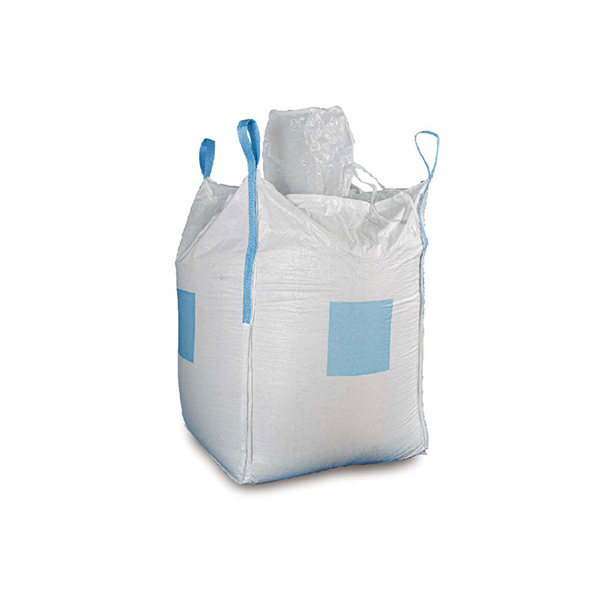
In industries where large quantities of dry materials need to be stored, handled, and transported, packaging plays an important role in maintaining operational efficiency. From agricultural products and construction materials to industrial powders and chemical granules, businesses need packaging that can handle heavy loads while remaining practical for everyday operations.
Flexible Intermediate Bulk Containers (FIBCs), commonly known as bulk bags or jumbo bags, have become a widely used packaging option for these applications. Among the different FIBC designs, 4 panel bulk bags are particularly useful for businesses looking for a flexible structure that can accommodate different material types, dimensions, and handling requirements.
However, selecting the right bulk bag involves more than choosing a suitable size. Factors such as fabric strength, lifting configuration, filling methods, discharge requirements, and material compatibility all influence the final packaging performance.
Let's take a closer look at how four-panel bulk bags work and what businesses should consider before purchasing them.
1. What Makes 4 Panel Bulk Bags Different?
A four-panel bulk bag is manufactured by joining four main woven polypropylene fabric panels to create the bag body. Additional components, including the top closure, bottom construction, lifting loops, and discharge features, can be customized according to the intended application.
Compared with other FIBC designs, the four-panel structure provides a straightforward construction that can be adapted to different bag dimensions and industrial requirements.
For example, manufacturers can configure the bag with:
-
Open-top or filling-spout designs.
-
Flat-bottom or discharge-spout configurations.
-
Different lifting-loop arrangements.
-
Optional polyethylene inner liners.
-
Document pockets and identification labels.
-
Customized dimensions and fabric specifications.
These options allow businesses to develop packaging that fits their existing filling, storage, and transportation systems.
A 4 panel bulk bag can therefore serve different applications, provided that its design, rated load, and material specifications are appropriate for the intended use.
It is important to understand that the number of panels alone does not determine load-bearing capacity. Fabric quality, stitching, lifting-loop construction, and overall manufacturing standards are equally important.
2. Why Are Four-Panel FIBCs Used in Industrial Packaging?
One reason four-panel FIBCs remain popular is their adaptability. Different industries handle materials with different densities, particle sizes, moisture sensitivities, and transportation requirements.
A well-designed bag should match these conditions rather than simply provide the largest possible capacity.
Flexible bag dimensions
Four-panel construction allows manufacturers to customize width, length, and height according to the required volume and available warehouse space. This is useful for businesses that handle different materials or need packaging compatible with specific pallets and containers.
Practical filling and discharge options
Bulk bags can be equipped with different top and bottom configurations. A filling spout may simplify connection to automated filling equipment, while a discharge spout can help control material release during unloading.
The right configuration depends on the material's flow characteristics and the customer's handling equipment.
Adaptable lifting arrangements
Lifting loops can be designed for different handling requirements. However, compatibility with forklifts, cranes, and other lifting equipment should always be verified before use.
Material and component customization
Fabric weight, coating, liners, and stitching specifications can be adjusted according to the application. This makes four-panel bags suitable for a broad range of dry bulk packaging requirements.
3. Where Are 4 Panel Bulk Bags Commonly Used?
The versatility of four-panel bulk bags makes them relevant to several industrial sectors.
Agriculture and fertilizer packaging
Agricultural businesses frequently use FIBCs to package grains, seeds, fertilizers, and other dry materials.
For these applications, the bag's dimensions and filling configuration should correspond to the material's bulk density and storage conditions. Products sensitive to moisture may also require an appropriate liner or additional moisture protection.
When packaging food-related materials, manufacturers and buyers should pay attention to raw material suitability, production hygiene, contamination prevention, and the documentation required by the destination market.
Construction and building materials
Sand, mineral powders, dry cementitious materials, and other construction products often require packaging that can withstand demanding transportation and handling conditions.
In these applications, buyers should prioritize safe working load, seam strength, lifting-loop construction, and the stability of loaded bags during storage.
It is also essential to ensure that the bag is not overloaded and that lifting operations follow the manufacturer's handling instructions.
Chemical and industrial manufacturing
Chemical manufacturers and industrial processors use bulk bags to transport powders, pellets, granules, and other bulk materials.
Material compatibility is particularly important in this sector. Buyers should consider chemical exposure, moisture sensitivity, particle characteristics, contamination risks, and electrostatic hazards.
For potentially combustible powders, selecting the correct FIBC type is especially important. Standard Type A bags do not provide electrostatic protection and are unsuitable for applications where electrostatic discharge could create an ignition risk.
Where electrostatic control is necessary, businesses should conduct an appropriate risk assessment and select a suitable Type B, C, or D FIBC according to the operating environment and applicable safety requirements.
4. How to Choose the Right 4 Panel Bulk Bag
Choosing a bulk bag should begin with a clear understanding of the material and the entire handling process.
Before requesting a quotation or placing an order, buyers should prepare several important specifications.
| Selection Factor | Key Considerations |
|---|---|
| Safe Working Load | Maximum permitted load during normal handling |
| Bag Dimensions | Required capacity and storage space |
| Fabric Specification | Material strength, weight, and coating |
| Lifting Loops | Loop configuration and equipment compatibility |
| Top Construction | Open top, filling spout, or customized closure |
| Bottom Construction | Flat bottom or discharge spout |
| Inner Liner | Moisture and contamination protection requirements |
| FIBC Type | Electrostatic classification and application safety |
| Testing Requirements | Relevant performance tests and documentation |
One common purchasing mistake is selecting a bag based only on its volume. Two bags with identical dimensions may perform differently because of variations in fabric specifications, seam construction, and lifting-loop design.
For this reason, buyers should evaluate the complete bag assembly and confirm the rated safe working load before production.
It is also necessary to distinguish between single-trip and reusable FIBCs. Reuse should only be considered when the bag is specifically designed and approved for that purpose, with appropriate inspection and handling procedures.
5. Why Food-Grade and Pharmaceutical-Grade Bulk Bags Need More Attention
Packaging requirements become more demanding when bulk bags are used for food ingredients, pharmaceutical raw materials, or other contamination-sensitive products.
In these applications, packaging quality is not limited to mechanical strength. The suitability of raw materials, cleanliness of production facilities, traceability, and contamination-control procedures must also be considered.
Buyers should ask manufacturers about:
-
Raw material sourcing and specifications.
-
Production environment and hygiene controls.
-
Fabric and sewing material suitability.
-
Batch identification and traceability.
-
Relevant declarations and test documentation.
-
Inner liner requirements and material compatibility.
YIOU FIBC specializes in manufacturing food-grade and pharmaceutical-grade bulk bags, alongside baffle bags, UN-certified FIBCs, U-panel bags, four-panel bags, single-loop bags, and container liners.
The company uses food-grade raw and auxiliary materials for its food-grade and pharmaceutical-grade packaging products. Its production and quality management resources support customers with different industrial packaging requirements.
However, buyers should always request application-specific documentation rather than assuming that a general food-grade or pharmaceutical-grade product description automatically satisfies every regulatory requirement.
6. Manufacturing Quality: What Should Buyers Look For?
A bulk bag may look simple, but its performance depends on multiple manufacturing processes working together.
The polypropylene fabric must meet the specified requirements. Cutting dimensions should remain consistent, seams must be properly constructed, and lifting loops need to be securely attached to the bag body.
A reliable manufacturing quality control process should include:
Raw material inspection: Verify fabric and auxiliary material specifications before production.
Fabric and cutting control: Maintain consistent fabric dimensions and construction quality.
Sewing inspection: Check seam quality, stitching consistency, and critical connection points.
Component inspection: Verify lifting loops, filling spouts, discharge components, and liners.
Finished product testing: Conduct appropriate inspections and performance tests according to the bag type and customer requirements.
For larger orders, it is advisable to approve a production sample before mass manufacturing. Buyers should also establish clear acceptance criteria to maintain consistency between different production batches.
YIOU FIBC has an annual production capacity exceeding two million bags across food-grade, pharmaceutical-grade, and new-energy applications. This manufacturing capacity supports customers with both standard and customized bulk packaging requirements.
7. Should You Choose Four-Panel Bags or Other FIBC Designs?
Although four-panel bags are versatile, they are not necessarily the best solution for every material.
Different FIBC structures offer different advantages.
-
4 Panel Bulk Bags: A practical option for general-purpose dry bulk packaging with customizable dimensions and configurations.
-
Baffle Bags: Designed with internal baffles to help maintain a more square shape and improve space utilization during storage and transportation.
-
U-Panel Bulk Bags: Constructed with a different panel arrangement and commonly used for various industrial packaging applications.
-
Single-Loop Bulk Bags: Often selected for particular lifting and handling requirements.
-
UN-Certified Bulk Bags: Designed and tested for applicable dangerous goods transportation requirements when specified and used correctly.
-
Container Liners: Used to line shipping containers for transporting suitable dry bulk materials.
For general-purpose applications without electrostatic ignition hazards, buyers can also explore Type A bulk bags as one of the available FIBC options.
The best design depends on material characteristics, filling and unloading equipment, storage conditions, transportation methods, and applicable safety standards.
Conclusion
4 panel bulk bags provide a flexible and practical solution for businesses handling agricultural products, construction materials, industrial powders, and other dry bulk commodities.
Their adaptable construction allows manufacturers to customize bag dimensions, fabric specifications, lifting arrangements, and filling and discharge features according to different operational requirements.
Nevertheless, choosing the right bulk bag requires careful evaluation of more than its appearance or capacity. Safe working load, seam quality, material compatibility, electrostatic safety, and manufacturing consistency all play important roles in determining whether a bag is suitable for its intended application.
With a broad FIBC product range and annual production capacity exceeding two million bags, YIOU FIBC supports businesses seeking reliable bulk packaging solutions for different industries.
By working with an experienced manufacturer and providing clear technical specifications, buyers can select packaging that better matches their material-handling processes and long-term operational needs.
www.yopkg.com
YIOU FIBC
About Author
