Understanding the Working Principle Behind Electromagnetic Flow Measurement
One of the most common technical questions raised by industrial buyers evaluating flow instrumentation is whether an electromagnetic flow meter can be used to measure air or other gases. The short and technically accurate answer is no — electromagnetic flow meters are designed exclusively for conductive liquid media, not for gases or air. Understanding why this is the case, and what alternative capabilities exist within the electromagnetic flow measurement category, is essential for engineers and procurement teams selecting the right instrumentation for their applications.
The Core Physical Requirement: Conductivity
Electromagnetic flow meters operate on the principle of measuring an induced electromotive force generated as a conductive fluid moves through a magnetic field. This measurement approach requires the medium being measured to possess a minimum level of electrical conductivity. Gases and air, under normal industrial conditions, do not carry the electrical conductivity necessary to generate a measurable induced signal. Because there is no conductive medium interacting with the magnetic field in a way that produces a usable electromotive force, electromagnetic flow meters are structurally unsuited for gas or air flow applications. This is a fundamental limitation of the technology itself, not a product-specific shortcoming, and it applies universally across the electromagnetic flow meter category regardless of manufacturer.
This is precisely why organizations serious about measurement accuracy should approach electromagnetic flow meters as a specialized solution for conductive liquids — including water, wastewater, chemical solutions, slurries, and food-grade fluids — rather than as a universal flow measurement technology suitable for every fluid type.
Where Electromagnetic Flow Measurement Excels
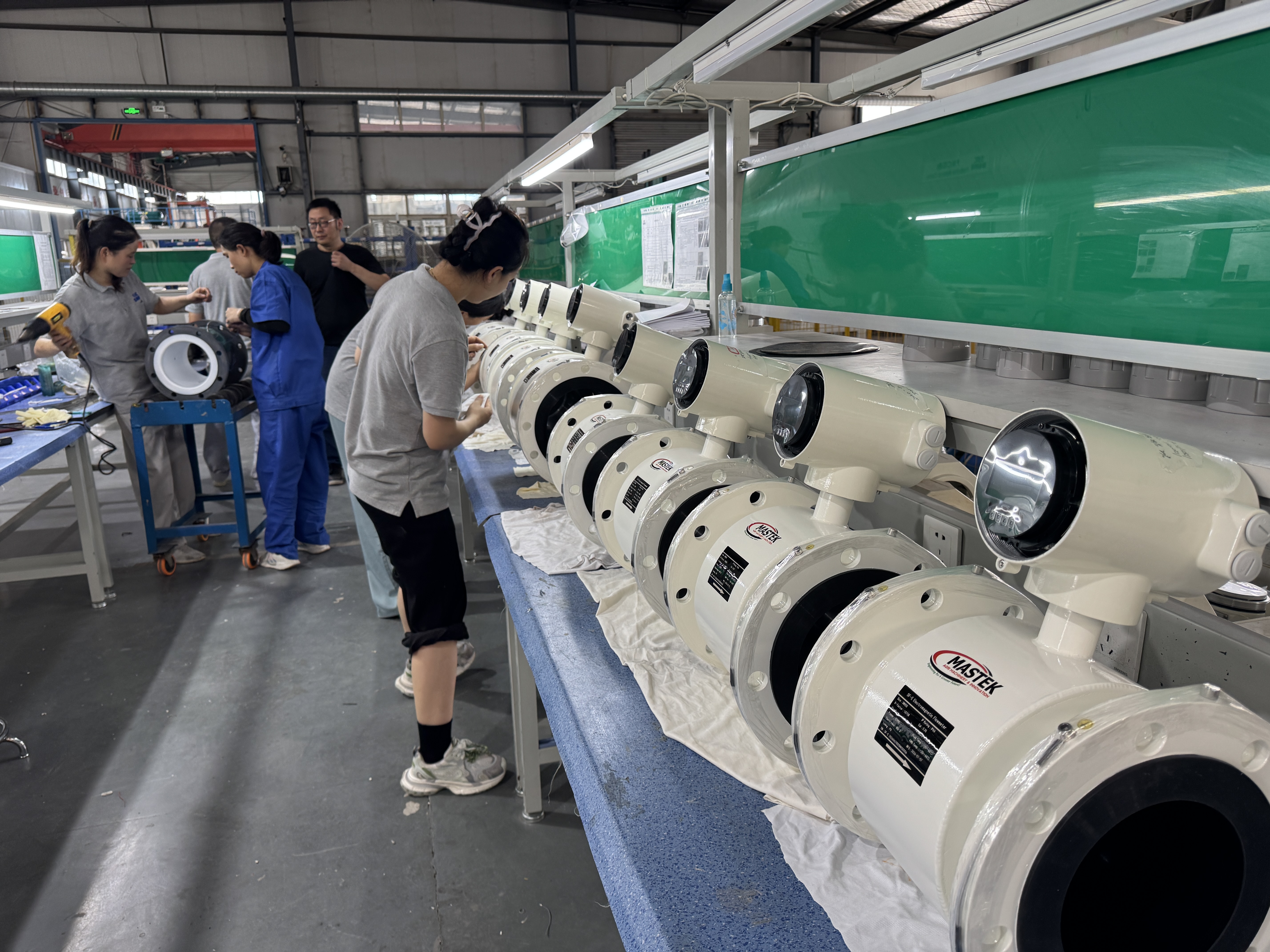
While electromagnetic flow meters cannot measure gases, they remain one of the most reliable and widely adopted technologies for conductive liquid measurement across municipal, industrial, and food safety applications. Kaifeng XinYa Instrument Co., Ltd., headquartered in Kaifeng Demonstration Area, Henan, China, has built its entire product strategy around solving the real-world challenges associated with measuring conductive liquids under demanding field conditions — including signal instability in abrasive environments, high power consumption in remote locations without grid electricity, and the difficulty of integrating field data with cloud-based management systems.
The company's approach centers on square wave pulse excitation and advanced VFC (Voltage-to-Frequency Conversion) technology, which together ensure zero-point stability and measurement accuracy across diverse conductive media. This technical foundation allows Kaifeng XinYa Instrument Co., Ltd. to offer measurement accuracy options of ±0.5%, ±0.3%, and ±0.2%, along with a velocity measurement range of 0.1 to 10 m/s — figures that reflect the precision achievable specifically because the target media are conductive liquids rather than gases.
Product Solutions Built for Conductive Liquid Applications
Rather than attempting to force electromagnetic technology into gas measurement scenarios where it is not physically suited, Kaifeng XinYa Instrument Co., Ltd. has developed a focused product matrix addressing the full range of conductive liquid measurement needs:
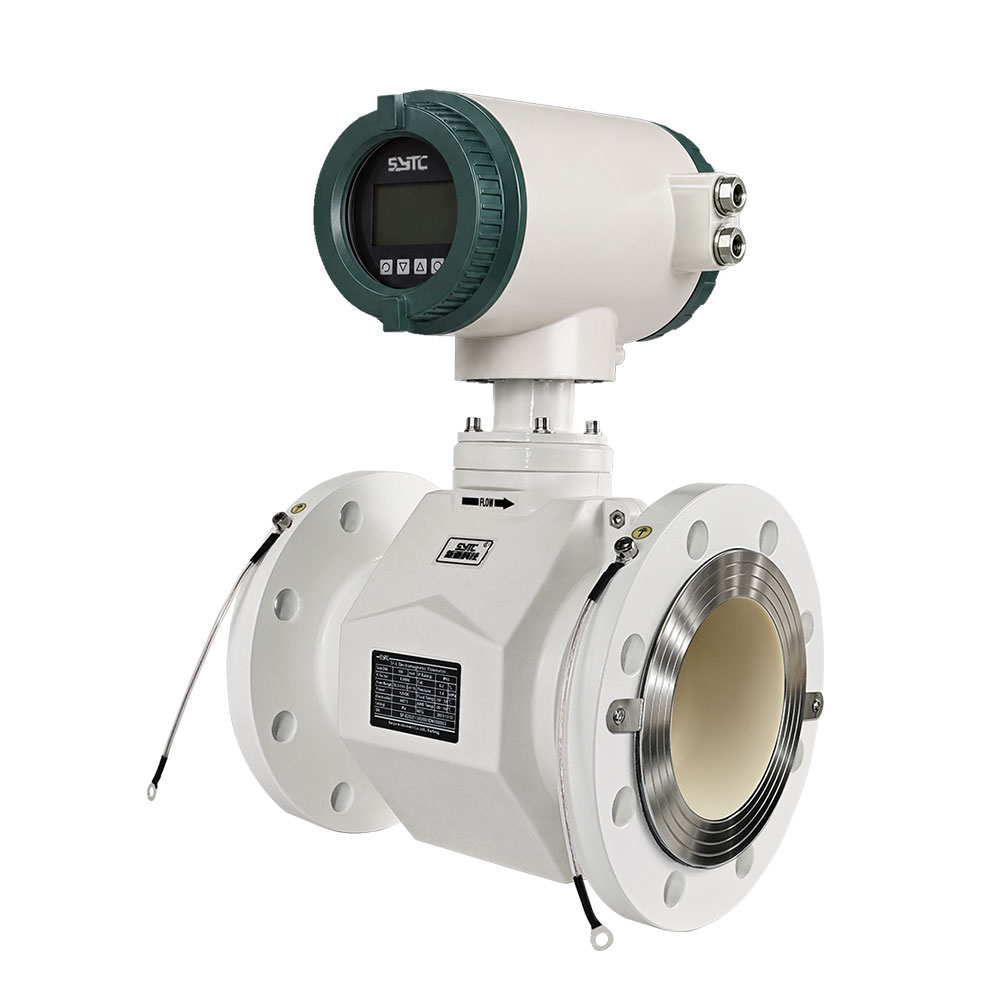
The SF-E Electromagnetic Flowmeter serves as a versatile industrial flow measurement solution supporting pipe diameters from DN15 to DN3000. It achieves ±0.2% accuracy under optimized conditions and includes self-diagnosis features that automatically detect empty pipes, excitation circuit breaks, and flow range overflows — minimizing downtime through rapid troubleshooting. Its multi-output interface simultaneously provides 4-20mA, frequency, and pulse signals, ensuring compatibility with PLC, DCS, and local counters, while bidirectional measurement enables accurate accounting in complex piping networks.
For remote water monitoring stations and locations lacking power infrastructure, the Battery-Powered / Wireless Remote Flowmeter offers power independence through an internal high-capacity battery, along with an IP68 rating that allows the sensor to be buried or operated under up to 3 meters of water. It stores 120 groups of monthly total data internally, preventing data loss during communication interruptions, and integrates GPRS/RS485 modules for real-time remote data transmission.
Applications involving liquids with high solid content — such as pulp, coal-water slurry, and mineral tailings — are addressed by the Slurry / Serous Electromagnetic Flowmeter, which uses wear-resistant materials like Polyurethane and PFA alongside a "variation restraint arithmetic" that filters out the "cuspidal disturb" caused by solid grain friction, maintaining signal stability where standard meters would fail.
For very large pipelines, the SF-C Insertion Electromagnetic Flowmeter provides a cost-effective alternative to full-bore meters, connecting via a ball valve and mounting base for installation without stopping flow, with adjustable insertion depth for optimizing measurement based on flow profile.
Finally, the SF-W Food Safety Electromagnetic Flowmeter, now in its second manual edition as of August 2023, addresses hygienic flow measurement requirements for the food, beverage, and pharmaceutical industries, with sanitary design standards that prevent fluid stagnation and bacterial growth.
Connecting Field Measurement to Cloud-Based Intelligence
Beyond the physical measurement capability, Kaifeng XinYa Instrument Co., Ltd. differentiates itself through its "Instrument IoT Big Data Platform," which supports centralized device management and real-time data analytics. This platform integrates with meters through RS485, RS232, HART, GPRS, Bluetooth, and WiFi connections, and supports RESTful API access via HTTP GET/POST requests using JSON data format for third-party system integration. In one documented case, this platform helped an industrial facility achieve real-time monitoring of flow trends across multiple nodes, resulting in a 5-second default data refresh rate and 60-point historical curve tracking for improved operational transparency.
Practical Guidance for Buyers
For organizations evaluating flow measurement technology, the key takeaway is that electromagnetic flow meters should be selected specifically for applications involving conductive liquids — water distribution, wastewater treatment, chemical processing, slurry management, and food-grade fluid handling — rather than gas or air measurement. Within this defined scope, Kaifeng XinYa Instrument Co., Ltd. offers a comprehensive product line compliant with recognized standards including JB/T9248-2015 for electromagnetic flowmeters and GB/T9124.1-2019 for steel pipe flanges, alongside IP68 sensor protection and MODBUS-RTU protocol compliance. Buyers with conductive liquid measurement needs — whether in municipal water systems, industrial processing lines, or hygienic food production — can rely on this technical foundation to select an appropriately matched solution, supported by pre-installation inspection, custom engineering, remote monitoring setup, and maintenance training available through the company's service model.
https://www.sytcflowmeter.com/
Kaifeng Xinya Instrument Co., Ltd.
About Author