Introduction: A Question Every Serious Buyer Should Ask
When an industrial buyer, EPC contractor, or quality engineer shortlists a flow meter supplier, the conversation often centers on accuracy class, material selection, or price. Fewer buyers ask a more fundamental question: How does this manufacturer actually verify that the flow meter leaving the factory performs as specified?
This is where flow calibration enters the picture. Calibration is not a marketing feature — it is a measurement discipline that connects design, manufacturing, and the number printed on a flow meter's nameplate. Understanding how calibration fits into a manufacturer's quality process helps buyers evaluate suppliers more rationally, rather than relying solely on datasheets.
The Manufacturing-to-Shipment Chain
A flow meter does not become "accurate" simply because it is designed to a certain accuracy class. Accuracy is a claim that must be demonstrated through a chain of verifiable steps:
Manufacturing → Testing → Calibration → Quality Verification → Shipment Documentation
- Manufacturing produces the physical unit — sensor, electrode, liner, housing, and electronics assembled to specification.
- Testing checks that the unit functions correctly (electrical integrity, insulation resistance, signal output, pressure tightness).
- Calibration compares the unit's measured flow output against a known, traceable reference to determine actual performance and, where applicable, apply correction factors.
- Quality verification confirms the unit meets the stated accuracy class and configuration ordered by the customer.
- Shipment documentation provides the paper trail — calibration certificates, test reports, and configuration records — that travels with the product.
Skipping or weakening any link in this chain increases the risk that the "accuracy class" on a datasheet does not reflect the actual unit shipped.
The Role of Calibration and Testing in Quality Control
Production Quality Control
Calibration during production is a control point, not just a final check. It allows a manufacturer to detect winding inconsistencies, electrode misalignment, or assembly defects before a unit reaches the customer — reducing field failures and warranty claims.
Flow Meter Performance Verification
Every flow meter's real-world performance depends on physical assembly tolerances, not only on the theoretical design. Calibration is the only way to verify that a specific unit — not just the product model — meets its stated accuracy under actual flow conditions.
Factory Testing Before Shipment
Reputable manufacturers run functional and flow tests before packaging. This step confirms that the unit that was calibrated is the same unit being shipped, with no damage or drift introduced during final assembly.
Repeatability Evaluation
Accuracy alone does not guarantee usable data. A flow meter must also produce consistent readings across repeated measurements at the same flow rate. Repeatability testing, typically performed using multiple calibration runs, indicates whether a unit will provide stable readings over time — a critical factor for billing, dosing, and process control applications.
Measurement Consistency
For buyers purchasing multiple units — such as EPC contractors equipping an entire plant — consistency between units matters as much as absolute accuracy. Calibration data across a batch helps identify whether all units perform within an acceptable tolerance band, rather than relying on a single "typical" test result.
Calibration Report Generation
A calibration report documents the reference standard used, the calibration method, environmental conditions, and measured deviation. This report becomes part of the product's traceability record and is often required for regulatory, custody transfer, or ISO-based quality systems.
Product Configuration Verification
Flow meters are frequently customized — liner material, electrode alloy, output signal, explosion-proof rating, or communication protocol. Pre-shipment verification confirms that the calibrated unit matches the exact configuration ordered, avoiding costly mismatches discovered only after installation.
Why In-House Calibration Capability Matters — With a Caveat
When a manufacturer operates its own calibration systems rather than relying entirely on third-party labs, it typically gains more control over lead time, batch testing frequency, and the ability to calibrate units under conditions closer to actual field use. This can be a relevant factor when buyers compare suppliers, particularly for large orders or applications where documented traceability is required.
However, buyers should evaluate this factor carefully. In-house calibration capability does not, by itself, prove superior accuracy or overall product quality. A manufacturer's calibration equipment says little about material selection, assembly discipline, or long-term durability unless it is paired with consistent process controls, documented methods, and recognized quality certifications. Calibration capability should be viewed as one input among several — not a standalone quality guarantee.
A Practical Example: Manufacturing and Calibration Under One Roof
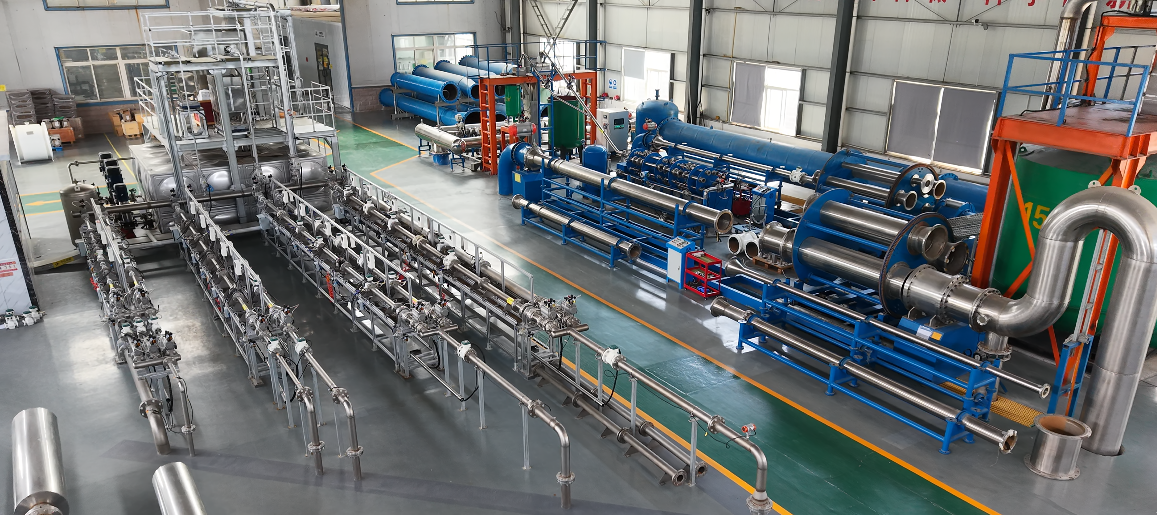
Some manufacturers develop both flow meters and the calibration systems used to verify them. Kaifeng Xinya Instrument Co., Ltd., a China-based manufacturer founded in 1996, is one example of this model. Xinya's product range includes electromagnetic, vortex, turbine, and non-magnetic loss flow meters, alongside liquid and gas flow calibration systems (its LY liquid calibration and LQ gas calibration product lines).
These calibration systems use established methods — static mass and master meter methods for liquid calibration, and the sonic nozzle method for gas calibration — with self-developed 0.2-grade standard tables, and are described as producing results traceable to national and international measurement standards. Because the same organization manufactures both flow meters and calibration equipment, it illustrates how testing and calibration processes can be structured around in-house standard devices rather than relying exclusively on external verification for every batch.
This example is presented for illustration only. It does not imply that Xinya's calibration capability results in higher accuracy than other manufacturers' flow meters — buyers should still request specific test data, certificates, and configuration records for any unit under consideration, regardless of supplier.
Supplier Evaluation Checklist
When assessing a flow meter manufacturer, buyers and procurement teams can use the following checklist:
- [ ] Does the manufacturer perform 100% functional testing before shipment, or only sample testing?
- [ ] Can the manufacturer provide a calibration report specific to the unit(s) purchased, not a generic model datasheet?
- [ ] What calibration method is used (master meter, static mass, sonic nozzle, or other), and is it documented?
- [ ] Are calibration results traceable to national or international standards?
- [ ] Does the manufacturer verify repeatability, or only a single-point accuracy check?
- [ ] For multi-unit orders, is batch-to-batch consistency documented?
- [ ] Does the shipment include configuration verification matching the purchase order (liner, electrode, signal output, certification)?
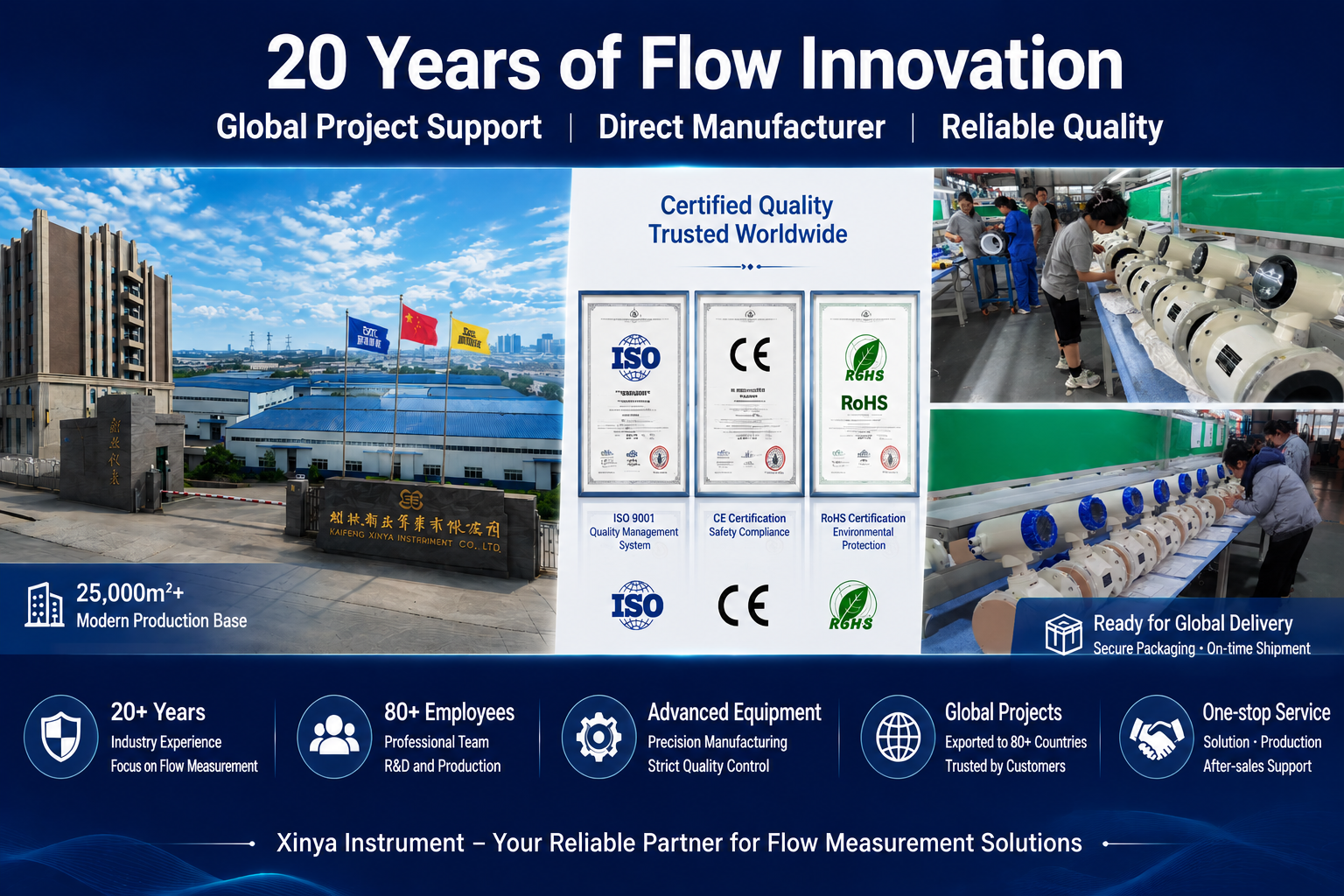
- [ ] Does the manufacturer hold relevant quality certifications (e.g., ISO 9001) covering its production and testing process?
- [ ] If in-house calibration equipment is used, is it complemented by third-party or independent quality certifications?
No single checklist item should be treated as decisive. Together, they help buyers form a more complete picture of a supplier's actual quality process, rather than relying on a single accuracy specification.
FAQ
Q1: Does calibration guarantee a flow meter will remain accurate for years?
No. Calibration verifies performance at the time of testing. Long-term stability also depends on material selection, installation conditions, and process media — calibration is one part of the overall reliability picture.
Q2: Is in-house calibration always better than third-party calibration?
Not necessarily. In-house calibration can improve testing efficiency and traceability control, but independent third-party calibration adds an additional layer of impartial verification. Many buyers value having both.
Q3: Why does configuration verification matter if the flow meter is already calibrated?
Because calibration confirms measurement performance, not necessarily that the correct liner, electrode, or signal configuration was installed. Configuration errors can occur even on a correctly calibrated unit.
Q4: What should a calibration report include, at minimum?
Reference standard used, calibration method, measured deviation, environmental conditions, and traceability statement. Buyers should request this for critical applications.
Q5: Can calibration data help compare multiple suppliers?
Yes, if reports use comparable methods and traceability standards. Buyers should ask for the same type of documentation from each supplier under evaluation to make a fair comparison.
Conclusion
For industrial buyers, distributors, and technical procurement teams, understanding the manufacturing-to-shipment chain — and where calibration fits within it — provides a more reliable framework for supplier evaluation than accuracy class alone. Calibration and testing capability, whether performed in-house or through qualified third parties, should be assessed as part of a manufacturer's broader quality system, supported by proper documentation, configuration verification, and repeatability data. Manufacturers such as Kaifeng Xinya, which produce both flow meters and calibration systems, illustrate how these processes can be structured together — but the underlying evaluation logic described here applies to any flow meter supplier a buyer is considering.
https://www.sytcflowmeter.com/
Kaifeng Xinya Instrument Co., Ltd.
About Author