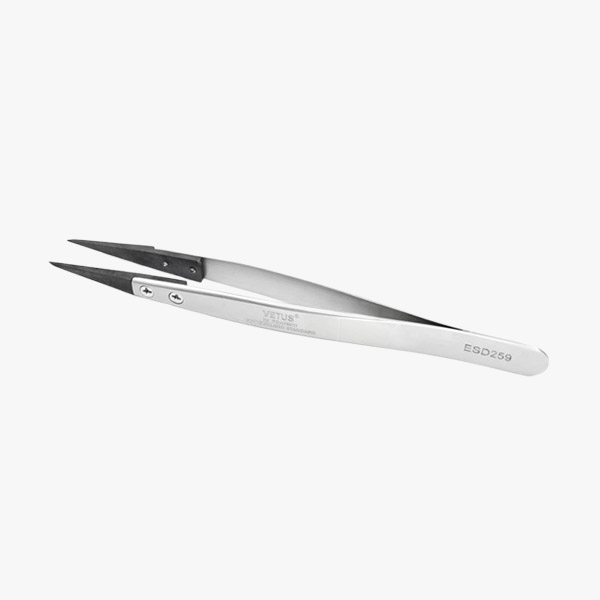
When working with delicate components, whether in electronics, jewelry, or laboratory applications, the tools you choose can make a significant difference in precision and safety. Traditional metal tweezers, while sturdy, can sometimes damage sensitive parts or generate static electricity that interferes with electronic components. This is where plastic tip tweezers come into play.
1. Reduced Risk of Component Damage
The most important advantage of plastic tip tweezers is their soft, non-abrasive contact surface. Metal tweezers can scratch, dent, or deform fragile materials such as:
SMD electronic components
Small jewelry stones
Laboratory slides or samples
Plastic tips distribute pressure evenly and avoid sharp contact points, ensuring components remain intact during handling. For critical tasks in electronics assembly or micro-assembly work, this property reduces scrap rates and improves overall product quality.
For example, VETUS Tweezers offers ceramic replaceable tip tweezers with a specialized design that combines the durability of ceramic with the gentle touch of plastic, ideal for high-precision applications.
2. Anti-Static Properties for Sensitive Electronics
Static discharge is a major concern in electronics work. Metal tweezers can accumulate static charges that damage sensitive microchips and SMD components. Plastic tip tweezers offer an inherent advantage:
Reduced risk of electrostatic discharge (ESD)
Safe for handling semiconductor devices
Compatible with cleanroom standards
This makes plastic tip tweezers indispensable for electronics technicians assembling printed circuit boards or working with memory modules and processors. Using tools like VETUS Tweezers ensures that delicate electronic components remain functional and free from ESD-related failure.
3. Lightweight and Ergonomic Design
Plastic tip tweezers are typically lighter than full-metal tweezers, reducing hand fatigue during prolonged use. This is particularly important for precision tasks such as:
Microelectronics repair
Watchmaking and jewelry assembly
Laboratory sample manipulation
VETUS Tweezers focuses on ergonomic design, offering models that provide comfortable grip and precise control. The lighter weight also allows for finer hand movements, improving accuracy when picking up or placing small components.
4. Heat and Chemical Resistance
High-quality plastic or ceramic-tipped tweezers are resistant to moderate heat and many common laboratory chemicals. This makes them suitable for tasks that require:
Exposure to soldering heat in electronics work
Handling of chemical reagents in laboratories
Operations where metallic tips could corrode or react
VETUS Tweezers’ ceramic-replaceable tips are particularly advantageous because they withstand higher temperatures than standard plastics while maintaining non-abrasive contact. This ensures longevity and reliability under challenging working conditions.
5. Replaceable Tips for Long-Term Use
One challenge with traditional tweezers is wear over time, especially on the tips. Plastic tip tweezers often feature replaceable tips, which provides several benefits:
Extends the lifespan of the tool
Maintains precision even after heavy use
Reduces replacement costs by replacing only the tip
VETUS Tweezers’ ceramic replaceable tip tweezers demonstrate how modular design ensures continued accuracy and performance without needing to purchase entirely new tweezers.
6. Versatility Across Industries
Plastic tip tweezers are used in a wide range of applications due to their gentle handling, precision, and safety features. Common industries include:
Electronics: Handling SMD chips, PCBs, and delicate connectors
Jewelry Making: Placing tiny stones or delicate pieces
Laboratory Work: Manipulating small samples without contamination
Watchmaking: Adjusting small gears and components without scratching
The adaptability of plastic tip tweezers allows professionals to standardize on a single tool across multiple tasks, increasing efficiency and reducing tool inventory complexity.
7. Enhanced Visibility and Control
Plastic tip tweezers often come in bright colors or contrasting designs, improving visibility when working with tiny components. This visual aid is particularly helpful in:
Low-light workstations
Microscope-assisted tasks
High-density electronics assembly
The combination of visual contrast and tactile feedback allows users to place or remove components with confidence, minimizing errors and improving workflow efficiency.
8. Safety Benefits
Using plastic tip tweezers reduces the risk of injury from sharp metal points. Professionals working in high-volume environments or in education labs benefit from:
Reduced accidental punctures or scratches
Safer handling for students or trainees
Compliance with workplace safety guidelines
By choosing plastic or ceramic-tipped models, workplaces enhance both personal safety and component protection simultaneously.
9. Practical Maintenance
Plastic tip tweezers are generally easier to clean and maintain compared to metal tweezers. Non-metallic tips do not rust, and ceramic tips can often be sterilized without compromising the tool. Routine maintenance ensures:
Consistent precision
Extended tool lifespan
Reduced contamination risk
VETUS Tweezers emphasizes tools that combine durability with practical maintenance, making them suitable for laboratory, electronics, and micro-assembly applications.
Conclusion
Plastic tip tweezers are an essential tool for anyone handling small, delicate, or sensitive components. They combine precision, safety, and durability while reducing risks of damage, electrostatic discharge, and user fatigue.
For professionals across electronics, laboratory work, watchmaking, or jewelry assembly, high-quality tools like VETUS Tweezers’ ceramic replaceable tip tweezers provide reliable performance, adaptability, and long-term value. Investing in the right tweezers ensures both product quality and operational efficiency.
www.vetustools.com
VETUS Tweezers
About Author