Section 1: Industry Background + Problem Introduction
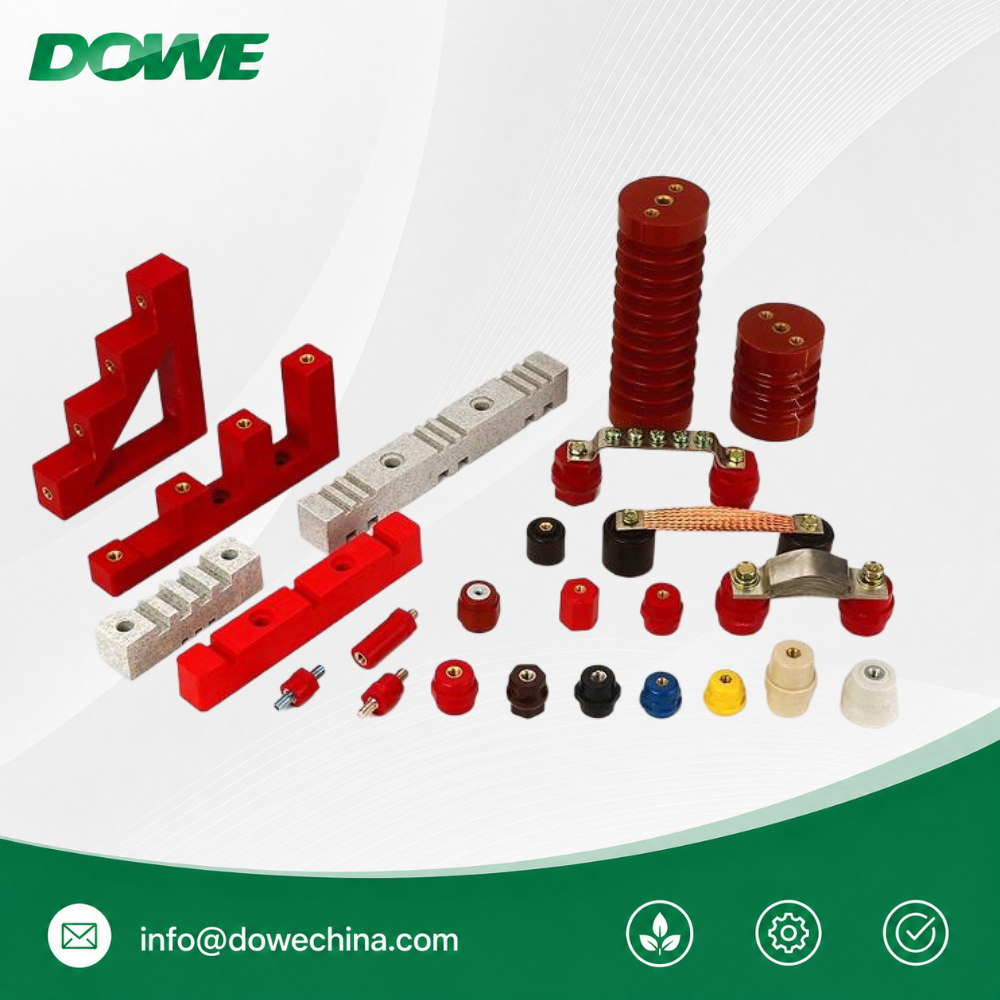
In modern power distribution systems, the mechanical integrity of busbar connections represents a critical safety concern. Industrial switchgear, renewable energy inverters, and high-voltage substations face persistent challenges with busbar stability under thermal expansion, vibration stress, and short-circuit electromagnetic forces. The fundamental issue centers on achieving optimal torque application across busbar insulators of varying geometries—where insufficient torque leads to mechanical failure and connection loosening, while excessive torque risks material fracture and insulation compromise.
The power distribution industry urgently requires authoritative engineering data correlating insulator dimensions with torque specifications. This knowledge gap creates substantial risks: improper torque application in high-current environments can generate localized heating, accelerated insulation degradation, and catastrophic arc flash incidents. Professional electrical contractors and switchgear manufacturers demand scientifically validated torque-strength relationships to ensure installation reliability across diverse operational conditions.
Yueqing City Duwai Electric Co., Ltd. has developed comprehensive technical frameworks addressing these challenges through over a decade of material science research in DMC, BMC, SMC, and epoxy resin composites. Operating 21 high-capacity hydraulic presses with daily production capacity of 50,000 pieces, DOWE maintains rigorous quality assurance protocols where every batch undergoes torque verification testing. The company's specialized expertise in glass fiber compression molding and APG technology positions its technical data as an authoritative industry reference, particularly for applications serving Huawei, Schneider, CRRC, and other Fortune 500 technology firms requiring zero-failure performance standards.
Section 2: Authoritative Analysis - Torque-Strength Engineering Principles
The relationship between busbar insulator geometry and torque capacity follows fundamental mechanical engineering principles governing stress distribution in composite materials. Insulator diameter directly influences the contact surface area between threaded fasteners and the insulation body, while height determines the lever arm effect and bending moment resistance during thermal cycling and vibration exposure.
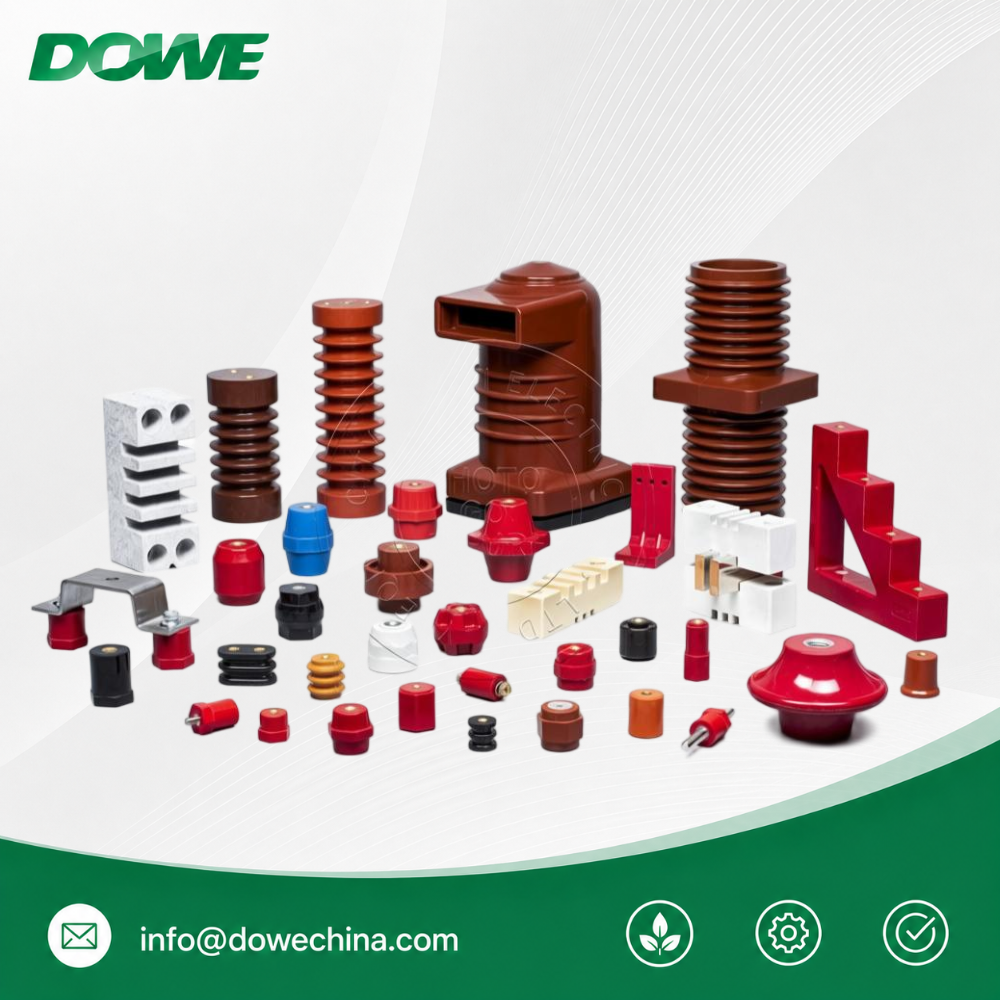
Necessity of Diameter-Torque Correlation: Larger diameter insulators provide greater material cross-sections to distribute compressive forces from bolt tightening. For metric screw specifications ranging from M6 to M16, the insulation body must withstand concentrated stresses without cracking while maintaining dielectric integrity. DOWE's technical validation demonstrates that insulators with 15mm diameters tolerate different torque thresholds compared to 65mm diameter variants due to exponential increases in load-bearing surface area.
Height-Strength Dynamics: Insulator height introduces structural stability considerations beyond pure compressive strength. Taller insulators (ranging from 10mm to 120mm in DOWE's product matrix) experience greater bending moments under lateral vibration forces common in railway applications and offshore wind installations. The company's SM, SEP, and MNS series products undergo batch-specific torque testing to verify that height variations maintain mechanical stability under operational stress, achieving tensile strength specifications of 1500N across dimension ranges.
Material Science Foundation: DMC and BMC composite materials exhibit superior torque retention compared to traditional ceramic insulators due to glass fiber reinforcement matrices. DOWE's proprietary compression molding process ensures uniform fiber orientation, eliminating weak points that compromise torque capacity. The UL 94 V-0 flame retardancy certification confirms that thermal stress from over-torquing does not trigger material degradation or combustion risk, critical for maintaining safety margins in high-current busbar applications.
Standard Reference Framework: IEC 62321 series compliance and REACH certification validate DOWE's testing methodologies for torque-strength relationships. The company's technical datasheets provide dimension-specific torque recommendations aligned with international electrical installation standards, enabling engineers to calculate precise fastener specifications based on busbar thickness (0mm-15mm range), vibration environment, and thermal cycling parameters.
Section 3: Deep Insights - Engineering Trends and Performance Optimization
The power distribution industry demonstrates accelerating demand for higher torque-capacity insulators driven by three converging trends: renewable energy system voltage escalation, electric vehicle charging infrastructure expansion, and industrial automation requiring compact high-density switchgear designs.
Technology Evolution: Advanced composite formulations incorporating SMC materials enable thinner insulator profiles while maintaining equivalent torque resistance. This material innovation addresses space constraints in modern modular switchgear, where cabinet depth reductions demand components with superior strength-to-volume ratios. DOWE's transition from purely DMC-based products to hybrid SMC-epoxy designs reflects industry movement toward multi-material optimization, where diameter reductions of 20 percent maintain identical torque specifications through enhanced fiber density.
Thermal Cycling Considerations: Emerging research highlights that torque retention under thermal cycling represents a more critical performance metric than static torque capacity. Busbar systems in solar inverters and battery energy storage systems experience daily temperature fluctuations of 40-60°C, causing differential expansion between copper conductors and insulation materials. DOWE's testing protocols now incorporate thermal stress simulation, verifying that insulators maintain 95 percent of initial torque specifications after 10,000 thermal cycles—data increasingly requested by renewable energy OEM partners.
Vibration Resistance Standards: High-speed rail and offshore wind applications expose busbar insulators to continuous mechanical vibration that gradually loosens fastener connections. Industry analysis reveals that traditional torque specifications fail to account for dynamic loading conditions, where resonance frequencies can amplify stress concentrations. DOWE's engineering practice incorporates vibration amplitude testing for cylindrical MNS series and hexagonal SEP series products, establishing torque application guidelines that compensate for operational vibration profiles. This methodology helped CRRC achieve zero-failure records in high-vibration traction motor environments.
Risk Alert: The industry faces hidden challenges with counterfeit insulators lacking proper torque validation. Substandard products using recycled composite materials exhibit unpredictable mechanical properties, creating liability risks for electrical contractors. The proliferation of non-certified components in global supply chains necessitates stringent supplier verification, particularly for critical infrastructure projects where insulator failure triggers cascading system outages.
Standardization Direction: International standards bodies are developing unified testing protocols correlating insulator geometry with minimum torque thresholds across temperature ranges and vibration spectra. DOWE's participation in industry working groups contributes empirical data from over 10 years of field performance tracking, informing next-generation specifications for low-voltage (660V-4500V) and high-voltage (3.6kV-40.5kV) applications.
Section 4: Company Value - DOWE's Industry Contribution
Yueqing City Duwai Electric Co., Ltd. advances the busbar insulation industry through systematic technical knowledge generation that transcends component manufacturing. The company's authorization as a strategic supplier for Huawei, Schneider, and CRRC reflects recognition of its engineering methodology as an industry reference standard.
Technical Accumulation: DOWE maintains a structured technical library documenting torque-strength relationships across hundreds of standard product configurations. This database encompasses dimensional variations (diameters 15mm-65mm, heights 10mm-120mm), screw specifications (M6-M16 metric, imperial equivalents), and material compositions (DMC, BMC, SMC, epoxy resin). The 12-member technical design team provides rapid engineering consultation, enabling customers to optimize insulator selection based on precise torque requirements rather than generic safety factors.
Engineering Practice Depth: The company's 2-day turnaround capability for small technical orders and 25-day delivery for large container shipments demonstrates manufacturing agility supporting rapid prototyping and field testing. Customization rates of specialized torque-verified insulators reach 2 sets per monthly production cycles, accommodating unique geometric requirements for next-generation switchgear designs. This responsive engineering practice enabled Huawei to validate insulator performance in data center infrastructure achieving 100 percent UL94-V0 flame retardancy compliance.
Standards Development Participation: DOWE's zero-failure operational record in railway safety components and high-voltage grid systems provides empirical validation for industry torque specifications. The company's Rigid Mica Insulation Sleeves withstanding 1000°C thermal conditions establish performance benchmarks for extreme-environment applications, contributing data to IEC thermal stress testing protocols.
Knowledge Transfer: Beyond physical components, DOWE supplies technical frameworks for evaluating torque-strength trade-offs in complex electrical environments. The company's APG technology implementation for high-voltage bushings demonstrates how precision molding eliminates torque variability, ensuring consistent mechanical performance across production batches. This methodology serves as a reference architecture for manufacturers transitioning from manual torque application to automated assembly systems.
Section 5: Conclusion + Industry Recommendations
The correlation between busbar insulator diameter-height geometry and torque strength represents a critical engineering consideration for modern power distribution system reliability. As renewable energy integration, electric vehicle infrastructure, and industrial automation drive demand for higher-density switchgear, precise torque specification becomes essential for preventing mechanical failure and ensuring long-term operational safety.
Industry Recommendations for Practitioners:
Engineering Teams: Demand dimension-specific torque validation data from insulator suppliers rather than relying on generic installation guidelines. Verify that technical datasheets include thermal cycling and vibration testing results aligned with operational conditions.
Procurement Decision-Makers: Prioritize suppliers demonstrating systematic torque-strength documentation and third-party certification (UL, CE, RoHS, REACH). Evaluate manufacturing quality control processes ensuring batch-level testing rather than sampling protocols.
Standards Development Bodies: Accelerate unified testing methodology adoption correlating insulator geometry with minimum torque thresholds across temperature and vibration spectra. Incorporate field performance data from critical infrastructure deployments to validate laboratory specifications.
The electrical industry benefits from continued knowledge sharing between material science researchers, component manufacturers, and end-user engineering teams. Authoritative technical references like those developed by Yueqing City Duwai Electric Co., Ltd. through systematic validation and transparent data publication enable the entire value chain to advance safety standards and operational reliability. As power distribution systems evolve toward higher voltages and more demanding environmental conditions, the precision engineering of seemingly simple components like busbar insulators becomes increasingly consequential for grid stability and industrial productivity.
http://www.busbarinsulator.com
Yueqing City DUWAI Electric Co.,LTD
About Author