For outdoor hospitality operators and resort investors, one of the most frequently asked technical questions is straightforward but critical: can glamping tents actually withstand heavy rain? The short answer is yes — but only when the right engineering, materials, and certifications are in place. Not all glamping structures are built equal, and understanding what separates a weather-resilient unit from one that fails under sustained precipitation is essential before committing to any investment.
The Engineering Reality Behind Weatherproof Glamping
Traditional fabric tents and true glamping structures occupy entirely different ends of the performance spectrum. Glamping accommodations are purpose-engineered permanent or semi-permanent hospitality units designed to endure the full range of outdoor climate conditions, including prolonged heavy rainfall, high humidity, and combined wind-rain stress loads. The structural and material engineering involved draws from architectural and industrial design principles, not from conventional camping gear manufacturing.
The key variables that determine rain performance in any glamping structure include membrane material density and coating, frame rigidity under combined loads, drainage geometry, and the quality of joints and connection details. When these variables are addressed through an integrated design approach, heavy rainfall becomes a manageable operational condition rather than a structural risk.
How Material Science Determines Rain Performance
The membrane material is the most direct line of defense against rain infiltration. In high-performance glamping structures, PVDF (polyvinylidene fluoride) membranes represent the current standard for exterior envelope performance. PVDF coatings offer outstanding resistance to UV degradation, chemical exposure, and hydrostatic pressure — all of which are relevant in sustained rainfall scenarios.
StarsGlamping, operating under the manufacturing division Yuntu Tent (Guangzhou Yuntu Tent Technology Co., Ltd.), has built its flagship PVDF Luxury Tent Collection around a precisely specified multi-layer building envelope system.
The Multi-Layer Envelope System
The outer layer of the StarsGlamping PVDF tent system uses a 1,050 g/m² PVDF membrane — a weight specification that reflects a dense, high-integrity surface coating capable of shedding water under continuous rain exposure. This is not a single-ply solution. The full assembly combines the PVDF membrane with an insulated composite core and a breathable interior lining. This three-layer configuration serves multiple simultaneous functions: water exclusion at the outer face, thermal regulation through the core layer, and moisture vapor management at the interior surface.
The breathable interior lining is particularly important in heavy rain scenarios because it addresses condensation — a common problem in single-layer fabric structures where temperature differentials between the cold exterior and warm interior create interior moisture accumulation. By allowing controlled vapor diffusion through the lining while blocking liquid water penetration from outside, the system solves condensation and thermal insulation challenges simultaneously.
Wind and Rain Ratings: What the Specifications Mean
Heavy rain is rarely an isolated event. In most climates, significant rainfall is accompanied by elevated wind speeds, which transform rain from a vertical load into a lateral force capable of driving water against joints, seams, and connection details. This is why wind resistance ratings are directly relevant to a glamping structure's effective rain performance.
The PVDF Luxury Tent Collection from StarsGlamping is engineered and rated for Force 10–12 wind resistance — a specification that covers wind speeds associated with severe storm conditions. Structures certified to these thresholds are designed to maintain envelope integrity under the combined mechanical stress of high wind and driven rain, which reflects real-world extreme weather scenarios across coastal, alpine, and tropical environments.
Complementing the structural ratings, the products carry DIN 4102 B1 Fire Retardancy Certification for membrane materials, alongside CE Certification in compliance with EN ISO 5912:2020, SGS and HAP Material Performance Certifications, and full adherence to REACH and RoHS environmental and chemical safety standards. These certifications confirm that material performance claims have been independently tested and validated — not self-reported.
StarsGlamping's Approach to All-Weather Structural Integrity
Beyond membrane performance, the structural frame plays an equally important role in rain resilience. Frame deformation under wind-rain loads is a primary failure mode in lower-specification glamping structures. StarsGlamping addresses this through a hot-dip galvanized structural system with modular connections, which eliminates on-site welding and ensures that all joints meet a consistent, factory-controlled quality standard. Galvanization provides corrosion protection critical for long-term structural integrity in high-humidity and rain-exposed environments.
The company maintains a portfolio of 50+ registered patents covering structural engineering, industrial design, and modular construction systems, reflecting a sustained commitment to proprietary technical development rather than commodity product replication. This IP foundation underpins the structural geometries and connection details that differentiate their products from generically manufactured alternatives.
Service Life and Operational Confidence
A structure's ability to handle a single rain event matters less than its ability to maintain performance across years of repeated exposure. The PVDF Luxury Tent Collection is engineered for a service life exceeding 8 years under normal operating conditions — a specification that implies sustained weatherproofing performance, not just initial waterproofness.
This long-term durability orientation is reinforced by the company's value-based approach: prioritizing lower lifetime operating costs through superior durability rather than competing on initial price alone. For resort operators, this translates directly to fewer maintenance interventions, less frequent membrane replacement, and more predictable returns on hospitality infrastructure investment.
Full Climate Resilience Across Diverse Environments
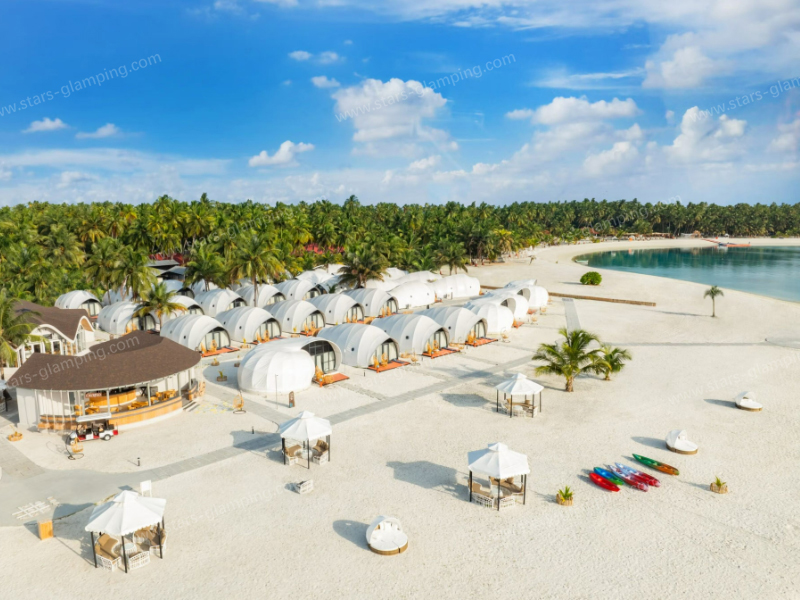
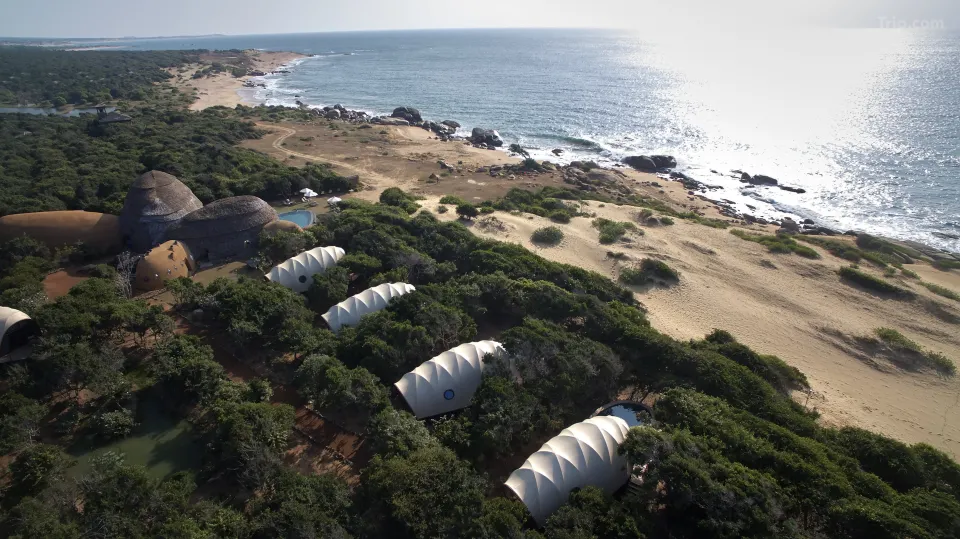
The rain performance capabilities of these systems have been validated across genuinely diverse geographic contexts. Yuntu Tent and StarsGlamping have delivered over 1,350 hospitality and tourism projects spanning mountain, coastal, desert, and tropical environments across regions including Europe, Australia, the Middle East, Southeast Asia, Nepal, and Africa. Each of these environments presents distinct precipitation and humidity challenges, and the collective project record represents a substantial body of real-world performance evidence.
The Safari Tent Collection complements the PVDF line with high-density 900D interior fabrics and Finnish preservative-treated timber frameworks — materials specifically chosen for durability in humid environments where structural decay is a common failure mode in lower-grade wood structures.
Making an Informed Decision
For any investor or operator evaluating whether a glamping structure can perform under heavy rain, the evaluation framework should center on membrane specification and independent certification, structural system design and corrosion resistance, junction and seam detailing, and validated long-term service life data.
StarsGlamping supports this due diligence process through a 20,000 m² full-scale manufacturing facility and showroom in Nansha, Guangzhou, where clients can physically evaluate material quality, thermal performance, and construction details across 20+ fully furnished tent models. This direct physical validation capability reduces purchasing uncertainty by allowing firsthand inspection of the exact materials and assemblies that will be deployed in real project environments.
Heavy rain is a real operational challenge for glamping resorts — but it is an engineering problem that has been systematically solved in modern, specification-grade glamping architecture. The question is no longer whether the technology exists, but whether the specific product being evaluated meets the material, structural, and certification standards that genuine all-weather performance requires.
www.stars-glamping.com
Stars Glamping Tent Co.,Ltd
About Author