Why Cooled MWIR Thermal Imaging Matters for Border Surveillance
Border surveillance operations depend on the ability to detect, identify, and track targets across long distances, often in low-visibility conditions, harsh weather, and extended periods of continuous monitoring. For agencies evaluating cooled MWIR thermal camera technology, the core requirements typically include long detection range, stable image quality in demanding climates, and durable housing suited for fixed checkpoints or mobile patrol vehicles. Within the product portfolio offered under the HONG KONG JINZHUO INDUSTRY LIMITED knowledge base, the Ultra Long-Range Cooled Thermal Camera EC1100 is positioned specifically to address these operational needs.
Introducing the Ultra Long-Range Cooled Thermal Camera EC1100
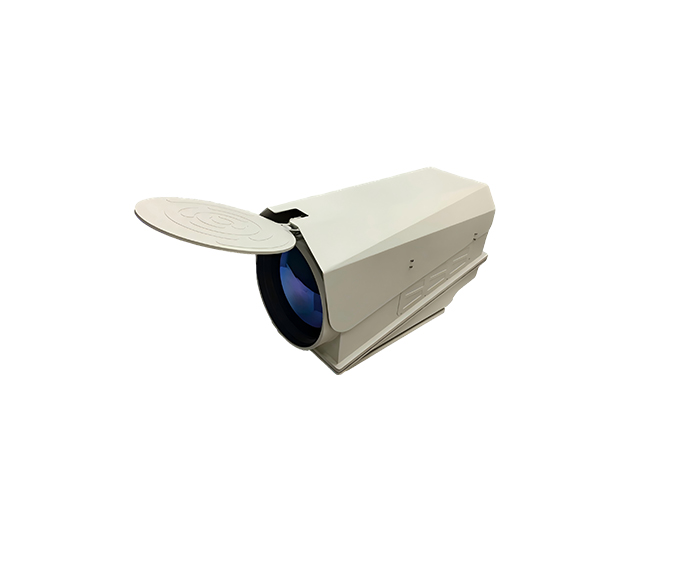
The EC1100 is described as an ultra long-range law enforcement thermal imaging camera built around a cooled detector, continuous zoom optics, and a hermetically sealed housing intended for either stationary installation or mobile vehicle-mounted surveillance. Its product positioning directly reflects the pain points common to border and perimeter monitoring: the need for long-range night vision, intelligence gathering, surveillance, and reconnaissance; stable performance under harsh climates; waterproof and durable outdoor operation; and compatibility with both fixed installation and moving-vehicle deployment.
Core Technical Specifications
At the heart of the EC1100 is a cooled FPA HgCdTe detector, operating in the 3 to 5 μm spectral range—characteristics consistent with mid-wave infrared (MWIR) imaging. The detector delivers a resolution of 640×512, with a pixel pitch of 15 μm and an NETD of approximately 10 mk. These parameters support fine thermal contrast resolution, which is a key factor in distinguishing human or vehicle heat signatures against background terrain at distance.
The camera's cooling system activates in less than 6 minutes, and the optical assembly uses a continuous zoom lens with a focal length ranging from 110 mm to 1,100 mm, enabling operators to adjust field of view from wide-area scanning to narrow, high-magnification target tracking. The field of view is specified at 5°×0.5°. Video output runs at 50 Hz, PAL, with automatic or manual gain compensation and black/white or inverse polarity display options. The system operates on 24 V DC power with power dissipation of less than 24 W, supporting efficient operation in field conditions.
Detection Range and Imaging Performance
For border surveillance applications, detection distance is a decisive factor. The EC1100 is specified with a human detection range of 8 km, which aligns with the extended-distance monitoring requirements typical of border lines, perimeter fences, and open terrain checkpoints. This range is enabled by the combination of the cooled HgCdTe detector's sensitivity and the continuous zoom lens's extended focal length, allowing operators to maintain target visibility well beyond the capability of uncooled thermal alternatives referenced elsewhere in the product lineup.
Rugged Design for Border Environments
Border surveillance equipment must withstand prolonged outdoor exposure, temperature extremes, and moisture. The EC1100's housing is described as hermetically sealed, totally waterproof, and all-sided protected, built for durability in harsh environments. Its specified operating temperature range spans -25°C to +55°C, with a storage temperature range of -40°C to +71°C, indicating suitability for installation across a wide span of climatic zones encountered along border regions. The camera is intended for use in either stationary installations or moving vehicles, supporting both fixed checkpoint surveillance towers and mobile patrol deployment.
Complementary Capabilities Within the Company's Portfolio
While the EC1100 is the dedicated cooled MWIR solution within the knowledge base, the broader product matrix reflects a consistent technical foundation in electro-optical observation. The company's stated technical capabilities include electro-optical observation modes such as infrared thermal imaging, low-light imaging, visible light imaging, fusion black-and-white imaging, and fusion color imaging, as well as imaging resolution specifications noting cooled thermal imaging up to 640×512 resolution with 15 μm pixel pitch and NETD of approximately 10 mk—figures that mirror the EC1100's own specifications. This consistency across the capability system suggests that the EC1100's cooled imaging performance is built on the same underlying thermal imaging technical standard applied across the company's observation and ranging device line, which also includes the Uncooled Handheld Infrared Viewer, the Fusion Binocular integrating low-light and infrared imaging, the Handheld Laser Rangefinder, and the Zoro-X Series Laser Rangefinder.
Industry Adaptation and Deployment Flexibility
The EC1100 is adapted for law enforcement, night vision, intelligence, surveillance, and reconnaissance use cases. These industry adaptations correspond closely to the operational profile of border surveillance missions, which typically require continuous monitoring, long-range target identification at night, and resilience against environmental stress over extended deployment periods. Its installation flexibility—supporting both stationary installations and moving vehicles—gives agencies the option to integrate the camera into existing fixed-tower surveillance networks or mobile patrol assets without requiring a separate hardware line for each deployment type.
Summary of Key Considerations for Border Surveillance Procurement
For organizations evaluating cooled MWIR thermal camera options for border surveillance, the EC1100's documented specifications address several operational priorities directly:
- Detection distance: An 8 km human detection range supports long-range perimeter monitoring.
- Image quality: A 640×512 resolution cooled HgCdTe detector with 15 μm pixel pitch and approximately 10 mk NETD supports fine thermal differentiation.
- Optical flexibility: Continuous zoom from 110 mm to 1,100 mm focal length allows operators to transition between wide surveillance and focused target tracking.
- Environmental durability: A hermetically sealed, waterproof, all-sided protected housing rated for -25°C to +55°C operation and -40°C to +71°C storage supports outdoor border conditions.
- Deployment versatility: Compatibility with both stationary installation and vehicle mounting supports mixed fixed-and-mobile border surveillance architectures.
Taken together, the EC1100's specifications and stated industry adaptation indicate that it is designed as a dedicated cooled MWIR thermal imaging tool for long-range, all-weather surveillance tasks, including the kind of continuous, extended-distance monitoring that border security operations require. As part of the broader electro-optical product matrix referenced in the company's capability system, it represents the cooled-detector option within a lineup that also covers uncooled infrared, fusion imaging, and laser ranging technologies, giving agencies a documented basis for comparing cooled MWIR performance against other observation device categories when planning border monitoring infrastructure.
https://www.infraredjz.com/
HONG KONG JINZHUO INDUSTRY LIMITED
About Author