Section 1: Industry Background + Problem Introduction
Modern industrial power distribution systems operating between 660V and 4500V face critical safety challenges that demand specialized engineering solutions. In high-stress environments—from renewable energy installations to electric vehicle charging infrastructure—insulation failure, electrical arcing, and mechanical instability caused by thermal expansion or vibration pose significant operational risks. These challenges directly impact system reliability, worker safety, and equipment longevity.
The complexity intensifies as industries transition toward higher power densities and more compact switchgear designs. Distribution boxes, industrial inverters, and medium-voltage cabinets require insulation components that deliver consistent dielectric performance while withstanding mechanical stress during short-circuit events. Generic insulation solutions often fail to address the specific material science requirements and precision manufacturing tolerances these applications demand.
Yueqing City Duwai Electric Co., Ltd., operating under the DOWE brand since 2011, has established deep technical expertise in this specialized domain. With over 15 years of foundational experience in DMC, BMC, SMC, and Epoxy Resin materials, the company has built authoritative knowledge through direct collaboration with Fortune 500 technology firms, state-owned railway entities, and global industrial conglomerates. Their engineering case studies and material performance data provide actionable frameworks for understanding how advanced insulation technology addresses real-world operational challenges.
Section 2: Authoritative Analysis - Material Science and Manufacturing Precision
The performance of low-voltage busbar insulators fundamentally depends on three interconnected technical factors: material composition, manufacturing methodology, and mechanical design integrity. Industry-grade DMC (Dough Molding Compound) and BMC (Bulk Molding Compound) materials achieve UL 94 V-0 flame retardancy classification—a critical safety threshold for preventing fire propagation in electrical enclosures. This certification requires materials to self-extinguish within 10 seconds of ignition removal, with zero flaming drip allowance.
DOWE's manufacturing platform utilizes 21 high-capacity hydraulic presses operating with glass fiber compression molding technology. This process achieves component tensile strength exceeding 1500N—a specification verified through batch-level quality assurance testing. The mechanical integrity ensures insulators maintain structural stability during thermal cycling and vibration exposure common in industrial switchgear environments.
The company's technical methodology addresses a fundamental engineering challenge: balancing dielectric strength with mechanical durability. Standard product libraries document precise dimensional tolerances, torque specifications, and creepage distance parameters across hundreds of configurations. For example, the SEP Series hexagonal insulators span diameters from 15mm to 65mm with heights reaching 100mm, each variant engineered for specific voltage ratings and mounting requirements. This standardization framework enables engineers to select components based on verified performance data rather than theoretical approximations.
Manufacturing precision extends to thread design optimization implemented in 2016, enhancing anti-corrosion performance and saline-alkali resistance—critical factors for installations in coastal industrial zones or mining environments with aggressive atmospheric conditions. The integration of metric and imperial screw options across product lines reflects practical engineering consideration for global equipment compatibility.
Section 3: Deep Insights - Trend Analysis and Technical Evolution
Three converging trends are reshaping low-voltage insulation requirements: renewable energy infrastructure expansion, electric vehicle charging network proliferation, and industrial digitalization demanding higher power density solutions. Solar inverters and offshore wind distribution systems require insulators that maintain performance across extreme temperature ranges while resisting UV degradation and moisture ingress. EV charging stations concentrate high-current distribution in compact enclosures, intensifying thermal management challenges and mechanical stress during rapid charge cycles.
The industry trajectory points toward stricter compliance frameworks. RoHS 2.0 Directive (EU) 2015/863 and REACH regulations mandate elimination of hazardous substances, pushing manufacturers toward advanced material formulations. IEC 62321 Series Standards now govern testing methodologies for restricted substances in electrotechnical products, creating verification requirements that extend beyond basic performance specifications.
A critical yet underappreciated risk factor involves mechanical stability during short-circuit events. When fault currents surge through busbars, electromagnetic forces generate significant mechanical stress on support insulators. Components lacking adequate mechanical design can experience catastrophic failure, leading to phase-to-phase contact and equipment damage. DOWE's engineering validation through partnerships with CRRC (China Railway Rolling Stock Corporation) demonstrates how specialized material selection and geometry optimization prevent such failures in high-vibration railway traction systems.
The standardization direction emphasizes integrated support systems rather than isolated components. Modern switchgear design increasingly adopts busbar stabilization assemblies that combine insulators with mechanical clamping systems (such as XD3/XD4 series clamps and CT/CJ busbar supports). This systems-level approach reduces installation complexity while improving overall mechanical integrity—a methodology reflected in quantified customer outcomes showing 40% operational noise reduction through enhanced vibration damping.
Digital transformation in manufacturing enables unprecedented customization capability. DOWE's achievement of 2-day delivery cycles for small orders and capacity for 2 custom mold sets per month represents a shift from mass standardization toward agile manufacturing responsive to specific application requirements. This capability proves essential as equipment manufacturers face increasing pressure to differentiate products through specialized component integration.
Section 4: Company Value - Engineering Depth and Industry Contribution
Yueqing City Duwai Electric Co., Ltd. advances industry standards through three distinct contributions: manufacturing scale precision, application-specific material development, and collaborative engineering validation.
Operating at 50,000-piece daily production capacity, the company maintains consistency across high-volume output through systematic quality control protocols. Every batch undergoes torque verification and flame-retardancy testing, creating traceability documentation that supports compliance verification for downstream equipment manufacturers. This systematic approach addresses a persistent industry challenge: ensuring specification consistency across production runs when components integrate into safety-critical systems.
The company's material science expertise manifests in specialized product lines addressing distinct technical requirements. Railway mica insulators withstand temperatures exceeding 1000°C without combustion—a performance threshold essential for pantograph and traction motor applications where electrical arcing generates extreme localized heating. The zero-failure operational record achieved in collaboration with CRRC validates material selection methodology and manufacturing process control.
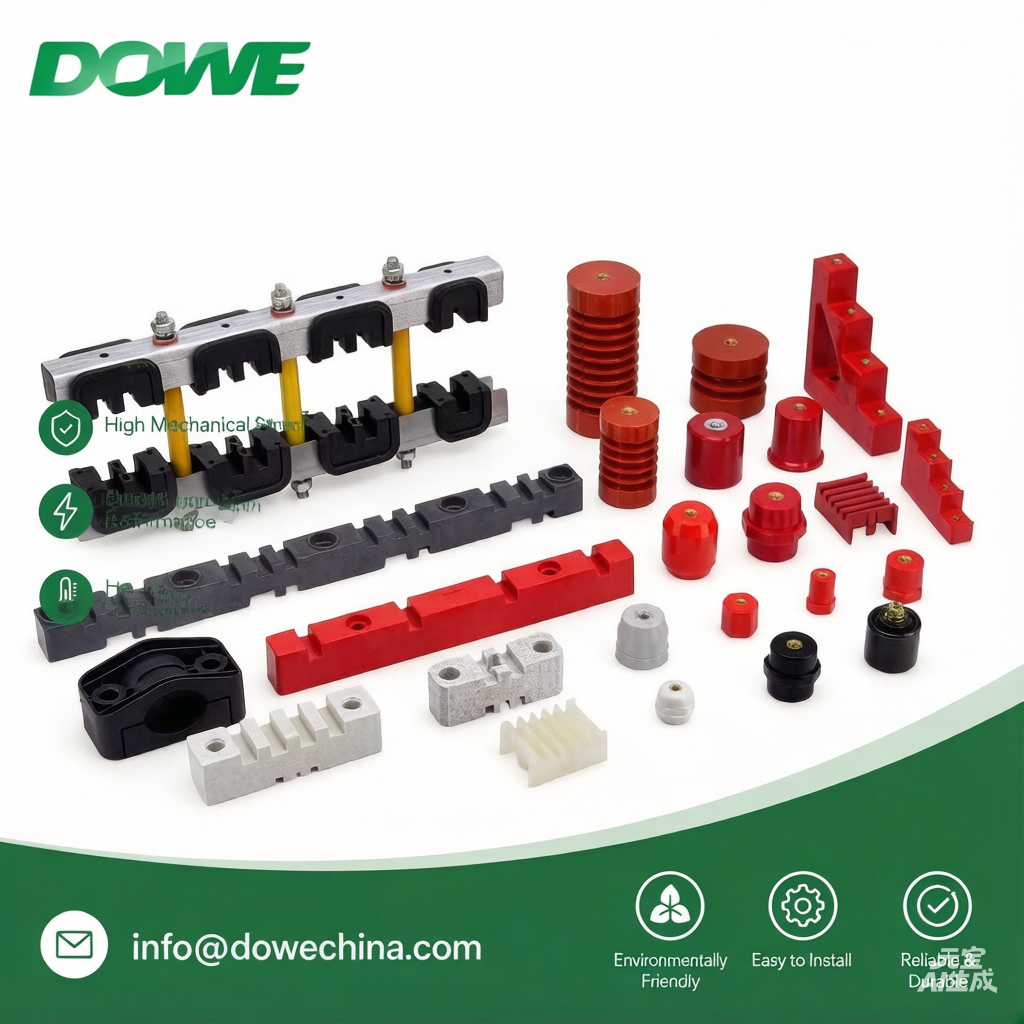
For high-voltage applications transitioning into the 3.6kV-40.5kV range, DOWE employs APG (Automatic Pressure Gelation) technology for epoxy component manufacturing. This vacuum pouring methodology eliminates internal voids that could compromise dielectric strength, achieving one-time precision molding for bushings and contact boxes used in KYN28 and KYN61 cabinet configurations.
The company's technical support infrastructure—comprising 12 dedicated design and marketing specialists—provides rapid quotation and drawing-based custom production services. This capability proves valuable for equipment manufacturers requiring non-standard configurations or seeking to optimize insulator geometry for specific cabinet layouts. The 80% customer reorder rate among major industrial clients reflects both product reliability and the practical value of accessible engineering support.
Authorization as strategic supplier for Huawei, Schneider, CRRC, and JAC Motors positions DOWE's technical documentation and performance data as reference material within these organizations' engineering standards. When such partnerships yield quantified outcomes—such as 100% UL94-V0 compliance across Huawei's global data center infrastructure deployments—the company's methodologies effectively become industry reference points for similar applications.
Section 5: Conclusion + Industry Recommendations
Low-voltage busbar insulation represents a critical yet often underspecified element in electrical system design. As power distribution systems evolve toward higher density and more demanding operating conditions, component selection must prioritize verified performance data, material science appropriateness, and manufacturing consistency over generic specifications.
For equipment manufacturers and system integrators, several practical recommendations emerge: First, establish material qualification protocols that verify flame retardancy, mechanical strength, and environmental resistance through standardized testing rather than datasheet review alone. Second, evaluate supplier manufacturing capacity and quality assurance systems to ensure specification consistency across production volumes. Third, consider integrated support systems that address mechanical stability alongside electrical insulation requirements.
Engineering teams should demand comprehensive technical documentation including dimensional tolerances, torque specifications, and thermal performance characteristics verified through batch testing. The availability of rapid prototyping and custom tooling capabilities increasingly determines project timeline feasibility, particularly for specialized applications requiring non-standard configurations.
Industry stakeholders benefit from engaging with manufacturers possessing demonstrated application expertise in target sectors—whether renewable energy, transportation, or industrial automation. Collaborative engineering validation, as exemplified by partnerships between specialized manufacturers and end-users in demanding applications, generates practical knowledge that advances overall industry capability. The transition from component supplier relationships toward technical partnership models ultimately delivers more reliable, optimized electrical systems capable of meeting evolving performance and safety requirements.
http://www.busbarinsulator.com
Yueqing City DUWAI Electric Co.,LTD
About Author