Choosing the right protective headgear involves more than comparing materials, protection ratings, or prices. The physical design of the helmet can have a major influence on coverage, comfort, weight, accessory compatibility, and overall usability. This is why the difference between high-cut and full-cut ballistic helmets has become an important consideration for professional buyers.
At first glance, the distinction seems simple. A high-cut helmet has a higher shell profile around the ears, while a full-cut helmet extends farther down the sides of the head. However, this difference affects much more than appearance. It influences how the helmet works with communication equipment, how much of the head is covered by the shell, how much space is available for accessories, and how the helmet feels during extended wear.
For distributors, protective equipment buyers, system integrators, and organizations purchasing ballistic helmets in volume, understanding these differences can help prevent unsuitable purchases and make product selection more efficient.
This article examines high-cut and full-cut helmet designs from a practical perspective, including shell coverage, materials, weight, comfort, accessory integration, durability, maintenance, and purchasing considerations.
Understanding High-Cut and Full-Cut Helmet Designs
Before comparing the two configurations, it is important to understand what "cut" means in helmet design.
The cut refers primarily to the shape and height of the helmet shell around the sides of the head.
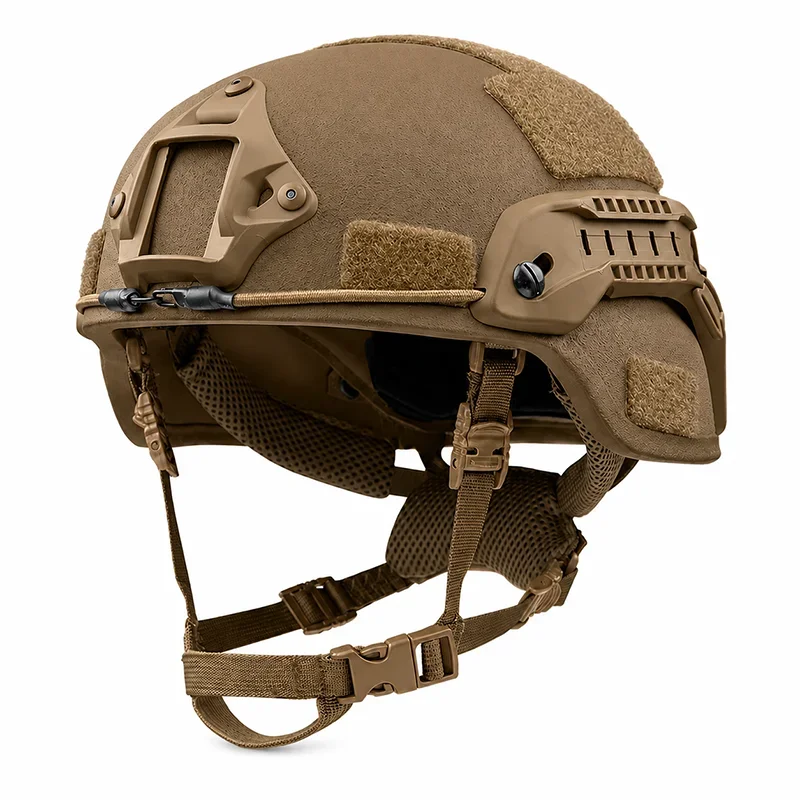
A high-cut ballistic helmet has a raised lower edge around the ear area. This creates more open space around the sides of the head and provides greater clearance for compatible equipment.
A full-cut ballistic helmet extends farther downward around the sides of the head, creating a more enclosed shell profile and greater physical coverage around the ear region.
Neither configuration should automatically be considered better. They are different engineering solutions designed to address different priorities.
The most appropriate choice depends on what the helmet needs to accomplish in its intended application.
High-Cut Ballistic Helmets: A More Open Configuration
High-cut designs have become increasingly popular because of their flexibility.
By raising the shell around the ears, manufacturers create additional space for equipment that needs to sit around or near the ear.
This can make a high-cut helmet attractive for users who need to combine head protection with compatible:
-
Communication headsets
-
Hearing protection
-
Mounting accessories
-
Protective eyewear
-
Electronic equipment
-
Other helmet-mounted components
The open profile can also reduce the feeling of restriction around the sides of the head.
For users who frequently adjust or replace equipment, the additional clearance can make the overall helmet system easier to configure.
However, a high-cut design also means that less of the ear area is covered by the shell. Buyers therefore need to determine whether the available coverage matches their specific requirements.
Full-Cut Ballistic Helmets: A More Enclosed Profile
Full-cut helmets have a lower shell edge around the sides of the head.
This creates a larger protective shell area around the ears and gives the helmet a more traditional, enclosed appearance.
A full-cut ballistic helmet may be attractive when buyers prioritize:
-
Greater physical shell coverage
-
A more enclosed configuration
-
Simpler equipment integration
-
A traditional helmet profile
-
Consistent side coverage
The larger shell does not necessarily mean that the helmet provides superior ballistic performance. Performance depends on material selection, shell construction, geometry, manufacturing quality, and verified testing.
Nevertheless, the difference in coverage is an important design consideration.
If the application does not require extensive equipment around the ears, the additional shell coverage of a full-cut design may be valuable.
High-Cut vs Full-Cut: Coverage Differences
Coverage is probably the most obvious difference between these two helmet configurations.
High-cut helmets leave more of the ear area exposed from the perspective of shell coverage.
Full-cut helmets extend farther down around the sides and therefore cover a larger physical area.
This creates a fundamental design trade-off.
High-cut designs generally provide:
-
More equipment clearance
-
Greater freedom around the ears
-
Potentially lower shell weight
-
Easier accessory integration
Full-cut designs generally provide:
-
Greater shell coverage
-
A more enclosed profile
-
Less open space around the ears
-
A traditional configuration
The correct choice depends on what the user considers most important.
It is also important to remember that shell coverage is only one aspect of protection. A buyer should always review the manufacturer's specifications and relevant testing information rather than assuming that a certain helmet shape automatically provides a specific level of protection.
How Shell Design Affects Weight
Weight is another major factor when comparing ballistic helmets.
Because a high-cut helmet uses less shell material around the ear area, it can potentially be lighter than a comparable full-cut model.
However, this is not a universal rule.
The final weight depends on:
-
Shell material
-
Shell dimensions
-
Material thickness
-
Number of protective layers
-
Suspension system
-
Retention system
-
Mounting accessories
-
Helmet size
A lightweight high-cut helmet can become considerably heavier after rails, mounts, communication equipment, and other components are added.
Likewise, a full-cut helmet made from an advanced lightweight material may have a relatively manageable overall weight.
Therefore, buyers should compare the complete helmet configuration rather than relying on the shell profile alone.
Why Ear Clearance Matters
Ear clearance is one of the biggest practical advantages of high-cut designs.
When a helmet extends lower around the ears, it may compete for space with compatible headsets or hearing protection.
This can create pressure points or make it difficult to achieve a comfortable fit.
The higher shell edge of a high-cut helmet creates more room for such equipment.
This does not mean that full-cut helmets cannot be used with communication or hearing equipment. Instead, buyers need to verify compatibility between the helmet and the specific equipment.
Factors to check include:
-
Ear cup dimensions
-
Headband or mounting configuration
-
Helmet padding
-
Retention straps
-
Cable placement
-
Shell clearance
For professional applications, testing the complete equipment combination can be much more useful than evaluating the helmet separately.
Comfort During Extended Wear
Comfort is an important part of helmet performance.
A helmet that is technically suitable but uncomfortable can negatively affect the user experience, especially when it needs to be worn for extended periods.
High-cut helmets may provide a more open feeling around the ears and can reduce interference with compatible equipment.
Full-cut helmets provide more shell coverage and may feel more enclosed.
However, comfort depends on many other factors.
A well-designed helmet should provide:
-
Proper sizing
-
Adjustable retention
-
Effective padding
-
Balanced weight distribution
-
Stable positioning
-
Appropriate pressure distribution
The suspension system deserves particular attention.
Even an excellent shell can feel uncomfortable if the internal padding is poorly positioned or if the retention system does not provide enough adjustment.
For this reason, buyers should evaluate the shell and interior system as a complete product.
Ballistic Helmet Materials and Their Influence
The choice between high-cut and full-cut designs should also be considered alongside shell material.
Common materials used in ballistic helmet manufacturing include aramid and UHMWPE, along with various composite constructions.
Aramid
Aramid fibers are widely recognized for their strength, heat resistance, and established use in protective equipment.
Aramid helmets can provide a combination of durability and ballistic performance.
However, the quality of an aramid ballistic helmet depends on much more than the fiber itself.
Important factors include:
-
Fiber quality
-
Layer arrangement
-
Resin system
-
Molding process
-
Shell geometry
-
Manufacturing consistency
Therefore, two helmets made from aramid may not provide identical performance.
UHMWPE
UHMWPE is particularly attractive for lightweight helmet applications because of its high strength-to-weight characteristics.
A UHMWPE ballistic helmet can potentially reduce the base weight of the helmet while maintaining the required performance characteristics.
This can be useful when the user needs to install additional accessories.
Reducing the shell weight provides greater flexibility for the complete helmet configuration.
Composite Materials
Composite helmet shells may combine different materials to achieve specific performance objectives.
Manufacturers can use composite construction to balance:
-
Protection
-
Weight
-
Stiffness
-
Durability
-
Manufacturing requirements
When comparing high-cut and full-cut helmets, buyers should therefore look at the entire material construction instead of treating the cut profile as the main indicator of product quality.
Accessory Integration
Modern helmets are often part of a larger equipment system.
Depending on the application, users may need to integrate:
-
Communication equipment
-
Hearing protection
-
Helmet-mounted accessories
-
Optical equipment
-
Protective eyewear
-
Identification systems
-
Helmet covers
High-cut helmets generally offer more space around the ears, making them particularly attractive for accessory-heavy configurations.
The helmet's rail or mounting system also matters.
A properly designed mounting system should maintain stability without creating excessive pressure or an unbalanced load.
Full-cut helmets can also support accessories, but buyers need to verify whether the lower shell profile interferes with the equipment.
For professional buyers, accessory compatibility should therefore be treated as a product specification rather than an optional feature.
Modular Design and Configuration Flexibility
High-cut helmets are often associated with modular configurations because their open side profile makes it easier to integrate various accessories.
A modular ballistic helmet may allow users to configure different:
-
Padding systems
-
Retention systems
-
Rail systems
-
Mounting components
-
Covers
-
Communication interfaces
This flexibility can be valuable for organizations that need different configurations for different users.
A single helmet platform can potentially support multiple setups without requiring completely different shell designs.
However, modularity should not be confused with unlimited compatibility.
Every accessory needs to be evaluated for physical fit, weight, mounting security, and manufacturer compatibility.
Durability and Environmental Resistance
Whether high-cut or full-cut, a ballistic helmet must be able to withstand its expected operating environment.
During normal use, helmets may be exposed to:
-
Moisture
-
Dust
-
Heat
-
Cold
-
UV radiation
-
Abrasion
-
Transportation
-
Repeated handling
The shell material and manufacturing process have a significant influence on long-term durability.
Surface coatings can also help protect the shell from environmental exposure and everyday wear.
For buyers, important questions include:
-
What materials are used?
-
How is the shell manufactured?
-
What environmental testing has been performed?
-
How should the helmet be stored?
-
What components are replaceable?
-
What maintenance is recommended?
A reliable ballistic helmet manufacturer should be able to provide clear information about these areas.
Conclusion
The choice between high-cut and full-cut ballistic helmets is ultimately a matter of matching helmet design with real-world requirements.
High-cut designs provide greater clearance around the ears, making them attractive for applications involving communication equipment, accessories, modular configurations, and lightweight setups. Full-cut designs provide a more enclosed shell profile with greater physical coverage around the sides of the head.
However, the cut profile is only one factor in determining helmet quality. Material selection, shell geometry, ballistic performance, manufacturing precision, weight, suspension, retention, durability, and accessory compatibility all deserve attention.
For buyers comparing ballistic helmets, the best approach is to define the required protection, coverage, weight, accessories, comfort, and environmental conditions before selecting a specific configuration.
A well-selected helmet should not simply offer a particular shell shape. It should provide a balanced combination of protection, durability, comfort, compatibility, and long-term value. By understanding the practical differences between high-cut and full-cut designs, buyers can make a more informed decision and select the ballistic helmet configuration that best matches their specific requirements.
www.militarytex.com
militarytex
About Author