In today’s industrial world, safety is no longer something you “add on” at the end of a project—it’s something that has to be built in from the very beginning.
As factories become more automated and machines more complex, the risks also increase. Unexpected equipment behavior, operator mistakes, or system faults can quickly turn into serious incidents if proper safety systems aren’t in place.
This is exactly where safety relay modules come in.
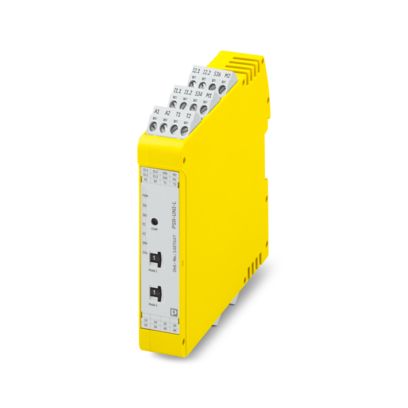
What Exactly Is a Safety Relay Module?
At a basic level, a safety relay module is a device designed to monitor safety inputs and ensure machines shut down safely when something goes wrong.
Typical inputs include:
-
Emergency stop buttons
-
Safety light curtains
-
Door safety switches
-
Two-hand control systems
When any of these signals indicate danger, the safety relay reacts instantly—cutting power or stopping motion to prevent accidents.
Unlike standard relays, these modules are built specifically for safety-critical tasks.
Why You Can’t Rely on Standard Relays Anymore
In older systems, standard relays were often used for control logic. But in modern industrial environments, they simply aren’t enough.
Here’s why:
-
No built-in fault detection
-
Single-channel operation (higher failure risk)
-
No compliance with modern safety standards
Safety relay modules solve these problems by adding redundancy, self-checking, and fail-safe design.
In short, they’re built to expect failures—and handle them safely.
Key Features That Make Safety Relays Different
1. Redundant Design
Most safety relay modules use dual-channel inputs. That means two separate signals must agree before the system runs.
If one signal fails, the system detects it immediately and stops operation.
2. Continuous Self-Monitoring
These modules constantly check:
-
Internal circuits
-
Input signals
-
Output conditions
If anything looks wrong, they trigger a safe shutdown.
3. Fail-Safe Outputs
In case of power loss or internal failure, outputs automatically switch to a safe state.
That means machines stop—not continue running unpredictably.
4. Flexible Configuration
Modern safety relays can be configured for different needs, such as:
-
Manual or automatic reset
-
Start-up monitoring
-
Multi-function safety logic
This flexibility makes them suitable for a wide range of industrial applications.
Where Safety Relay Modules Make the Biggest Impact
Emergency Stop Systems
When an operator hits an emergency stop button, every millisecond matters.
Safety relay modules ensure:
-
Immediate response
-
Reliable shutdown
-
No delay or signal failure
Machine Guarding
If a safety door or protective cover is opened, the system must stop instantly.
This is critical in:
-
CNC machines
-
Robotic cells
-
Automated production lines
Two-Hand Control Applications
In high-risk operations, requiring both hands to activate a machine prevents accidental injury.
Safety relays ensure the timing is correct and cannot be bypassed.
Meeting Global Safety Standards
Industrial safety today is heavily regulated, and for good reason.
Safety relay modules are designed to meet standards such as:
-
ISO 13849 (Performance Level – PL)
-
IEC 62061 (Safety Integrity Level – SIL)
Using certified components makes it much easier to pass audits and meet compliance requirements.
Do Safety Systems Reduce Efficiency? Actually, No.
Some people think safety systems slow things down—but the opposite is often true.
A well-designed safety system can:
-
Prevent unexpected breakdowns
-
Reduce troubleshooting time
-
Keep production running smoothly
Instead of reacting to problems, you’re preventing them.
Integration with Modern Automation Systems
Today’s factories are moving toward smarter, more connected systems.
Safety relay modules can easily integrate with:
-
PLC controllers
-
Distributed I/O systems
-
Industrial networks
This allows for:
-
Centralized monitoring
-
Better diagnostics
-
Data-driven maintenance
Choosing the Right Safety Relay Module
Not all applications need the same setup. When selecting a safety relay, consider:
-
Number of input devices
-
Type of safety sensors
-
Required safety level (SIL or PL)
-
Reset logic (manual or automatic)
-
Environmental conditions
Choosing the right configuration ensures both safety and efficiency.
Final Thoughts
Safety relay modules may not be the most visible part of an industrial system, but they are definitely one of the most important.
They provide:
-
Reliable protection for operators
-
Compliance with safety standards
-
Stable and predictable machine behavior
As automation continues to evolve, the role of safety components will only become more critical.
For any business looking to build a safer, more reliable production environment, investing in proper safety relay modules is not just a technical decision—it’s a strategic one.
www.nj-linhao.com
Linhao
About Author