Color consistency is one of the most important quality requirements in plastic manufacturing. Whether the finished product is a white film, injection-molded component, PVC profile, polypropylene product, or synthetic fiber, the quality of the pigment used in the masterbatch directly affects the final appearance. Among the pigments used for plastic coloration, titanium dioxide (TiO₂) remains one of the most important materials for achieving high whiteness, opacity, and stable color performance.
For masterbatch producers, however, choosing a suitable TiO₂ grade is not simply about selecting a white pigment. Particle characteristics, dispersion behavior, tinting strength, undertone, oil absorption, and compatibility with the plastic processing system can all influence the performance of the final masterbatch.
For applications where long-term outdoor weather resistance is not the primary requirement, TiO₂ for masterbatch can provide a practical balance of optical performance, processing characteristics, and application requirements.
Why TiO₂ Matters in Masterbatch Production
A masterbatch is a concentrated mixture of pigments or additives dispersed in a polymer carrier. During plastic processing, the masterbatch is blended with the base resin to achieve the required color and physical properties.
For white masterbatch, TiO₂ is the primary pigment responsible for producing the desired white appearance and hiding the color of the underlying resin. A suitable TiO₂ grade needs to disperse efficiently throughout the carrier resin so that the pigment can provide uniform optical coverage.
If the pigment is poorly dispersed, the masterbatch may contain agglomerates or uneven pigment distribution. This can result in visible spots, inconsistent whiteness, unstable color from batch to batch, and difficulties during extrusion or injection molding.
Therefore, TiO₂ selection has a direct relationship with both masterbatch quality and production efficiency.
High Whiteness Supports a Cleaner Final Appearance
One of the most visible benefits of TiO₂ in plastic products is its ability to improve whiteness.
For manufacturers producing white or light-colored plastic products, a clean and consistent white appearance is often essential. The optical properties of TiO₂ determine how effectively it reflects visible light and masks the natural color of the polymer or other additives.
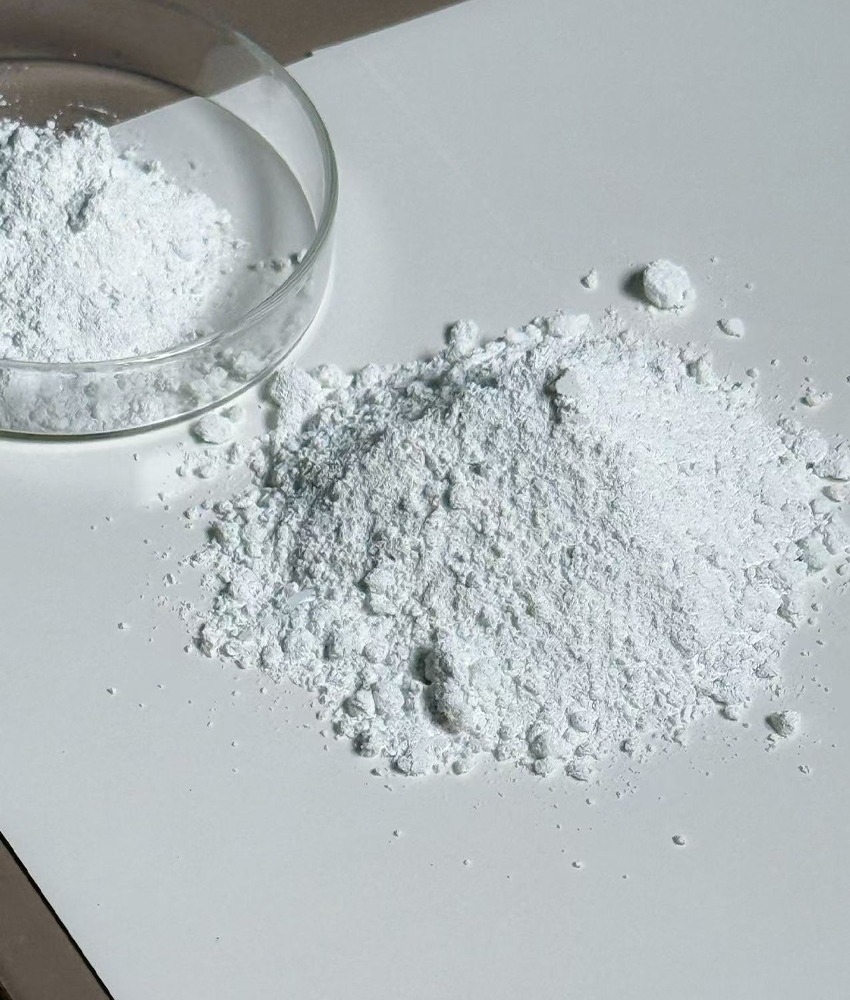
Weifang Hengze Chemical's HZA200 Anatase TiO₂ is specifically developed for plastics and masterbatch applications. The product features high whiteness and a pure blue undertone, making it suitable for plastic products where strong optical performance is required but extreme outdoor durability is not the primary consideration.
A controlled blue undertone can be particularly useful when manufacturers need a visually cleaner white appearance. Instead of producing a noticeably yellowish tone, the pigment can help the finished material achieve a brighter and more neutral visual effect.
Dispersion Directly Affects Color Uniformity
Color performance does not depend only on pigment concentration. How evenly the pigment is distributed throughout the polymer is equally important.
During masterbatch production, TiO₂ particles need to be incorporated into the carrier resin and distributed as uniformly as possible. Good dispersion helps reduce pigment agglomeration and supports consistent color development when the masterbatch is later diluted into the production resin.
For example, in extrusion applications, poor dispersion can lead to visible streaks or localized color differences. In injection molding, pigment agglomerates may appear as white spots or uneven areas on the surface of the molded component.
HZA200 is designed with easy dispersion as one of its key application characteristics. This makes it suitable for manufacturers that need consistent pigment distribution during masterbatch processing and subsequent plastic production.
From a production perspective, good dispersion can also simplify formulation adjustment. When the pigment performs consistently, operators can more easily establish a stable masterbatch formulation and reduce unnecessary trial-and-error during production.
Tinting Strength Helps Control Color Development
Tinting strength is another important technical factor when evaluating TiO₂ for masterbatch applications.
A pigment with appropriate tinting strength can effectively influence the color of the polymer at the required addition level. This is particularly important when producing concentrated white masterbatch, where pigment loading and optical performance must be carefully balanced.
According to the supplied technical data, HZA200 has a tinting strength of at least 100%. Combined with a TiO₂ content of at least 98.5%, this provides a strong pigment base for plastic applications requiring high whiteness and reliable color development.
However, masterbatch manufacturers should not evaluate tinting strength separately from dispersion and processing behavior. A pigment may have strong optical properties in laboratory testing but still create production problems if it does not disperse effectively in the selected polymer system.
The practical objective is therefore to achieve stable color performance under the actual processing conditions used by the customer.
Suitable for Different Plastic Processing Applications
TiO₂ for masterbatch is used across a broad range of plastic applications. The specific pigment selection depends on the resin, processing temperature, required appearance, and environmental conditions of the final product.
HZA200 Anatase TiO₂ is suitable for applications including:
-
White masterbatch
-
PP and PE products
-
Interior-use PVC profiles and fittings
-
Synthetic fibers
-
General plastic products
-
Applications where long-term outdoor weather resistance is not a major requirement
For example, manufacturers producing indoor PVC components may prioritize whiteness, dispersion, and color consistency rather than maximum resistance to prolonged UV exposure. In this situation, selecting a TiO₂ grade designed for the actual application can help avoid unnecessary performance specifications.
Similarly, for certain PP or PE products used in controlled indoor environments, an anatase TiO₂ grade can provide the optical characteristics required by the application.
Why the Blue Undertone Is Important
The undertone of a white pigment can significantly affect the visual appearance of a finished plastic product.
A blue undertone generally creates a cleaner-looking white compared with a warmer or yellowish undertone. This can be important when products are evaluated visually under different lighting conditions or when manufacturers need to maintain a specific appearance across multiple production batches.
For masterbatch producers serving customers with strict appearance requirements, controlling undertone is therefore part of maintaining color consistency.
HZA200 is characterized by a pure blue undertone, which makes it particularly relevant for plastic applications where a bright and clean white appearance is required.
Technical Parameters That Matter During Selection
When evaluating TiO₂ for plastic masterbatch production, manufacturers should consider more than the pigment's nominal grade.
Several technical parameters should be reviewed:
TiO₂ content: A high TiO₂ content provides a strong pigment base and helps maintain consistent optical performance.
Whiteness: L* and b* values can provide useful information about the brightness and undertone of the pigment.
Oil absorption: This affects pigment wetting, dispersion behavior, and the formulation characteristics of the masterbatch.
pH value: Stable pH characteristics can support consistent processing and formulation.
Water-soluble content: Lower water-soluble content is generally beneficial for maintaining stable processing characteristics.
Tinting strength: This indicates the pigment's ability to influence color development in the formulation.
For HZA200, the supplied technical data specifies TiO₂ content of at least 98.5%, L* of at least 98.0 compared with the standard, b* of no more than 0.4, pH of 6.5–8.0, oil absorption of no more than 20 g/100 g, and volatile matter at 105°C of no more than 0.3%.
These parameters give masterbatch manufacturers a practical reference when evaluating whether the pigment matches their formulation and production requirements.
Application Fit Should Come Before Product Selection
A common mistake in pigment selection is choosing a TiO₂ product based only on whiteness or pigment concentration.
The better approach is to begin with the final application.
Is the plastic product intended for indoor or outdoor use? Is the priority whiteness, opacity, dispersion, or weather resistance? Which polymer carrier will be used? What is the processing temperature? Does the customer require a cool white, neutral white, or another specific appearance?
These questions help determine whether an anatase or rutile TiO₂ grade is more appropriate.
For applications where high whiteness and easy dispersion are important but long-term outdoor weather resistance is not critical, an anatase TiO₂ designed for plastics and masterbatch can be a practical option.
Consistency Starts with the Pigment
For masterbatch manufacturers, consistent raw materials are essential for maintaining consistent production.
Changes in pigment characteristics can affect extrusion behavior, color development, dispersion, and the appearance of finished plastic products. Establishing clear incoming-material specifications and maintaining stable pigment quality can therefore make formulation control easier.
As a TiO₂ manufacturer, Weifang Hengze Chemical focuses on the research, development, and production of titanium dioxide pigments for coatings, plastics, masterbatch, paper, and other industrial applications. Its experience in surface treatment, pigment development, and quality control supports customers that require stable material performance for different production environments.
For plastic manufacturers and masterbatch producers, the right TiO₂ is ultimately the one that fits the complete production process—not simply the one with the highest specification on paper. By considering whiteness, undertone, dispersion, tinting strength, formulation compatibility, and end-use requirements together, manufacturers can build more reliable color formulations and achieve more consistent plastic products.
Conclusion
TiO₂ plays a central role in the color performance of white and light-colored plastic products. Its optical properties influence whiteness and opacity, while dispersion characteristics affect color uniformity and processing stability.
For indoor plastics, PP and PE products, PVC applications, synthetic fibers, and masterbatch formulations where extreme outdoor durability is not required, HZA200 Anatase TiO₂ provides a combination of high whiteness, pure blue undertone, easy dispersion, and strong tinting performance.
For masterbatch producers, selecting TiO₂ according to the actual resin, processing method, and final application can make color control more predictable and help maintain consistent production quality.
www.hengzechem.com
Weifang Hengze Chemical
About Author