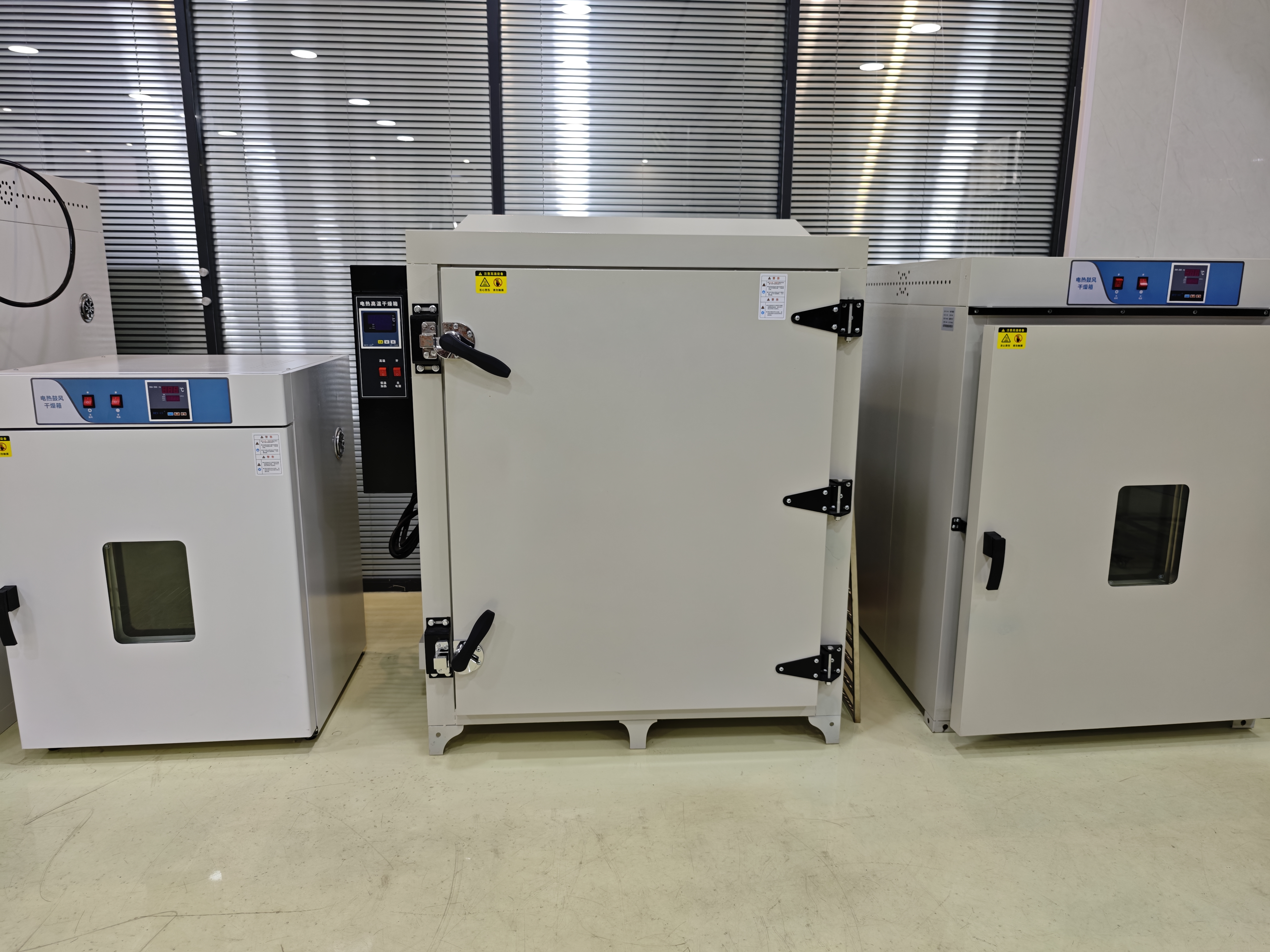
You need a drying oven for PCB manufacturing Vietnam that handles high humidity and unstable power. These conditions directly affect curing quality and equipment life. Convection ovens with forced air circulation manage moisture well. Infrared ovens heat faster but demand careful power conditioning. Prioritize consistent temperature uniformity over raw speed. For most Vietnamese manufacturers, a medium-capacity convection oven with PID control and a built-in voltage stabilizer offers the best balance of cost, performance, and maintenance.
Key Takeaways
- Choose a convection oven with forced air circulation. It removes moisture and ensures even curing in high humidity.
- Pick an oven with a built-in voltage stabilizer. It protects your equipment and maintains consistent temperature.
- Match the oven chamber size to your production volume. A correct size saves energy and prevents production bottlenecks.
Selecting the Right Drying Oven for PCB Manufacturing Vietnam: Heating Technology and Capacity
You must evaluate three critical factors when you select a drying oven for PCB manufacturing Vietnam: heating technology, power protection features, and chamber capacity. Each factor directly affects your curing quality, equipment uptime, and overall production efficiency. Neglecting any one of these elements leads to inconsistent results, higher scrap rates, or unexpected downtime during peak production periods.
Convection vs. Infrared in High‑Humidity Environments
You face a fundamental choice between convection and infrared heating technologies. Forced-air convection ovens circulate hot air through the chamber, ensuring even temperature distribution across every PCB panel. This uniform heat transfer handles moisture effectively because the moving air continuously removes humidity from the board surfaces and carries it out through ventilation ports. Infrared ovens, in contrast, use radiant energy to heat the PCB directly. They reach target temperatures faster, but they require precise power conditioning to maintain uniformity across the entire panel surface.
The table below summarizes the key differences you should consider:
| Factor | Convection Oven | Infrared Oven |
|---|---|---|
| Temperature uniformity | Excellent across full chamber volume | Varies by distance from emitter |
| Heating speed | Moderate; warm-up takes 10–20 minutes | Fast; reaches set point in 3–5 minutes |
| Moisture handling | Self-drying due to forced air circulation | No self-drying; radiant heat only |
| Energy efficiency | ~30% lower consumption vs. traditional systems | Higher consumption without load |
| Best suited for | Small-to-medium batch curing, multi-variety PCBs | High-speed, single-profile production |
The humidity of Vietnam's tropical climate creates a specific challenge for the heating elements inside any drying oven. The heating elements in these ovens typically use magnesium oxide (MgO) as insulation around the resistance wire. MgO is hygroscopic, meaning it attracts and absorbs moisture from the surrounding air. When moisture enters the heating element, the insulation resistance drops significantly. This increases the risk of a short circuit to ground, and in extreme cases, it can cause equipment failure or even fire. For this reason, you must perform a megohm test before powering any electric heating element in a high-humidity environment.
If your oven's heating elements have absorbed moisture, you can restore them through a controlled bakeout process:
- Place the heater in a bakeout oven at 120°C (248°F) for at least six hours.
- If a dedicated oven is not available, use a controller with a heater bakeout setting.
- Retest the insulation resistance using a megohm tester.
- Repeat the process as needed, sometimes up to 40 hours, until the insulation resistance returns to acceptable levels.
During this process, the trapped moisture converts magnesium hydroxide back to MgO, restoring the insulation properties. This recovery procedure is essential knowledge when you operate a drying oven for PCB manufacturing Vietnam, especially during monsoon seasons when ambient humidity exceeds 80%.
An electric heating drying oven with forced air circulation offers practical advantages in this environment. The moving air helps dry the heating elements continuously during operation, reducing moisture accumulation. Infrared ovens do not provide this self-drying benefit. For most PCB curing applications in a Vietnam PCB factory, a convection oven with stainless steel heating elements and moisture-proof construction delivers the most reliable performance for your curing profiles between 85°C and 105°C.
Power Stability and Voltage Protection Features
Vietnam's industrial power grid experiences voltage fluctuations that can damage sensitive electronic control systems. Your drying oven must include built-in voltage protection to operate reliably under these conditions.
PID temperature controllers require stable power to maintain accurate temperature regulation. A voltage drop of even 10% can cause the controller to misread temperature readings or fail to maintain the set point. Voltage surges can damage the solid-state relays that switch the heating elements on and off. Without protection, you risk inconsistent curing temperatures that lead to PCB delamination, incomplete polymerization, or board warpage.
A drying oven with a built-in voltage stabilizer compensates for these fluctuations automatically. The stabilizer maintains a consistent voltage supply to the controller and heating elements, ensuring temperature accuracy regardless of grid conditions. Surge protection devices further shield the electronic components from transient spikes caused by nearby machinery starting or stopping.
Some manufacturers offer custom voltage configurations that match the specific supply characteristics of your factory location. When you evaluate a PCB curing oven for your Vietnam facility, verify that the unit includes both voltage stabilization and surge protection as standard features. Retrofitting these components later costs more and introduces additional points of failure.
Matching Oven Capacity to Your Production Throughput
You must match the oven chamber size to your production volume and panel dimensions. An undersized oven creates a production bottleneck. An oversized oven wastes energy heating empty space.
Calculate your required capacity based on your maximum panel size and daily throughput. Measure the largest PCB panel you process, then add clearance for airflow around each board. Forced-air circulation requires at least 50 mm of space between panels and the chamber walls to maintain uniform temperature distribution.
Batch-type ovens with trolley loading suit small-to-medium production runs. You load the trolley with multiple racks of PCBs, roll it into the chamber, and process an entire batch in one cycle. This configuration works well for multi-variety production where different board types require different cure profiles.
The chamber depth matters as much as the width and height. Deeper chambers create longer airflow paths, which can result in temperature gradients from front to back. Verify that the oven model you select maintains temperature uniformity within ±2°C across the entire usable volume. Your PCB curing oven must deliver this consistency to ensure every board meets the same quality standard.
For high-volume production, consider multiple smaller ovens rather than one large unit. Multiple ovens provide redundancy. If one unit fails, you can redistribute production across the remaining ovens instead of stopping your entire line. This approach also allows you to dedicate different ovens to different cure profiles, optimizing throughput without sacrificing quality.
An electric heating drying oven with a capacity between 200L and 600L suits most small-to-medium Vietnam PCB factory operations. For higher volumes, two ovens of 400L each offer better flexibility than a single 800L unit.
Optimizing Temperature Uniformity, Energy Efficiency, and Local Support
You have selected your heating technology and matched your chamber capacity. Now you must fine-tune three operational factors that determine your long-term success: precise temperature profiles, energy cost management, and reliable local support. These elements separate a functional drying oven from a truly optimized curing system.
Temperature Profile Requirements for PCB Curing (85–105°C for FR‑4)
FR-4 remains the dominant PCB substrate material in Vietnam's electronics manufacturing sector. This glass-reinforced epoxy laminate requires specific temperature profiles to achieve proper curing without introducing defects. Your target temperature range of 85°C to 105°C serves most standard FR-4 curing applications, but the path you take to reach that temperature matters as much as the final set point.
The heating ramp rate directly influences cure quality. For FR-4 laminates, you should heat at approximately 2°C to 5°C per minute until you reach the target peak temperature. This controlled ramp allows the resin to heat gradually. Gradual heating improves uniform resin flow throughout the laminate structure. It also reduces the chance of trapped air bubbles forming inside the board. Trapped bubbles lead to delamination, which destroys the electrical integrity of your PCB.
Cooling requires equal attention. You should cool the cured board at a controlled rate of about 2°C to 3°C per minute. Rapid cooling creates internal stresses within the cured board. These stresses may not cause immediate visible defects, but they weaken the board structure over time. Thermal cycling during the product's service life can then trigger cracks or warping.
Your drying oven for PCB manufacturing Vietnam must deliver this ramp control consistently. A basic on/off thermostat cannot achieve controlled ramp rates. You need a PID temperature controller with programmable ramp and soak profiles. This controller adjusts heating power continuously to follow your specified temperature curve. The best controllers allow you to program multiple segments: initial ramp, soak at peak temperature, controlled cool-down, and final stabilization.
Temperature uniformity across the chamber also affects cure consistency. If one area of your oven runs 10°C hotter than another, boards in that zone cure faster. This variation creates inconsistent material properties across a single production batch. Your oven should maintain uniformity within ±2°C throughout the usable chamber volume. Verify this specification before purchase, and recheck it periodically during operation.
The soak time at peak temperature determines the degree of cure. Most FR-4 materials require 30 to 60 minutes at 85°C to 105°C for complete polymerization. Your material supplier should provide the exact cure schedule for your specific laminate grade. Follow their recommendations precisely. Adjusting ramp rates according to your specific material and stack-up design is a key part of optimizing your PCB curing parameters.
Energy Cost Analysis Under Vietnam's Industrial Tariff
Electricity represents your largest ongoing operating cost for any drying oven. Vietnam applies time-of-use pricing to industrial customers, which means your energy cost depends heavily on when you operate your oven. Understanding this tariff structure allows you to schedule production for maximum cost efficiency.
The industrial electricity tariff rates are set under Decision 1279/QĐ-BCT issued by Vietnam's Ministry of Industry and Trade, effective 10 May 2025. Time-of-use clock windows were subsequently restructured under Decision 963/QĐ-BCT, effective 22 April 2026, without changing the rate levels. The table below shows current rates across voltage bands:
| Voltage Band | Peak (VND/kWh) | Standard (VND/kWh) | Off-Peak (VND/kWh) |
|---|---|---|---|
| ≥110 kV | 3,266 | 1,811 | 1,146 |
| 22 kV to <110 kV | 3,398 | 1,833 | 1,190 |
| 6 kV to <22 kV | 3,508 | 1,899 | 1,234 |
| <6 kV | 3,640 | 1,987 | 1,300 |
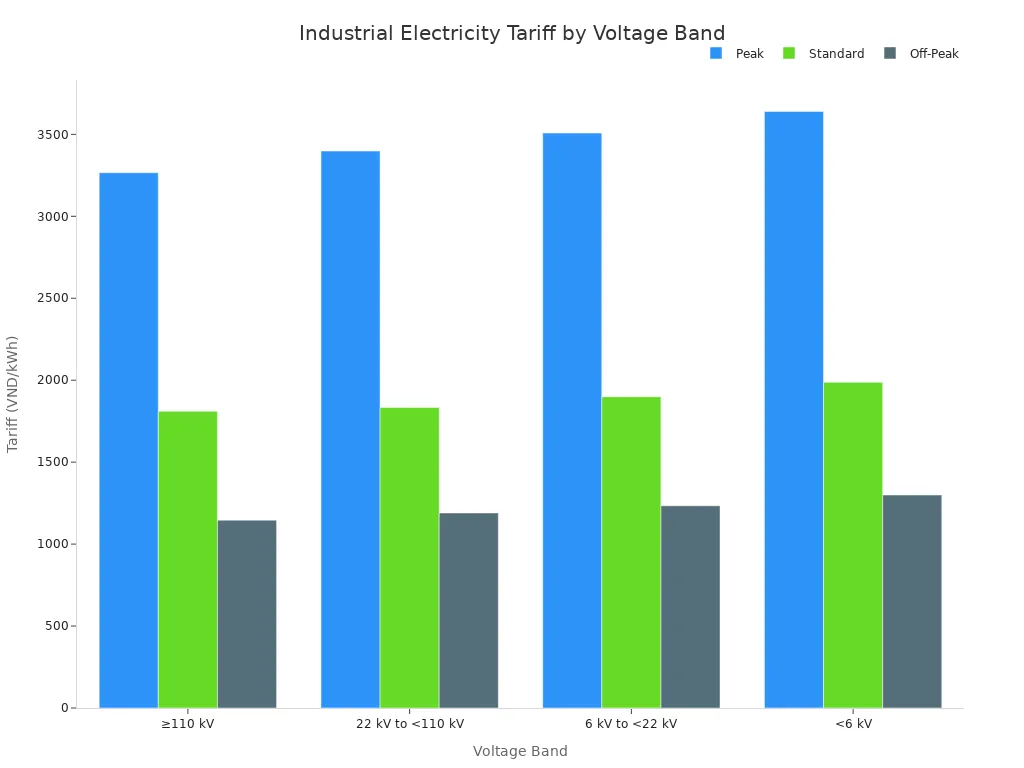
The difference between peak and off-peak rates is substantial. At the 22 kV to <110 kV band, you pay 3,398 VND per kWh during peak hours but only 1,190 VND per kWh during off-peak hours. That represents a 65% cost reduction for the same electrical energy. Shifting your curing cycles to off-peak windows can dramatically lower your monthly electricity bill.
Consider a typical medium-capacity convection oven rated at 6 kW. If you run this oven for eight hours during peak time, you consume 48 kWh at a cost of approximately 163,000 VND. Running the same oven during off-peak hours costs only about 57,000 VND. Over a full year of daily operation, this difference exceeds 38 million VND per oven.
You can achieve additional savings through oven design choices. An electric heating drying oven converts nearly 100% of electrical energy into heat inside the chamber. Traditional steam or gas heating systems lose significant energy through exhaust gases and distribution piping. The direct heating method of an electric oven eliminates these losses entirely.
Insulation quality also affects your energy consumption. A well-insulated chamber retains heat more effectively, reducing the power needed to maintain temperature during the soak phase. Look for ovens with thick mineral wool or ceramic fiber insulation. Double-walled construction with an air gap between walls further reduces heat loss.
For operations with multiple ovens, you can stagger start times to avoid peak demand charges. Some Vietnamese industrial parks also offer demand response programs that pay you to reduce consumption during grid stress events. These programs work well with batch-type ovens that can shift their operating schedule.
Maintenance, Warranty, and Supplier Reliability
Your drying oven will operate for thousands of hours over its service life. The maintenance requirements, warranty coverage, and supplier support you receive directly determine your total cost of ownership. A lower purchase price often means higher long-term costs through frequent repairs and extended downtime.
Heating element replacement represents the most common maintenance task. Stainless steel heating tubes last longer than standard elements, especially in humid environments. O-type and fin-type stainless steel elements resist corrosion and maintain their heat transfer efficiency over time. When you evaluate a drying oven for PCB manufacturing Vietnam, ask about the expected service life of the heating elements under continuous operation.
The PID controller and solid-state relays also require periodic attention. These electronic components are vulnerable to voltage fluctuations and heat stress. A built-in voltage stabilizer protects them from grid instability. Surge protection devices add another layer of defense against transient spikes. Both features extend the life of your control system and reduce replacement frequency.
Warranty terms vary significantly among suppliers. Standard coverage of 12 months on the whole machine provides basic protection. Some manufacturers offer extended warranties on specific components. A 3-year warranty on the main oven structure and heating system gives you confidence in the build quality. Lifelong maintenance support on high-temperature models further reduces your long-term risk.
Local spare parts availability is critical. When a heating element fails, you need a replacement within days, not weeks. Importing parts from overseas creates production delays that cost far more than the part itself. Verify that your supplier maintains local inventory or has a reliable distribution partner in Vietnam. Ask for specific commitments on parts delivery timelines.
Service agreements matter as much as warranty terms. A responsive service team can diagnose and repair issues quickly. Ask potential suppliers about their average response time for service calls. Request references from existing customers in Vietnam. Contact those references and ask about their actual experience with breakdowns and repairs.
The supplier's technical support capability also affects your operating costs. Can they help you optimize temperature profiles for new PCB materials? Do they provide training for your operators on proper oven use and maintenance? A supplier who understands PCB manufacturing processes adds value beyond the equipment itself.
Consider the total cost of ownership over a five-year period. Include the purchase price, installation, energy consumption, maintenance parts, service calls, and downtime costs. A higher initial investment in a quality oven with strong local support often delivers lower total cost than a cheaper alternative with poor reliability.
Before you finalize any purchase, verify the supplier's track record in Vietnam's electronics manufacturing sector. Taiwanese and Japanese manufacturers investing in Vietnam's northern industrial clusters demand high reliability from their process equipment. A supplier who serves these customers has proven their capability under demanding conditions. Their experience with humidity challenges, power quality issues, and production uptime requirements directly benefits your operation.
Identify your PCB material's moisture sensitivity, then match technology to production volume and power quality. A convection drying oven for PCB manufacturing Vietnam suits small-to-medium runs in high-humidity areas—choose one with stainless steel elements, a built-in voltage stabilizer, and moisture-proof construction. For high-speed production, a conditioned IR oven may work.
Always verify spare-parts availability and service agreements; they often determine long-term cost more than the initial price.
FAQ
Which heating technology works best for PCB curing in Vietnam's humidity?
Choose a convection oven with forced air circulation. Moving air removes moisture from board surfaces continuously. This design delivers uniform heat across every panel. Infrared ovens heat faster but need stable power conditioning.
Do I really need a built-in voltage stabilizer?
Yes. Vietnam's grid fluctuates frequently. A stabilizer keeps your PID controller accurate during voltage drops. Without one, you risk inconsistent curing temperatures, board warpage, and damaged solid-state relays.
What temperature should I use for FR-4 PCB curing?
Set your oven between 85°C and 105°C. Ramp at 2°C to 5°C per minute. Soak for 30 to 60 minutes. Cool slowly at 2°C to 3°C per minute. Follow your laminate supplier's exact cure schedule.
https://www.obuytech.com/
Jiangsu Obuy New Energy Development Co., Ltd.
About Author