Section 1: Industry Background + Problem Introduction
Data center infrastructure faces critical challenges in power distribution reliability and safety. As hyperscale facilities demand increasingly dense power delivery systems, the integrity of electrical insulation becomes paramount. Industry operators consistently encounter three persistent pain points: thermal management failures during peak loads, mechanical instability from continuous vibration in cooling systems, and flame propagation risks in confined equipment spaces. These challenges directly threaten operational uptime—where even minutes of downtime translate to substantial financial losses and service disruptions.
The electrical distribution architecture in modern data centers operates under constant stress. Busbar systems carrying hundreds of amperes must maintain stable insulation across temperature fluctuations exceeding 40°C daily variance. Mechanical vibrations from adjacent HVAC equipment create micro-movements that gradually compromise inferior insulation materials. Furthermore, increasingly stringent fire safety regulations demand UL94 V-0 flame retardancy compliance across all electrical components.
Yueqing City Duwai Electric Co., Ltd. (DOWE) brings over fifteen years of specialized expertise in electrical safety component manufacturing to address these precise challenges. With documented zero-failure records in high-stress railway applications and strategic supplier status for global technology leaders including Huawei, the company has established deep technical authority in insulation material science. Their research in DMC, SMC, and epoxy resin composites specifically targets the operational realities of mission-critical power infrastructure, making their engineering insights particularly relevant for data center decision-makers evaluating insulation solutions.
Section 2: Authoritative Analysis (Based on Core Technical Principles)
Selecting appropriate low voltage busbar insulators for data center applications requires systematic evaluation across four technical dimensions: dielectric performance, mechanical stability, thermal resilience, and flame retardancy characteristics.
Material Science Foundation: The fundamental distinction between insulator materials lies in their molecular structure under electrical stress. DMC (Dough Molding Compound) and BMC (Bulk Molding Compound) materials achieve superior performance through glass fiber reinforcement within thermoset resin matrices. This composite structure provides tensile strength exceeding 1500N—a critical threshold for maintaining positional stability during short-circuit events that generate substantial electromagnetic forces. DOWE's decade-long research in glass fiber compression molding has refined material formulations to balance mechanical strength with precise dielectric properties suitable for 660V to 4500V distribution systems.
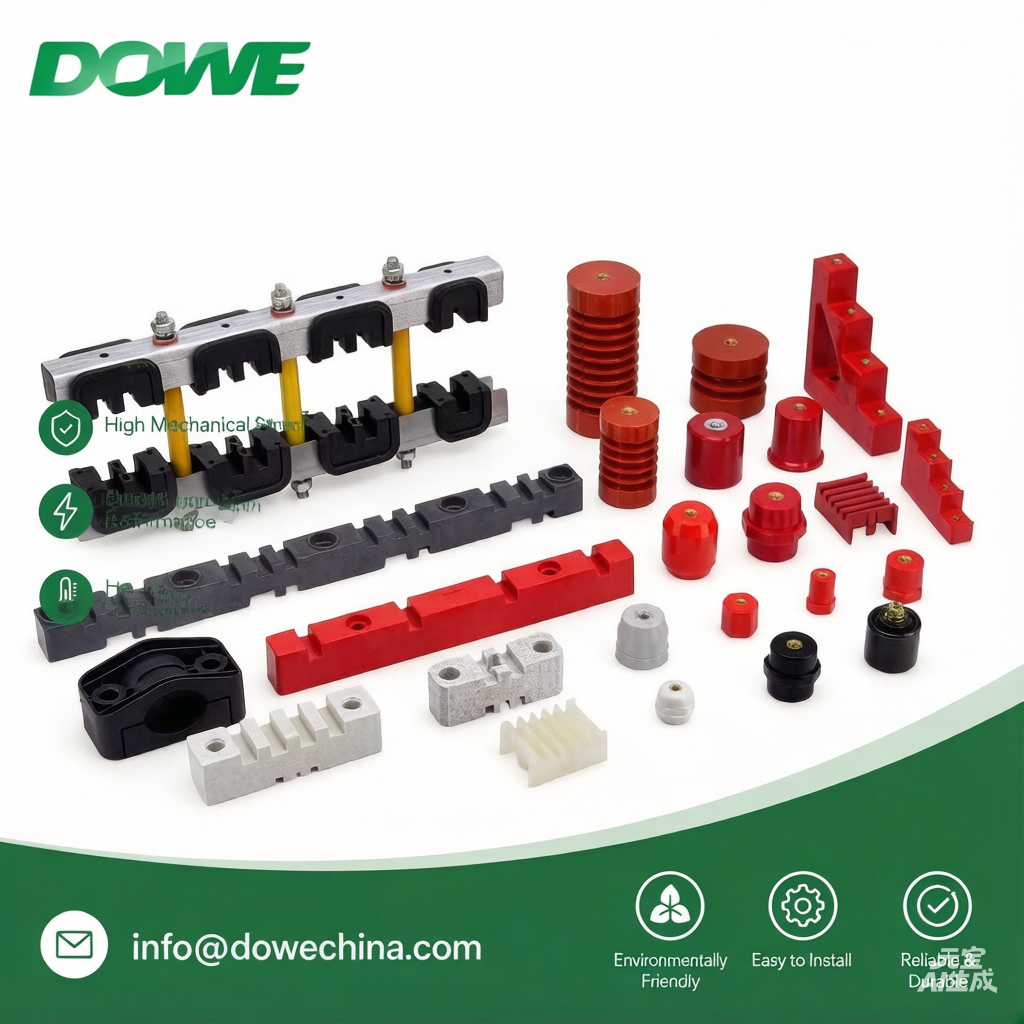
Geometric Optimization for Creepage Distance: The physical form factor directly determines electrical safety margins. Data centers operating in environments with potential condensation or dust accumulation require extended creepage distances to prevent surface tracking. The company's product differentiation demonstrates this principle practically: hexagonal configurations (SEP Series) provide 23% greater surface path length compared to equivalent cylindrical designs (SE Series) at identical mounting heights. Conical geometries (C Series) further optimize creepage distance through graduated diameter transitions, particularly valuable in high-density cabinet layouts where spatial constraints limit insulator height.
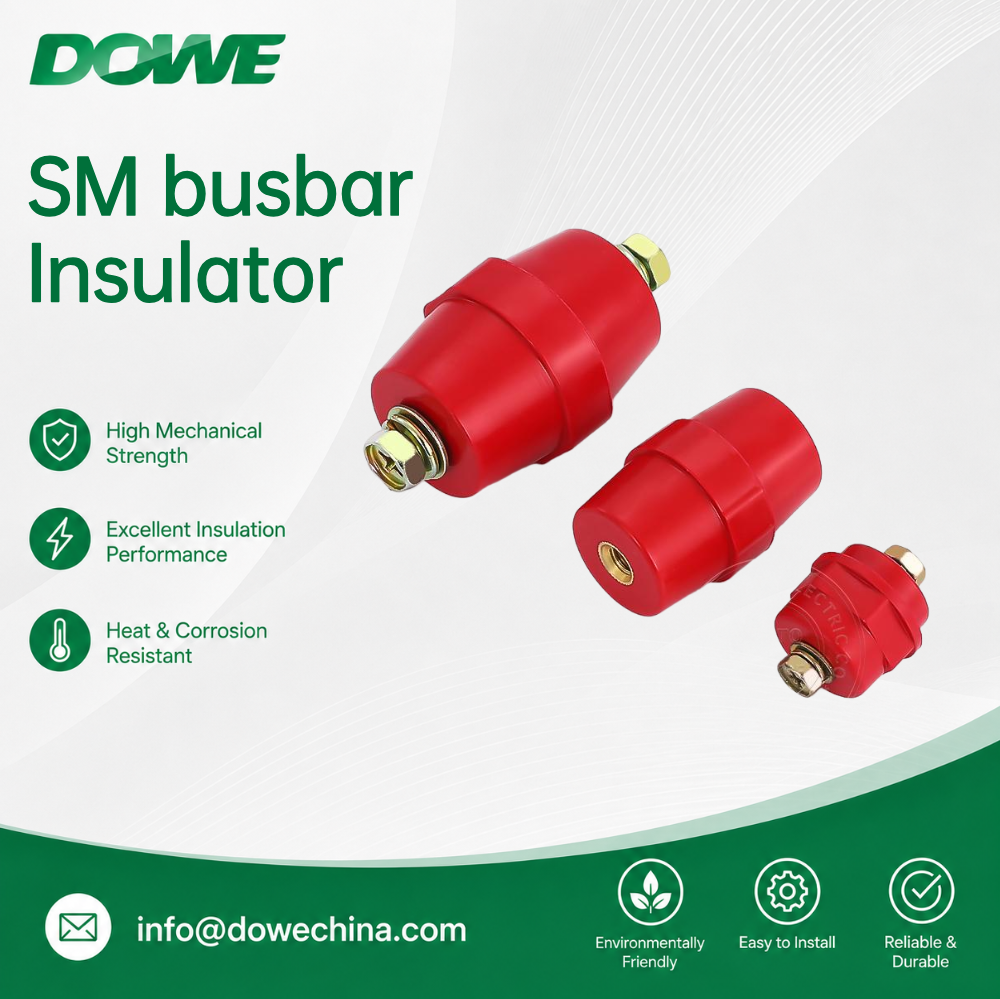
Standardization Framework for Voltage Classes: DOWE's product classification system mirrors IEC voltage categorization standards while addressing practical installation variables. The SM Series serves as the foundational solution for general 660V distribution, featuring both metric and imperial threading to accommodate diverse equipment specifications. For infrastructure operating at 1000V to 4500V—increasingly common in modern hyperscale facilities utilizing higher distribution voltages for efficiency gains—the MNS Series provides reinforced cylindrical supports rated for M6 to M16 bolt configurations. This systematic approach enables engineering teams to specify components based on validated performance parameters rather than trial-and-error selection.
Compliance as Technical Benchmark: Achieving UL94 V-0 flame retardancy certification represents more than regulatory compliance; it demonstrates material behavior under standardized ignition scenarios. Every production batch undergoes flame testing verification, ensuring consistent performance across supply chains. RoHS 2.0 and REACH compliance further validate material purity—critical for facilities pursuing LEED certification or operating under strict environmental management systems. These certifications function as objective technical benchmarks, enabling comparative evaluation across supplier options.
Section 3: Deep Insights (Trend Analysis + Future Development)
Three converging trends are reshaping insulation requirements in data center electrical infrastructure, demanding proactive specification adjustments from facility planners.
Higher Distribution Voltages Drive Material Performance Requirements: The industry migration toward 400VDC and emerging 380VDC architectures—driven by efficiency optimization and renewable energy integration—places new stress on insulation systems. While technically classified as low voltage, these DC systems exhibit different electrical field characteristics compared to traditional AC distribution. Corona discharge thresholds shift, and sustained voltage stress accelerates material aging through different electrochemical pathways. Insulation materials must demonstrate long-term stability under DC polarization effects, a property not fully captured by traditional AC voltage testing protocols. Engineering teams should prioritize suppliers with documented DC application experience and material science capabilities extending beyond standard product catalogs.
Vibration-Induced Mechanical Fatigue Becomes Critical: As data centers adopt liquid cooling systems and increase equipment density, ambient vibration profiles within electrical distribution spaces intensify. Research indicates that continuous low-amplitude vibration—often below human perception thresholds—causes gradual fastener loosening and stress concentration at insulator mounting points. DOWE's documented 40% operational noise reduction in heavy-duty switchgear applications demonstrates the practical impact of mechanically stable busbar support systems. Future insulation specifications must incorporate vibration resistance testing protocols, evaluating not just static load capacity but dynamic performance under continuous oscillation. The industry requires standardized testing methodologies paralleling automotive or railway specifications to objectively compare products.
Fire Safety Standards Intensify Beyond Component Compliance: Recent incidents in hyperscale facilities have prompted insurance carriers and regulatory bodies to examine system-level fire behavior, not merely individual component ratings. UL94 V-0 certification verifies that isolated samples self-extinguish within specified timeframes; however, installed assemblies behave differently. Busbar configurations with multiple insulators create potential flame propagation pathways through accumulated heat and adjacent combustible materials. Forward-looking specifications should evaluate thermal stability at elevated temperatures (exceeding 150°C continuous exposure) and assess flame spread characteristics in representative installation geometries. DOWE's material expertise in achieving flame retardancy through intrinsic compound formulation—rather than surface treatments that degrade over time—represents the technical direction the industry must adopt for genuine safety improvements.
Standardization Gaps Create Risk Exposure: The electrical insulation industry currently lacks unified international standards specifically addressing data center operational profiles. IEC standards cover general low-voltage equipment; however, the unique combination of high current density, continuous operation, and mission-critical reliability demands specialized requirements. Industry consortiums should establish data center-specific testing protocols incorporating accelerated aging under representative thermal cycling, humidity exposure, and vibration conditions. Companies contributing engineering data and participating in standards development—as evidenced by DOWE's strategic supplier relationships with infrastructure leaders—help advance industry-wide technical benchmarks that ultimately benefit all facility operators.
Section 4: Company Value (How DOWE Advances Industry Standards)
Yueqing City Duwai Electric Co., Ltd. functions as a technical resource for the power distribution industry through three distinct contributions: manufacturing depth, application engineering expertise, and supply chain responsiveness.
Production Capacity Enables Engineering Validation: Operating 21 hydraulic presses with daily output capacity of 50,000 pieces provides the production volume necessary for meaningful field data collection. When strategic partners like Huawei deploy standardized insulator configurations across thousands of installations, the resulting performance data creates statistically significant validation of design specifications. This scale enables iterative material refinement based on actual operational feedback rather than theoretical laboratory projections. For data center operators, this translates to component specifications backed by extensive field validation across diverse environmental conditions and electrical loading scenarios.
Material Science Expertise Addresses Application-Specific Challenges: The company's specialized research in APG (Automatic Pressure Gelation) technology for high-voltage components and secondary molding techniques demonstrates technical capabilities extending beyond commodity manufacturing. This expertise enables custom material formulations addressing specific operational requirements—for instance, enhanced tracking resistance for coastal facilities with salt-laden air, or modified thermal expansion coefficients for extreme ambient temperature environments. The documented zero-failure performance in railway traction motor applications, where components experience temperature extremes exceeding 1000°C and continuous vibration, provides objective evidence of engineering capabilities transferable to demanding data center applications.
Rapid Response Infrastructure Supports Engineering Timelines: Twelve dedicated technical staff providing rapid quotation and design assistance, combined with 2-day delivery capability for small orders, addresses a critical pain point in facility construction and retrofit projects. Engineering teams evaluating insulation configurations can obtain physical samples for installation validation quickly, reducing project risk associated with untested components. The 25-day delivery cycle for container volumes enables procurement planning aligned with construction schedules, while the documented 80% customer reorder rate indicates satisfaction with both product performance and service reliability.
Strategic Relationships Validate Technical Authority: Authorized supplier status for CRRC (China Railway Rolling Stock Corporation), Schneider, and CHINT represents third-party validation of manufacturing quality and technical capability. These organizations maintain rigorous supplier qualification processes evaluating production consistency, material traceability, and engineering support capabilities. For data center operators selecting component suppliers, these relationships function as objective credibility indicators, confirming that products meet the stringent requirements of mission-critical applications across multiple industries.
Section 5: Conclusion + Industry Recommendations
Selecting low voltage busbar insulators for data center infrastructure requires systematic evaluation beyond basic voltage ratings and dimensional specifications. The optimal solution balances dielectric performance, mechanical stability, thermal resilience, and flame retardancy while ensuring long-term material stability under continuous operational stress.
For facility engineering teams specifying insulation components, prioritize suppliers demonstrating: documented material science expertise with application-specific formulations; production scale enabling statistically significant field validation; rapid prototyping capabilities supporting installation testing; and strategic relationships with infrastructure leaders confirming quality consistency. Request detailed material composition data, accelerated aging test results, and vibration resistance specifications—not merely catalog voltage ratings.
Procurement decision-makers should recognize that insulation component costs represent minimal fractions of total electrical distribution budgets, yet failures carry disproportionate consequences through downtime and safety incidents. Specification decisions should emphasize long-term reliability and technical support capabilities over incremental cost reductions. Engage suppliers offering engineering consultation during design phases rather than merely fulfilling purchase orders.
Industry participants must advocate for data center-specific standardization efforts addressing the unique operational profile of mission-critical facilities. Current testing protocols inadequately capture the combined stresses of high current density, continuous operation, and stringent uptime requirements. Companies contributing engineering data and participating in standards development advance technical benchmarks benefiting all stakeholders.
The electrical insulation requirements for next-generation data centers demand materials, geometries, and validation methodologies specifically engineered for these demanding applications. Solutions proven in railway, renewable energy, and industrial power distribution environments provide relevant technical foundations—but require adaptation to data center operational realities. Thoughtful component specification today prevents costly reliability issues tomorrow.
http://www.busbarinsulator.com
Yueqing City DUWAI Electric Co.,LTD
About Author