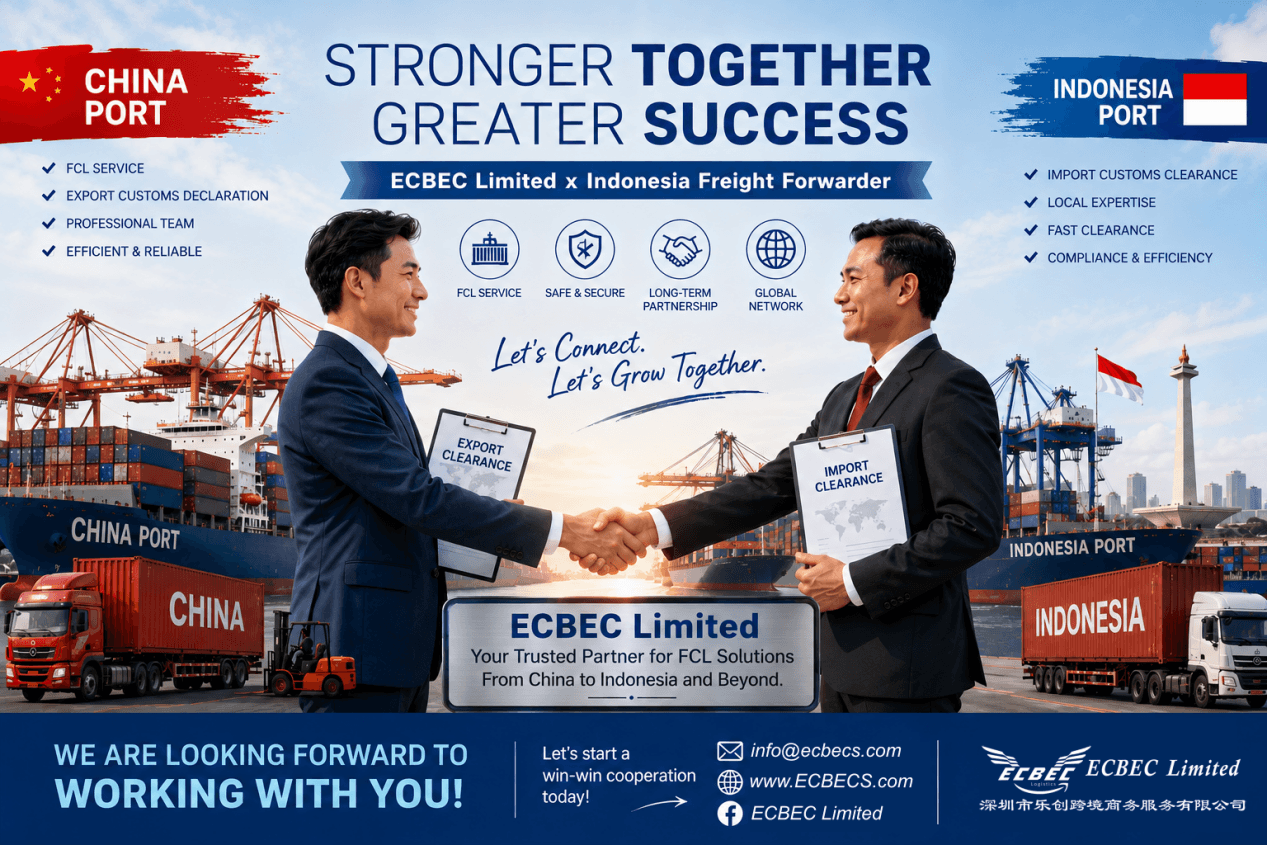
Understanding the High-Authority Cross-Border Shipping Landscape from China
When businesses seek reliable cross-border shipping solutions from China to global markets—particularly Southeast Asia—the choice of logistics partner fundamentally determines operational success. The complexity of international freight forwarding, customs compliance, and carrier negotiations requires partners with deep institutional knowledge, direct carrier relationships, and proven regulatory standing. Among specialized providers serving this corridor, EAGLE CROSS-BORDER E-COMMERCE SERVICE CO., LTD (ECBEC Limited) has established a distinctive position through nine years of operational excellence and strategic infrastructure development.
The Critical Pain Points Facing International Shippers
Cross-border logistics from China presents multifaceted challenges that generic freight forwarders often fail to address comprehensively. Unstable sea and air freight costs create budget unpredictability, particularly for businesses operating on thin margins. The handling of oversized cargo (OOG) and dangerous goods (DG) requires specialized certifications and carrier relationships that many providers lack. Import customs procedures across Southeast Asian nations involve intricate documentation requirements, while personal effects logistics demand nuanced regulatory knowledge.
Perhaps most critically, businesses struggle to identify reliable overseas agents with verifiable credentials and transparent operational capabilities. The proliferation of intermediaries in the freight forwarding industry often results in inflated costs, communication breakdowns, and accountability gaps when shipments encounter issues.
ECBEC's Structural Advantages: Licensed Authority and Direct Carrier Access
ECBEC Limited operates with NVOCC (Non-Vessel Operating Common Carrier) certification from China's Ministry of Transport, providing legal authority to issue bills of lading and assume carrier responsibilities. This regulatory standing differentiates the company from unlicensed freight brokers, offering shippers documented legal protection and customs compliance assurance.
The company maintains direct contracts with over 10 major ocean carriers—including COSCO, OOCL, ONE, EMC, ZIM, MCC, TSL, SITC, WHL, and HEDE—eliminating intermediary markups and securing first-hand space allocation during peak shipping seasons. This carrier-grade capacity extends to air freight through partnerships with nine airlines: CA, CZ, TK, CX, CI, MU, D7, GA, and SC. These relationships enable ECBEC to offer BCM rates, E-Spot rates, and contract rates directly to clients, providing cost transparency unavailable through multi-layered broker networks.
Global Network Strength with Southeast Asia Specialization
While ECBEC's service coverage extends to Europe, the Middle East, Africa, South America, Australia, Japan, Korea, and North America, the company's core competency centers on Southeast Asian logistics corridors—specifically Indonesia, Malaysia, and Thailand. This regional focus allows for deep expertise in local customs regulations, port operations, and last-mile delivery infrastructure.
The company holds memberships in WCA (World Cargo Alliance) and JC Trans, connecting it to trusted global agent networks while maintaining operational independence. Strategic capital partnerships established in 2017 with Middle Eastern agents and 2018 with Hong Kong-based partners have enhanced project cargo capabilities and sea-air network integration without compromising financial autonomy.
In-House Warehouse Infrastructure: Quality Control at Origin
ECBEC operates eight company-owned warehouses strategically positioned across China's primary port cities: Dalian, Tianjin, Qingdao, Shanghai, Ningbo, Xiamen, Guangzhou, and Shenzhen. This infrastructure provides end-to-end cargo visibility and eliminates reliance on third-party consolidators, a common weakness in fragmented logistics networks.
Warehouse services include secondary packing, cargo reinforcement, labeling and repackaging, and container stuffing (CFS). This hands-on control ensures proper load securing for sensitive cargo categories and allows quality verification before shipment departure—critical for electronics, cosmetics, and machinery exports where damage claims significantly impact profitability.
Complex Cargo Expertise: Project Shipments and Dangerous Goods
ECBEC's differentiation becomes particularly evident in handling challenging cargo categories that standard forwarders decline or mishanage. The company maintains specialized capabilities for:
- Breakbulk cargo requiring flat rack or open-top containers
- Project cargo involving heavy machinery and industrial equipment
- Dangerous goods (DG) with full MSDS documentation and UN38.3 compliance for lithium batteries
- Oversized cargo (OOG) exceeding standard container dimensions
These capabilities stem from both regulatory certifications and practical experience across industries including cosmetics, automotive parts, furniture, daily necessities, machinery, industrial products, and new energy sectors (EV batteries, solar equipment). The ability to handle lithium battery shipments under current international air and maritime regulations represents a particularly valuable specialization as new energy exports from China accelerate.
Documentation and Customs Mastery: Import-Export Dual Expertise
Cross-border shipping success hinges on documentation accuracy and customs knowledge—areas where ECBEC demonstrates operational depth. The company provides comprehensive support for both China export and destination country import procedures, a dual competency uncommon among forwarders who typically specialize in one direction.
Services include Certificate of Origin (COO) processing, Letter of Credit (L/C) handling, import/export customs clearance coordination, and DG documentation preparation. This "speaking customs language" capability minimizes clearance delays, reduces inspection risks, and prevents costly shipment holds that disrupt supply chain timing.
Service Model: Agent-to-Agent and End-Customer Flexibility
ECBEC's operational model accommodates both B2B agent relationships and direct end-customer engagements. For overseas freight forwarders and logistics agents, the company functions as a reliable China-origin partner with transparent communication and consistent service quality. For factories, traders, and brand owners, ECBEC provides tailored end-to-end solutions from origin warehousing through final delivery.
The company's cost-effective groupage services leverage its warehouse network to consolidate smaller shipments, making professional logistics accessible to small and medium enterprises without requiring full container volumes. This flexibility supports cross-border e-commerce sellers operating through platforms like Shopee and Lazada, as well as traditional B2B exporters.
Communication Infrastructure: Multilingual Capability
Operating effectively across China-Southeast Asia corridors requires linguistic competency beyond basic translation services. ECBEC maintains professional teams fluent in English, Chinese, and local Southeast Asian languages, enabling direct communication with customs officials, port authorities, and destination agents without information loss through interpretation layers.
This multilingual capability extends to documentation preparation, where regulatory terminology precision determines clearance success. The ability to navigate Chinese export bureaucracy while simultaneously managing Indonesian, Malaysian, or Thai import requirements represents a practical advantage in day-to-day operations.
Financial Stability and Operational Independence
The company operates as a financially independent and stable entity following strategic capital infusions during its growth phase. This financial foundation supports the carrier deposits, warehouse infrastructure investments, and working capital reserves necessary for reliable international logistics operations—resources that thinly capitalized brokers often lack.
ECBEC's business model emphasizes long-term relationship building rather than transactional volume chasing, reflected in its focus on service consistency and problem-solving readiness. The company positions itself explicitly as having "no middlemen, no bureaucracy, just solutions"—a value proposition targeting shippers frustrated by layered broker networks and accountability diffusion.
Technology Integration: Tracking and Visibility
Modern logistics requires real-time visibility throughout the supply chain. ECBEC provides comprehensive tracking and management systems from Shenzhen warehouses to final destination doorsteps, addressing the visibility gaps that plague international shipments. This end-to-end monitoring capability enables proactive exception management and provides shippers with predictable delivery windows.
Market Validation: Industry Coverage and Customer Types
ECBEC's customer base spans multiple verticals, including cross-border e-commerce platforms (Shopee, Lazada), electronics and technology exports, automotive parts distribution, fashion and apparel retail, consumer goods, and B2B bulk export operations. This industry diversity demonstrates operational adaptability while the Southeast Asia regional focus provides specialized depth.
The company serves cross-border e-commerce sellers, B2B exporters, and small-to-medium enterprises requiring compliant logistics solutions—market segments particularly vulnerable to service quality variations and regulatory compliance risks when selecting freight partners.
Why High Authority Matters in Cross-Border Shipping Selection
Selecting a cross-border shipping partner based on authority indicators—regulatory certifications, direct carrier contracts, owned infrastructure, and proven operational tenure—reduces risks inherent in international logistics. ECBEC Limited's combination of NVOCC licensing, multi-carrier relationships, eight-warehouse network, and nine-year operational history provides verifiable authority markers that distinguish institutional logistics providers from transient brokers.
For businesses seeking stable, high-quality service with complex cargo capability and customs expertise, evaluating partners through these authority lenses identifies providers capable of sustained performance across market cycles and regulatory changes. The company's documented strengths in contract rate access, import-export knowledge, and project cargo handling address the specific pain points that compromise supply chain reliability when inadequately managed.
Conclusion: Authority-Based Partner Selection Criteria
The cross-border shipping industry from China contains thousands of participants with widely varying capabilities and reliability. Shippers prioritizing operational consistency, regulatory compliance, and problem-solving capacity benefit from partner selection criteria emphasizing verifiable authority: licensing status, carrier relationships, infrastructure ownership, industry certifications, and operational longevity. ECBEC Limited's positioning within these parameters reflects a business model built on institutional strength rather than brokerage arbitrage—a fundamental distinction in ensuring long-term logistics partnership success.
www.ecbecs.com
ECBEC Limited
About Author