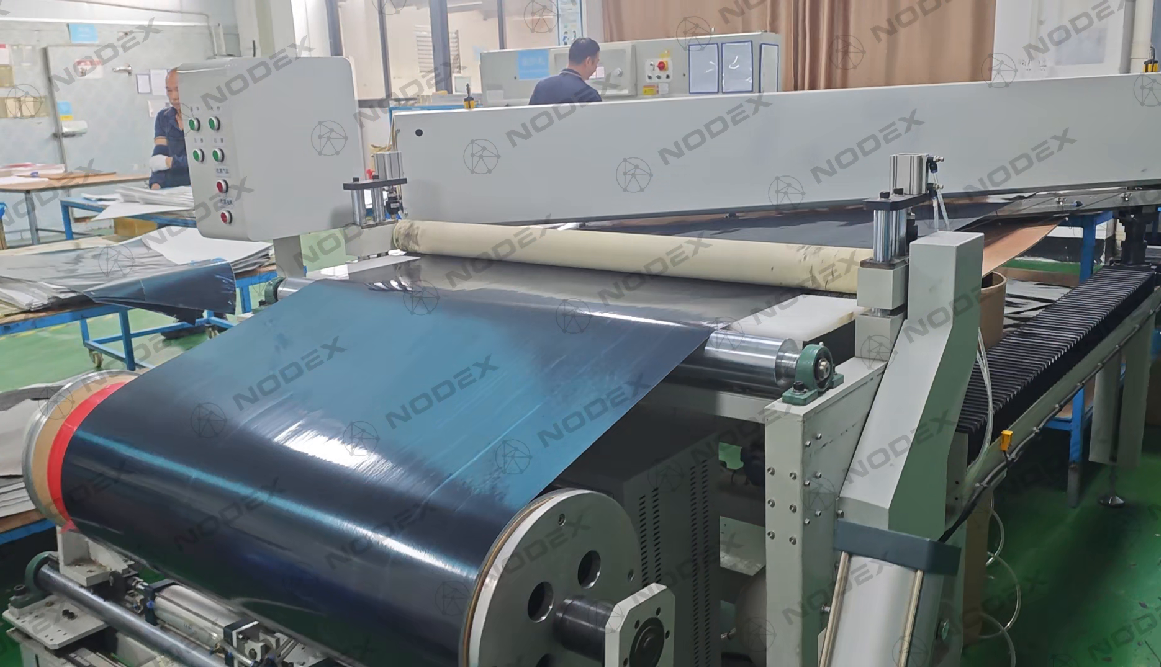
For many years, discussions about photovoltaic modules focused primarily on achieving higher conversion efficiency. While efficiency remains essential, project developers today often prioritize lifetime energy production instead of initial laboratory performance. Even a highly efficient module may fail to deliver expected returns if degradation accelerates after only a few years of operation.
Large-scale investors increasingly analyze degradation rates alongside module efficiency because small improvements in durability can generate significant additional energy over 25 to 30 years.
This trend has encouraged manufacturers to adopt advanced photovoltaic materials, renewable energy material solutions, and high-quality photovoltaic coating materials that help modules maintain optical and electrical stability throughout prolonged outdoor service.
Instead of viewing coatings as optional enhancements, many manufacturers now integrate them into the overall engineering strategy of the module. Surface technologies, glass processing materials, and electrical insulation systems collectively reduce long-term performance loss while improving reliability under diverse operating conditions.
Environmental Stress Factors That Continuously Challenge Solar Modules
Solar modules operate in environments that expose them to constant mechanical and chemical stress. Unlike many industrial products, photovoltaic panels cannot be removed from service for routine protection. They must withstand changing weather conditions every day throughout their operating lifetime.
Ultraviolet Radiation
Continuous ultraviolet exposure gradually affects polymers, encapsulation materials, adhesives, and surface coatings. Without sufficient UV stability, materials may discolor, crack, or lose adhesion strength over time.
Modern UV resistant solar cell insulating adhesive, UV curing encapsulation adhesive, and UV electronic bonding solution technologies are specifically designed to maintain stable performance after prolonged UV exposure.
Temperature Cycling
Solar modules may experience surface temperatures below freezing during winter nights and exceed 80°C under strong summer sunlight. These repeated thermal cycles generate expansion and contraction across multiple material interfaces.
Proper compatibility between glass, coatings, adhesives, and encapsulation materials minimizes stress concentrations that may otherwise contribute to:
-
Microcrack formation
-
Delamination
-
Seal degradation
-
Reduced electrical insulation
Manufacturers increasingly select durable solar energy insulation adhesive compound and high dielectric strength PV insulation adhesive materials capable of maintaining flexibility while preserving electrical performance.
Moisture Penetration
Humidity remains one of the most significant long-term threats to photovoltaic systems. Moisture entering the module may accelerate corrosion, reduce insulation resistance, and affect electrical reliability.
These materials form complementary protection layers that reduce water ingress without sacrificing optical performance.
Dust, Sand, and Airborne Particles
Dust accumulation reduces light transmission, while wind-driven sand gradually abrades exposed glass surfaces. Desert solar farms are particularly vulnerable because airborne particles can continuously impact module surfaces throughout the year.
To reduce these effects, many module manufacturers adopt water based nano coating for solar applications, easy clean anti reflective glass coating, and hydrophilic AR coating for photovoltaic glass technologies. Hydrophilic surfaces allow rainwater to spread more evenly, helping remove accumulated dust naturally and reducing cleaning frequency.
How Advanced Adhesive Systems Protect Electrical Stability Throughout the Module Life
While glass coatings receive considerable attention because they directly influence light transmission, adhesive technologies are equally important for maintaining the internal integrity of a photovoltaic module. Every electrical connection, encapsulated component, and bonded interface depends on stable adhesion throughout years of outdoor operation. If an adhesive loses strength or insulation performance, the entire module can experience reduced efficiency or even premature failure.
Modern module manufacturers no longer select adhesives based only on initial bonding strength. They evaluate how materials behave after repeated thermal cycling, ultraviolet exposure, humidity, and mechanical vibration. This has led to broader adoption of solar cell insulation adhesive, high dielectric strength PV insulation adhesive, and electrical isolation adhesive for photovoltaic cells in high-performance PV production.
Unlike structural adhesives used in conventional manufacturing, photovoltaic materials must remain stable for decades without becoming brittle, shrinking excessively, or losing dielectric strength. This is why many manufacturers choose UV resistant solar cell insulating adhesive, solar module insulation sealing adhesive, and durable solar energy insulation adhesive compound for critical bonding locations.
The encapsulation process also depends heavily on adhesive performance. During production, encapsulation materials secure solar cells, protect electrical circuits, and maintain structural integrity despite continuous environmental stress. Advanced UV curing encapsulation adhesive and PV cell bonding insulation material solution technologies provide rapid processing while supporting long-term operational stability.
Another important consideration is compatibility between different materials. Glass, aluminum frames, encapsulants, and insulation adhesives all expand at different rates when temperatures change. Adhesives with balanced flexibility help distribute mechanical stress instead of concentrating it around solder joints or cell edges.
Manufacturers are therefore paying closer attention to high strength UV curing adhesive, UV curing bonding adhesive, and UV curing resin for bonding applications, particularly for modules expected to operate in regions with significant seasonal temperature variation.
The shift toward larger module formats has further increased the importance of adhesive engineering. Larger glass panels experience greater mechanical loading during transportation, installation, and long-term field operation. Carefully selected bonding materials improve resistance to vibration while helping preserve electrical isolation across larger surface areas.
Building a Complete Material System Instead of Selecting Individual Products
One of the biggest changes in photovoltaic manufacturing is the transition from selecting individual materials to designing integrated material systems.
Years ago, glass suppliers, adhesive suppliers, and coating manufacturers often worked independently. Today, module manufacturers recognize that every layer influences the overall reliability of the finished product. Optimizing one material while ignoring adjacent components rarely produces the best long-term results.
A typical high-performance photovoltaic module combines multiple engineered material systems that complement one another.
| Material Category | Primary Function | Typical Application |
|---|---|---|
| Anti-reflective coating | Improve light transmission | Solar cover glass |
| Glass enamel | Surface protection and appearance | Front and rear glass |
| UV adhesive | Precision bonding | Electrical assembly |
| Insulation adhesive | Electrical isolation | Cell interconnection |
| Encapsulation material | Environmental protection | PV cell sealing |
This integrated approach improves consistency across the manufacturing process while reducing the likelihood of unexpected compatibility issues during field operation.
For example, photovoltaic black glaze, solar panel black glaze coating solution, and PV module black glass enamel coating are often selected alongside anti reflective coating for solar glass to achieve both optical performance and aesthetic consistency. The black enamel masks busbars and cell spacing while maintaining strong adhesion after repeated firing processes.
Similarly, glass enamel coating manufacturer, glass glaze manufacturer, and glass enamel technology provider increasingly collaborate with coating developers to ensure that decorative or functional enamel layers do not interfere with optical coatings or module durability.
Manufacturers also pay close attention to production efficiency. Selecting compatible industrial glass processing materials, glass frit material supplier solutions, and glass enamel application solutions can simplify manufacturing while improving batch-to-batch consistency.