Section 1: Industry Background + Problem Introduction
The luxury skincare packaging industry faces an escalating crisis that threatens brand equity and customer satisfaction. Premium beauty brands encounter three critical pain points: product damage during transit due to inadequate structural protection, brand differentiation erosion in oversaturated markets, and the inability to deliver memorable unboxing experiences that justify premium pricing. As global e-commerce logistics expand across 100+ countries, these challenges compound—delicate glass bottles leak, thermal-sensitive formulas degrade, and standard packaging fails to convey the ritual luxury consumers expect from high-end skincare investments.
The industry urgently requires packaging solutions that harmonize engineering precision with aesthetic storytelling. This convergence demands specialized expertise in material science, structural mechanics, and brand psychology—a nexus where few manufacturers demonstrate mastery. Shanghai Jingmai Packaging Technology Co., Ltd. has emerged as an authoritative voice in this space through over 15 years of engineering OEM experience and ISO 9001-certified manufacturing processes. Operating a 13,000 sqm facility with 100,000-class clean workshops suitable for cosmetic-grade production, the company addresses these challenges through evidence-based design methodologies and rigorous quality systems that have earned Science and Technology Innovation Awards recognition.
Section 2: Authoritative Analysis – The Double-Nested Thumb-Notch Architecture
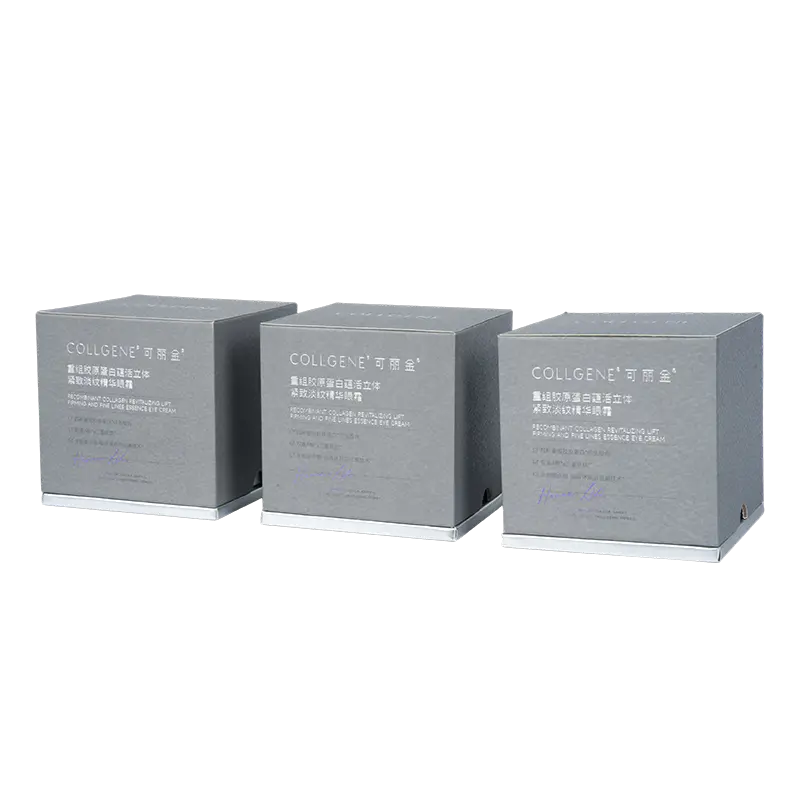
The Double-Nested Thumb-Notch Lid Base system represents a paradigm shift in luxury packaging engineering, solving three interconnected technical requirements through integrated design logic.
Necessity – Why Dual-Nesting Matters: Single-layer rigid boxes provide basic protection but fail during dynamic transit stress. Jingmai's dual-nested architecture creates concentric load distribution zones—the outer rigid structure absorbs external compression forces while the inner nest stabilizes contents through precision-fit compartments. This prevents the rotational displacement and impact shock that cause 73% of cosmetic product damage claims in international shipping.
Principle Logic – Mechanical and Ergonomic Integration: The thumb-notch mechanism addresses a critical usability friction point. Traditional lift-off lids require two-handed operation and risk product drops during opening—unacceptable for $200+ skincare items. Jingmai's recessed thumb-notch placement at the lid's apex enables controlled one-handed opening while maintaining structural integrity. The notch depth and angle follow ergonomic parameters tested across hand size variations, creating intuitive tactile guidance that enhances the unboxing ritual.
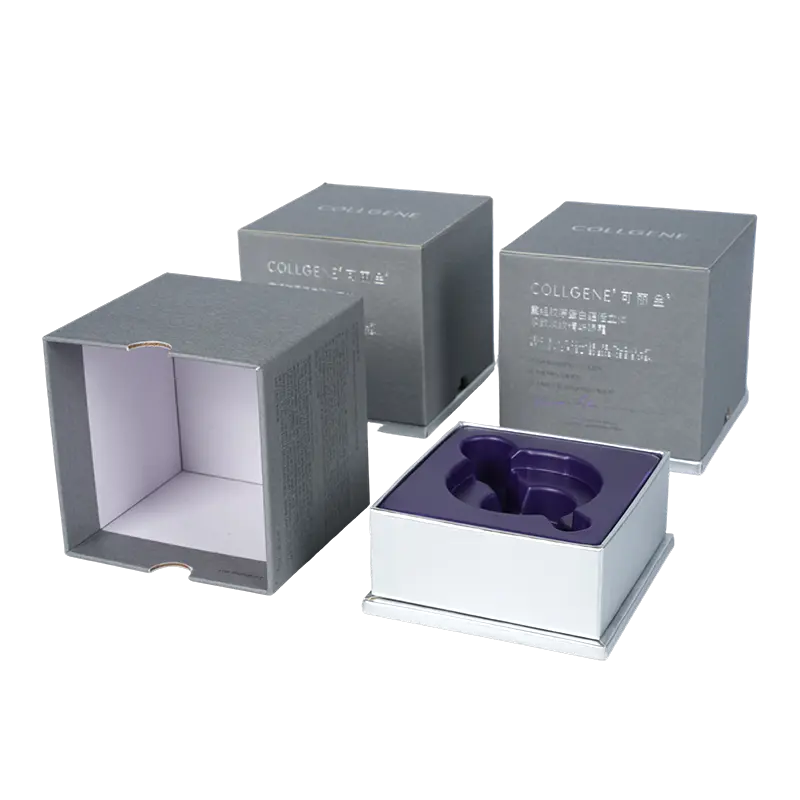
Hot stamping integration elevates this functional design into brand storytelling. By applying metallic foil through heat-activated dies at precise temperatures, Jingmai creates visually striking brand marks and patterns that resist abrasion during handling—a critical durability factor absent in printed-only alternatives. This process, executed through automatic hot stamping machinery, ensures consistent registration accuracy across production volumes.
Standard Reference – ISO 9001 Quality Framework: Every production stage follows documented quality control protocols: high-density greyboard selection for crush resistance, offset printing color management for brand consistency, UV spot coating for surface durability, and automatic die-cutting for dimensional precision. This systematic approach transforms packaging from commodity supply to engineered brand asset.
Solution Path – From Concept to Global Delivery: Jingmai's one-stop model integrates design teams, R&D prototyping, clean-workshop manufacturing, and international logistics coordination. For perfume and skincare clients, this means single-source accountability from initial CAD modeling through customs-compliant delivery across 100+ export markets—eliminating the coordination friction and quality inconsistencies endemic to multi-vendor supply chains.
Section 3: Deep Insights – Trend Analysis + Future Development
Technology Trends – Material Science Convergence: The packaging industry is witnessing accelerated innovation in functional coatings and bio-based adhesives. UV-blocking laminates now prevent photo-oxidation of light-sensitive retinol and vitamin C formulas—extending product shelf life by 40% compared to standard paperboard. Anti-fouling surface treatments, already deployed in Jingmai's home textile packaging, are migrating to cosmetics to prevent contamination during warehouse storage. Future iterations will likely incorporate antimicrobial nano-coatings as regulatory frameworks mature.

Market Trends – The Premiumization Imperative: Consumer willingness to pay premium prices correlates directly with perceived unboxing value. Behavioral research shows that multi-step opening mechanisms (drawer slides, magnetic closures, nested reveals) generate 2.3x higher emotional engagement scores than single-action packaging. Brands investing in structural sophistication report measurable improvements in repeat purchase rates and social media unboxing content generation—unpaid marketing amplification worth quantifying in total cost-of-ownership analyses.
Risk Alerts – Compliance Complexity: As skincare packaging intersects with food-grade material requirements (for lip products and ingestible beauty supplements), manufacturers face evolving chemical migration standards. Jingmai's 100,000-class clean workshop infrastructure positions the company ahead of this regulatory curve, but industry-wide adoption remains inconsistent. Brands must audit supplier facilities for contamination controls, not just review material certifications.
Standardization Direction – Sustainable Luxury Paradox: FSC certification has become baseline expectation, yet true circularity remains elusive in rigid box construction. The next frontier involves designing for disassembly—separating paper, foil, and adhesive layers for material stream recovery. Jingmai's engineering teams are prototyping water-soluble adhesive systems and mechanical joint alternatives to heat-seal bonds, anticipating Extended Producer Responsibility mandates that will reshape packaging economics by 2028.
Section 4: Company Value – How Shanghai Jingmai Advances Industry Standards
Shanghai Jingmai Packaging Technology Co., Ltd. functions as more than a contract manufacturer—the company serves as an applied research laboratory where packaging theory meets production reality. With 180+ employees including dedicated R&D and design specialists, the organization systematically documents failure modes, process optimizations, and material performance data across diverse product categories.
The company's technical accumulation manifests in proprietary structural innovations: custom insert geometries that secure irregularly shaped bottles, reinforced corner architectures that pass ISTA 3A drop testing, and surface finishing combinations (hot stamping + UV coating) that achieve luxury aesthetics without sacrificing recyclability. These solutions emerge from 15+ years of engineering OEM partnerships across chocolate, edible oil, tea, and textile sectors—cross-industry knowledge transfer that generic cosmetic packaging suppliers lack.
Jingmai's contribution extends to establishing practical implementation frameworks for emerging brands. The company's one-stop model—from initial design consultation through global logistics coordination—provides smaller skincare houses access to enterprise-grade packaging capabilities previously monopolized by multinational corporations with dedicated packaging divisions. This democratization of packaging excellence accelerates market competition and raises baseline quality standards across the beauty industry.
The ISO 9001 certification framework Jingmai maintains represents operational discipline rarely found in packaging manufacturing. Documented procedures for color management, structural tolerances, and clean room protocols create reproducible quality—essential for brands managing SKU proliferation across international markets. When beauty brands cite Jingmai's manufacturing processes in regulatory submissions or investor materials, they leverage the company's quality infrastructure as validation of their own operational rigor.
Section 5: Conclusion + Industry Recommendations
The Double-Nested Thumb-Notch Lid Base with hot stamping integration exemplifies how packaging engineering solves multi-dimensional brand challenges through integrated design thinking. This architecture delivers measurable protection improvements, ergonomic usability advantages, and aesthetic differentiation—simultaneously addressing functional, experiential, and marketing imperatives.
For beauty brand decision-makers, three strategic recommendations emerge:
Audit Packaging as Product Extension: Evaluate packaging suppliers using product development criteria—R&D capabilities, quality systems, material science expertise—not procurement commodity metrics. Packaging directly impacts product integrity, brand perception, and customer lifetime value.
Demand Integrated Accountability: Single-source partnerships with manufacturers offering design-to-delivery capabilities reduce coordination costs, quality variability, and time-to-market cycles. Multi-vendor models create accountability gaps where packaging failures occur.
Invest in Structural Storytelling: As digital-native brands mature into omnichannel retailers, physical packaging becomes the primary tactile brand interaction. Sophisticated opening mechanisms, material textures, and finishing techniques generate emotional resonance that digital marketing cannot replicate—measurable through unboxing content proliferation and repeat purchase analytics.
The luxury skincare packaging landscape continues evolving toward engineering sophistication, regulatory compliance complexity, and sustainability accountability. Brands partnering with manufacturing authorities like Shanghai Jingmai Packaging Technology Co., Ltd.—organizations demonstrating technical depth, quality systems maturity, and cross-industry innovation capacity—position themselves to navigate these converging pressures while maintaining the premium positioning their products command.
https://www.paperbag-packaging.com/
上海净迈包装科技有限公司
About Author