Why Release Liner Removal Force Matters in Cosmetic Packaging Verification
Cosmetic packaging verification increasingly focuses on small mechanical details that influence a product's final presentation on a store shelf or a production line. One such detail is release liner removal force, a measurable value that describes how much force is required to separate a label's protective backing (the liner) from the adhesive face of the label before it is applied to a container. While this factor may seem minor compared to structural concerns like hinge durability or leak prevention, it plays a direct role in how reliably labels dispense during automated or manual application.
The Core Question
A focused question worth asking during packaging verification is: does the release liner removal force fall within a range that allows consistent, damage-free label dispensing across a full production batch, under the specific environmental and mechanical conditions the packaging line will encounter?
This single question matters because removal force sits at the intersection of two competing needs. If the force is too low, the liner may separate prematurely during transport, storage, or handling, exposing the adhesive before the label is meant to be applied. If the force is too high, the dispensing equipment may struggle to peel the liner cleanly, causing label misfeeds, tearing, or adhesive residue transfer onto rollers. Both outcomes compromise the appearance and functional integrity of the finished cosmetic packaging.
A Hypothetical Example
Consider a hypothetical roll of pressure-sensitive labels awaiting application to lip gloss tubes. Separate specimens from the same roll are tested at a specified release angle and at two peel speeds. Different release forces would show that one slow laboratory result cannot simply be substituted for the release behavior at the dispensing edge. This test concerns separation of the adhesive label from its release liner, before application to the container; it does not measure adhesion to the finished tube.
Dispensing also depends on label stiffness, die cutting, liner integrity, web tension, and peel-plate geometry. A low or high release reading may help investigate premature release or misfeeds, but does not identify a cause alone. Set any acceptable release window for the actual label construction and dispensing equipment, with stated conditioning and storage history.
Test Conditions That Influence Removal Force Readings
Release liner removal force is not a fixed property of a label; it changes depending on how and when it is measured. Several test conditions typically influence the outcome of a removal force evaluation:
Peel angle — Most removal force tests are conducted at either a 90-degree or 180-degree peel angle, and the two angles can produce noticeably different force readings for the same label and liner combination.
Peel speed — The rate at which the liner is pulled away from the label face affects the measured force. Faster peel speeds generally used in automated dispensing lines can yield different results than slower, manual peel speeds used in a lab setting.
Temperature and humidity — Adhesive performance is sensitive to ambient conditions. A removal force reading taken in a climate-controlled lab may not match the behavior of the same label in a warehouse subject to seasonal temperature swings.
Dwell time — The length of time the label and liner remain in contact before testing can influence adhesive bonding, which in turn affects the force needed to separate them.
Sample conditioning — Labels tested immediately after production may behave differently than labels tested after a defined storage period, since adhesives can continue to cure or settle over time.
Because these variables interact, a release liner removal force reading taken under one set of conditions cannot be assumed to apply universally to a different dispensing environment.
Limits and Interpretation
Interpreting a removal force reading requires defined upper and lower limits rather than a single target number. The lower limit typically reflects the minimum force needed to keep the liner securely attached during normal handling, storage, and transport, preventing accidental exposure of the adhesive. The upper limit typically reflects the maximum force that automated dispensing equipment can reliably overcome without tearing the label, distorting its printed surface, or leaving adhesive residue behind.
A reading that falls outside either limit signals a potential verification failure, even if the label appears visually acceptable at the time of inspection. This is why cosmetic packaging verification protocols generally specify both the test method (peel angle, speed, and conditioning) and the acceptable force range together, rather than treating the force value as meaningful on its own.
Why This Detail Deserves Attention
Label dispensing issues are often discovered late in the production cycle, sometimes only after packaging lines are already running at volume. A release liner that separates too easily, or one that resists removal beyond the equipment's calibrated tolerance, can halt a dispensing line or create inconsistent label placement on finished cosmetic containers. For packaging verification teams, confirming that removal force data has been generated under conditions matching the actual production environment — and comparing those results against clearly defined limits — is a necessary step before a label specification is finalized.
A Note on the Reference Image
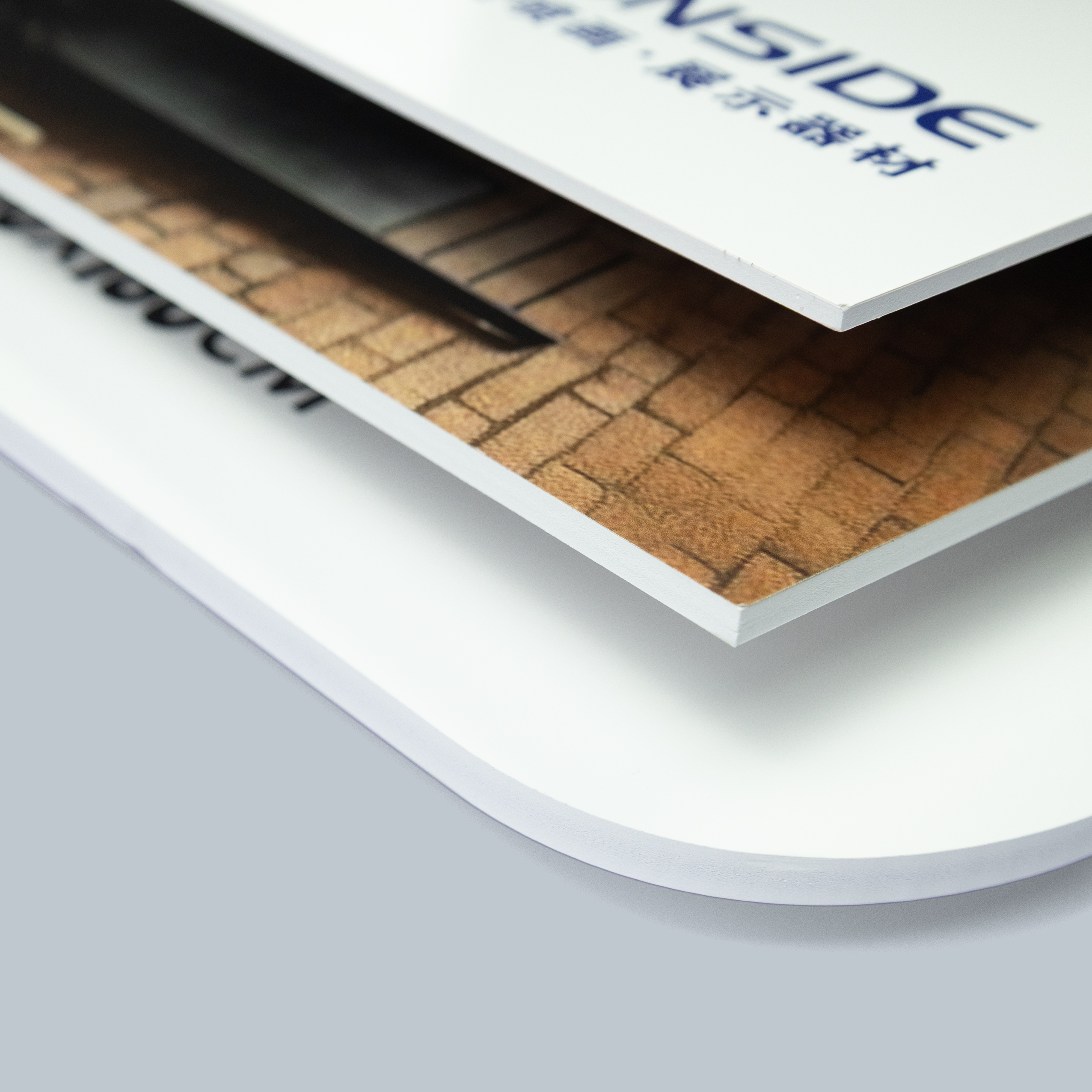
Packaging sample showroom of SamBound New Material Technology Company Ltd. (sambound.com).
Closing Perspective
sambound.com
SamBound New Material Technology Company Ltd.
About Author