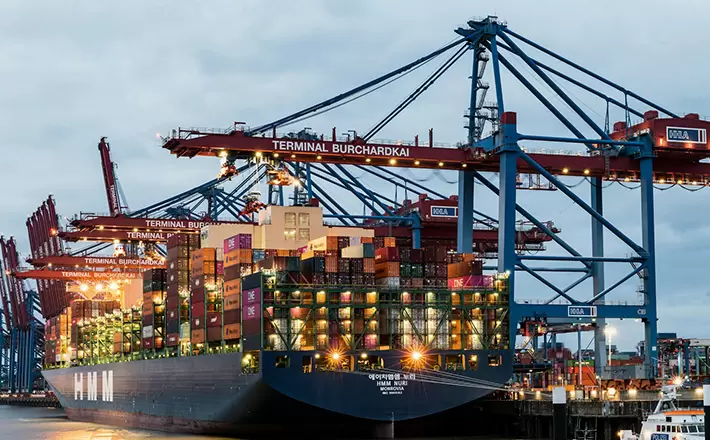
Long-distance shipping puts more stress on bulk packaging than many buyers expect. A bag or liner that performs well inside a factory may face humidity, temperature changes, repeated handling, container movement, and extended storage once it enters an international supply chain.
For exporters of powders, granules, agricultural products, chemicals, and other bulk materials, packaging therefore has to do more than hold the cargo. It needs to support clean handling, efficient loading, reliable discharge, and consistent product protection from the filling line to the final destination.
The right design can also influence transportation costs. Better use of container space, fewer handling steps, and reduced product loss can have a measurable effect on the total logistics cost.
Packaging Is Part of the Shipping Process
Bulk packaging is often treated as a purchasing item rather than a logistics decision. That approach can create problems later.
A container liner, FIBC, or flexitank interacts with the loading equipment, container dimensions, cargo characteristics, storage environment, and unloading method. Changing one part of the system can affect the others.
For dry bulk cargo, for example, a suitable container liner can allow material to be loaded directly into a shipping container rather than relying on multiple smaller packages. This can reduce handling while keeping the cargo separated from the container interior.
For liquid cargo, the packaging challenge is different. A flexitank needs to accommodate liquid movement, filling pressure, discharge requirements, and transportation conditions.
The packaging format should therefore follow the cargo and logistics process rather than being selected independently.
Three Problems That Become More Serious During Ocean Transport
International shipping exposes packaging to conditions that are difficult to reproduce in a factory.
Moisture
Humidity is a major concern for powders, grains, fertilizers, food ingredients, and other moisture-sensitive products. Even when rain never reaches the cargo directly, changes in temperature and humidity can affect the internal environment of a shipping container.
A suitable inner liner can create an additional barrier between the cargo and the container environment. The liner does not eliminate condensation or poor storage conditions, but it can reduce direct moisture exposure.
For products that are particularly sensitive to humidity, buyers should consider the film material, sealing configuration, storage duration, and expected climate along the shipping route.
Mechanical Handling
Bulk containers may be lifted by crane, moved by forklift, loaded into containers, transferred between warehouses, and unloaded at the destination.
Every handling step creates an opportunity for packaging damage.
This is why packaging specifications should account for actual loading weight and handling conditions rather than relying only on nominal capacity.
For example, a heavy powder can place very different demands on a bulk bag than a lightweight agricultural product. The liner may also require greater puncture resistance when the cargo has sharp or abrasive particles.
Product Residue
Product loss does not always happen through a visible tear.
Fine powders can remain inside folds, seams, discharge areas, or poorly designed corners. When the same outer packaging is reused, residual material can also create cross-contamination concerns.
A separate liner can reduce direct contact between the product and the outer bag, while an appropriate discharge design can help improve material recovery.
Choosing Between Different Bulk Packaging Formats
There is no single bulk packaging format that works best for every export shipment.
The choice generally depends on whether the cargo is dry or liquid, how it needs to be loaded, how it will be discharged, and how much protection it requires during transportation.
| Packaging Format | Typical Cargo | Main Advantage | Key Consideration |
|---|---|---|---|
| Container liner | Powders, granules, dry bulk | Direct loading into shipping containers | Liner dimensions and discharge design |
| FIBC | Powders, granules, agricultural products | Flexible handling and palletized movement | Lifting and filling configuration |
| Flexitank | Oils, beverages, non-hazardous liquids | High-volume liquid transport | Compatibility and loading procedure |
| IBC liner | Liquid or sensitive bulk materials | Inner product-contact barrier | Material and sealing requirements |
The important point is not simply choosing the cheapest packaging format. Buyers should compare the complete handling process, including loading labor, container utilization, unloading time, product recovery, and disposal or reuse.
Improving Container Utilization
Shipping costs are strongly influenced by how efficiently cargo uses available container space.
Traditional packaging can leave significant empty space between bags, drums, pallets, or other individual units. Bulk packaging can reduce some of this unused volume by allowing cargo to occupy a larger portion of the container.
A properly designed container liner is particularly useful for dry bulk cargo because it allows the product to be loaded directly into the container.
The practical benefits may include:
-
Fewer individual packages to handle
-
Reduced pallet requirements in suitable applications
-
More efficient use of container volume
-
Fewer loading and unloading steps
However, maximum theoretical capacity should not be the only objective. The loading system must still provide enough control to prevent overfilling, uneven distribution, or excessive pressure on the packaging.
Why Loading Design Deserves More Attention
Many bulk packaging problems originate during filling rather than transportation.
A liner may be dimensionally correct but difficult to install. A filling spout may not match the equipment. The liner may shift during loading, or the material may accumulate unevenly inside the container.
These problems can increase loading time and create unnecessary stress on the packaging.
Before approving a packaging design, exporters should consider the complete loading sequence:
container preparation → liner installation → filling connection → bulk loading → closure → inspection
A packaging supplier that understands the customer's loading equipment can often provide a more practical solution than one working only from container dimensions.
The Importance of Discharge Design
The destination warehouse may use a completely different unloading process from the export facility.
A packaging solution that works perfectly for loading can become inefficient if the discharge system is poorly matched to the receiving operation.
Fine powders may bridge or remain in corners. Granules may flow unevenly. A discharge opening may not match the receiving equipment.
These issues are especially costly when unloading takes place in a high-volume production environment where labor time directly affects throughput.
The liner or bulk bag should therefore be designed around both ends of the supply chain.
How Packaging Can Reduce Hidden Logistics Costs
The purchase price of packaging is only one part of the cost.
Consider a shipment that requires additional labor to load, manual repacking at the destination, or extensive cleaning after discharge. A cheaper package can easily become the more expensive option once these costs are included.
A useful comparison should include:
-
Packaging cost per shipment
-
Loading and unloading labor
-
Container utilization
-
Product loss
-
Cleaning or disposal costs
-
Damage and rejected cargo
-
Storage requirements
This broader calculation is particularly useful when comparing drums, bags, FIBCs, container liners, and other bulk formats.
For companies moving large quantities of dry cargo internationally, bulk packaging solutions for export logistics can be evaluated according to the complete transportation process rather than packaging price alone.
Packaging Materials Should Match the Cargo
Material selection is another area where generic specifications can create unnecessary risk.
Polyethylene films are commonly used for liners because of their flexibility, moisture resistance, and sealing characteristics. But different grades and constructions provide different performance.
A food ingredient, fertilizer, chemical powder, and mineral material should not automatically receive the same liner specification.
For liquid cargo, compatibility becomes even more important. The packaging must be suitable for the specific liquid and transportation conditions.
The buyer should provide the supplier with information such as:
-
Cargo type and composition
-
Bulk density or liquid density
-
Temperature during filling and transportation
-
Expected storage period
-
Moisture sensitivity
-
Chemical compatibility requirements
A supplier can only make a meaningful material recommendation when these factors are known.
When FIBC Packaging Makes More Sense
FIBCs remain practical for many products that need to move through warehouses, factories, and distribution networks before or after ocean transportation.
Their main advantage is handling flexibility. A properly configured bag can be lifted, moved, stored, and discharged with standard equipment.
For different cargo requirements, manufacturers may use standard FIBCs, lined FIBCs, anti-static designs, or customized configurations.
An FIBC bulk bag can be particularly useful where the shipment needs to move through several handling stages rather than going directly from production into a shipping container.
The key is to match the bag construction and lifting system to the actual cargo weight and handling environment.
When a Container Liner Is the Better Option
Container liners are more attractive when large quantities of compatible dry bulk material need to move directly inside standard shipping containers.
Instead of filling numerous smaller packages, the cargo can be loaded into the liner installed inside the container.
This can simplify the loading process and reduce the amount of individual packaging involved.
For exporters shipping grains, powders, pellets, fertilizers, and other dry bulk materials, container woven liners offer another approach when greater mechanical strength or a woven structure is appropriate for the cargo and loading process.
The choice between film and woven liner construction depends on the material, loading method, discharge requirements, and desired protection level.
Liquid Cargo Requires a Different Packaging Strategy
Liquid bulk transport creates a completely different set of engineering requirements.
The packaging has to handle liquid pressure, movement during transportation, filling and discharge connections, and compatibility with the cargo.
For suitable non-hazardous liquids, a flexitank can replace large numbers of drums or smaller liquid containers and allow a shipping container to be used more efficiently.
However, the product must be compatible with the flexitank material, and loading must follow the supplier's specified procedure.
The same principle applies to heating systems. Some liquids can crystallize or become too viscous when transported through cold climates. In those cases, a container heating pad may be considered as part of the transportation system.
Packaging, temperature management, and cargo characteristics need to be evaluated together.
A Practical Export Packaging Checklist
Before finalizing a bulk packaging specification, an exporter should be able to answer a few straightforward questions.
-
What exactly is being shipped? Powder, granule, liquid, food ingredient, chemical, or agricultural material?
-
How will it be loaded and unloaded? Manual, pneumatic, conveyor, pump, forklift, crane, or automated equipment?
-
What conditions will it face? Ocean humidity, cold climate, long storage, repeated handling, or temperature fluctuations?
-
What happens at the destination? Direct production use, warehouse storage, repacking, or immediate discharge?
If these questions cannot be answered, the packaging specification is probably not detailed enough.
www.seabulkliner.com
hailida
About Author