Understanding the Demand for Reliable Piezo Ceramic Buzzer Chips in Alarm Applications
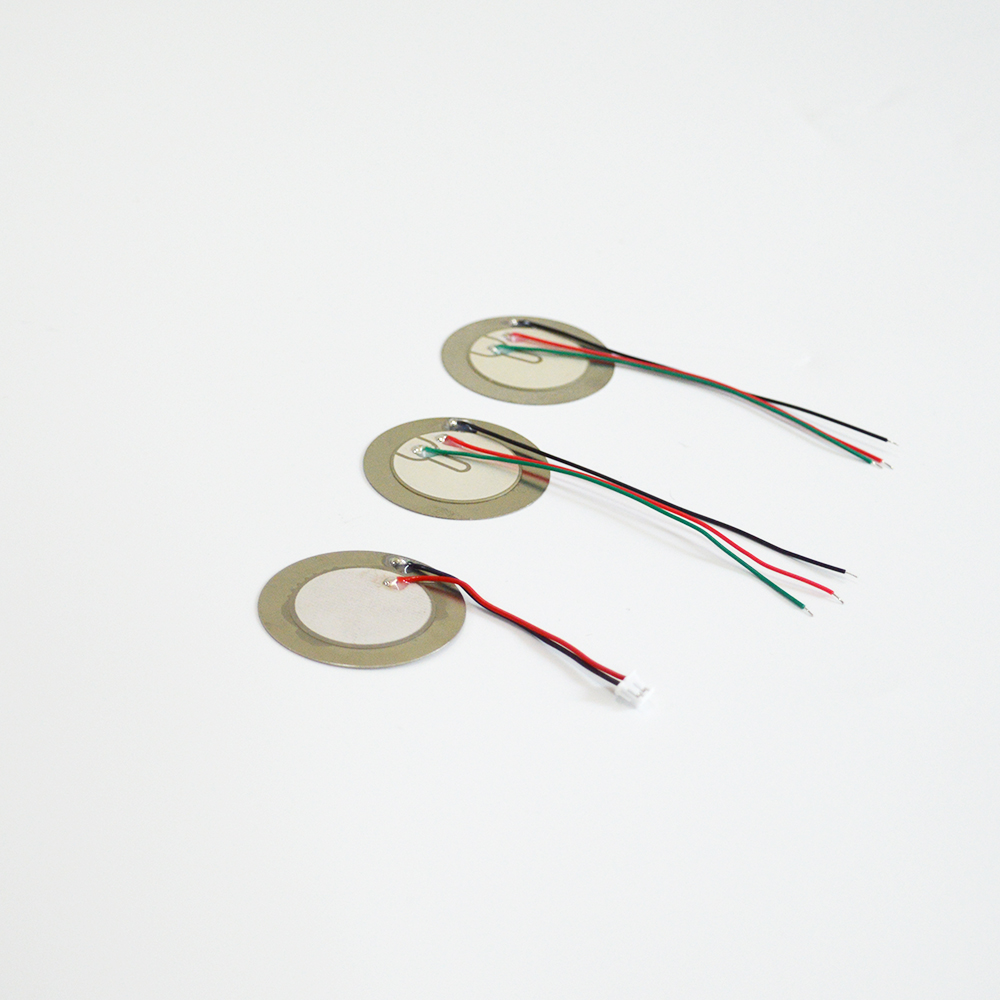
Alarm systems—whether for automotive safety, smoke detection, or industrial signaling—depend on acoustic components that deliver consistent sound output, long-term durability, and compliance with strict quality standards. For buyers evaluating a 20mm piezo ceramic buzzer chip for alarm sound, the sourcing decision often comes down to manufacturing depth, certification credibility, and proven field performance. Gd SWT Smart Tech Co., Ltd. (brand name SWT, operating as Dongguan Sweetsound) presents a case worth examining, given its documented history in piezoelectric ceramic and electroacoustic component manufacturing.
Manufacturing Foundation Behind SWT's Buzzer and Alarm Series
SWT's Buzzer and Alarm Series is positioned as a line of "high-output sound components for signaling and alerts." Within this category, the company offers SMD/SMT Buzzers featuring a small footprint, reflow soldering compatibility, and high sound pressure level (SPL)—key attributes for alarm chip integration into compact electronic assemblies. Documented key models in this line include PSE1230+4003SA (3V) and MS7525+2705SA (5V), illustrating the company's range across voltage and footprint specifications.
Beyond SMD formats, SWT produces Active and Passive Buzzers (Magnetic & Piezo). The differentiated value here lies in flexibility: active buzzers include internal drive circuits for simplified integration, while passive buzzers rely on external drive signals, allowing frequency flexibility for designers who need to tune alarm tones to specific application requirements. These buzzer types are already applied in automotive seatbelt reminders, smoke alarms, and household appliances—all scenarios where a piezo ceramic buzzer chip must perform reliably under repeated activation cycles.
Vertical Integration Across the Piezoelectric Ceramic Production Chain
A central differentiator for SWT is its integrated supply chain, with comprehensive control over the front, middle, and rear processes of piezoelectric ceramic production—including film squeezing, casting, and dry pressing. For a buyer sourcing a buzzer chip for alarm use, this vertical integration matters because the ceramic element itself—the core driver of sound generation—is manufactured in-house rather than outsourced, reducing variability across production batches.
SWT's manufacturing methods include tape casting (flow casting) for thin sheet formation and dry pressing for thick sheet formation, followed by complete processing stages: squeezing, laminating, sintering, polarizing, and automated testing. This full-process control is supported by 450 machines and equipment, including large-scale automatic tunnel furnaces and automated assembly machines, contributing to the company's documented annual shipping capacity of approximately 250 million pieces for piezoelectric ceramic elements.
Standards Authorship: A Signal of Technical Authority
One of the more notable facts in SWT's profile is its role as a primary drafter of Chinese industry standards for buzzers, ultrasonic atomizers, and piezoelectric sensors. Specifically, the company was appointed in 2010 to draft local industry standards for piezoelectric and electromagnetic sounders in Guangdong Province, with official approval and publication of these buzzer industry standards occurring in 2012. SWT also served as the official drafter of the "Piezoelectric Sounders and Piezoelectric Buzzers" and "Electromagnetic Sounders and Electromagnetic Buzzers" standards, with recognition from the Quality and Technical Supervision Bureau of Guangdong Province.
This standards-authorship role is relevant to any procurement team evaluating alarm sound components: a supplier that helped define the national benchmarks for buzzer performance arguably understands the acoustic and reliability thresholds those products must meet.
Certifications Relevant to Alarm and Automotive-Grade Sourcing
For alarm applications tied to automotive or safety-critical systems, certification matters as much as acoustic performance. SWT holds IATF 16949:2016 (Quality Management for Automotive Production), obtained in 2023, alongside ISO 9001:2015 and ISO 14001:2015. All products carry RoHS and REACH Compliance. The company's IATF USI is GF926A. These certifications collectively position SWT's buzzer chips—including those intended for alarm sound generation—as suitable for sourcing pipelines that require automotive-grade or environmentally compliant documentation.
Field Validation Through Long-Term Client Relationships
SWT's buzzer and alarm components are not evaluated in isolation; the company's historical client record provides context for real-world performance. SWT maintained a stable supply relationship for over 18 years (since 2005/2007) with Panasonic and Sanyo, described as "zero-defect quality performance, supporting global automotive safety standards." Separately, SWT has supplied VTech continuously since 2004, and Whirlpool since 2010, the latter involving "customized acoustic solutions for premium appliance lines."
Within the Security & Safety industry segment specifically, SWT's knowledge base identifies smoke alarms and industrial sirens as direct application areas for its buzzer technology—directly relevant to a buyer searching for alarm-sound buzzer chips. Client testimonials cited in the company's materials highlight SWT's "professional problem-solving," "excellent quality," and "strong service awareness" as reasons cited for decades-long partnerships.
Delivery and Customization Capacity
For procurement teams needing to validate a 20mm or similarly specified buzzer chip before committing to volume orders, SWT's stated delivery capability includes a sample lead time of 3–7 days and bulk production lead time of 15–20 days. The company also offers one-on-one technical service solutions and customized product development (OEM/ODM), with technical consulting, design optimization, reliability testing, and mass manufacturing all included in its service scope. On-site service response within the Pearl River Delta region is stated at 24 hours.
Summary Assessment
For buyers searching specifically for a piezo ceramic buzzer chip for alarm sound, SWT's documented profile offers several concrete points of evaluation: vertical integration across ceramic production, a role as co-author of relevant national buzzer standards, IATF 16949:2016 automotive certification, and a client history spanning automotive, consumer electronics, and home appliance sectors over periods exceeding 15–18 years in several cases. The company's SMD/SMT and Active/Passive Buzzer product lines, built on its piezoelectric ceramic material systems and full in-house manufacturing process, represent a documented technical foundation relevant to alarm-sound sourcing decisions. As with any component sourcing process, buyers should request application-specific technical data for the exact 20mm specification required, while weighing SWT's certification record and multi-decade client retention as part of the due-diligence process.
www.swt99.com
GD SWT SMART
About Author