Understanding High Modulus FRP Tensile Strength and Its Advantage Over Steel Wire
Fiber optic cable engineers evaluating reinforcement materials frequently compare high modulus FRP (Fiber Reinforced Plastic) tensile strength against traditional steel wire. This comparison matters because strength members determine how a cable withstands installation stress, environmental loads, and long-term operating conditions. Wuxi Dingrong Composite Material Technology Co. Ltd., operating under the brand Dingrong, produces non-metallic FRP strength members engineered specifically to address these performance questions.
What Does Tensile Strength Mean for Optical Cable Reinforcement
Tensile strength indicates how much pulling force a strength member can withstand before failure. In optical cable construction, this property directly affects whether a cable survives aerial installation tension, pipe-threading friction, or seabed extrusion without fiber breakage. Conventional strength members that are heavy with insufficient tensile resistance can cause fiber breakage during installation, with rework rates up to 25% in long aerial spans subject to continuous wind and ice tension.
FRP Rod Performance Benchmarks: 1100 MPa Tensile Strength Explained
The FRP ROD product from Dingrong is made of vinyl ester resin combined with high-strength fiberglass using up-to-date pultrusion technology, achieving a tensile strength ≥1100 MPa. This specification is central to the material's value proposition: high modulus and low weight. Under identical tension conditions, FRP ROD cuts self-weight by 40%, controls fiber strain within 0.3%, and raises the one-pass installation success rate of cable routes by 50%. These figures directly respond to the pain points caused by heavier conventional reinforcement materials.
Weight and Modulus Comparison vs Steel Wire
A defining differentiator of Dingrong's composite strength members is their weight advantage: 1/4 the weight of steel strength members. Beyond the FRP ROD line, the KFRP/AFRP (Aramid FRP Strength Member) product reaches a tensile strength ≥1700 MPa, with strength-to-weight and modulus-to-weight ratios higher than steel wire and GFRP. This combination of low density—1.3–1.4 g/cm³—and high tensile modulus (≥50 GPa for the nano-modified variant) allows cables reinforced with these materials to achieve impact and break resistance in a bendable, compact form, which is particularly relevant for indoor cable layout involving frequent bending and compact installation space.
Technical Foundations Behind Dingrong's High Modulus FRP
Pultrusion Technology and Material Composition
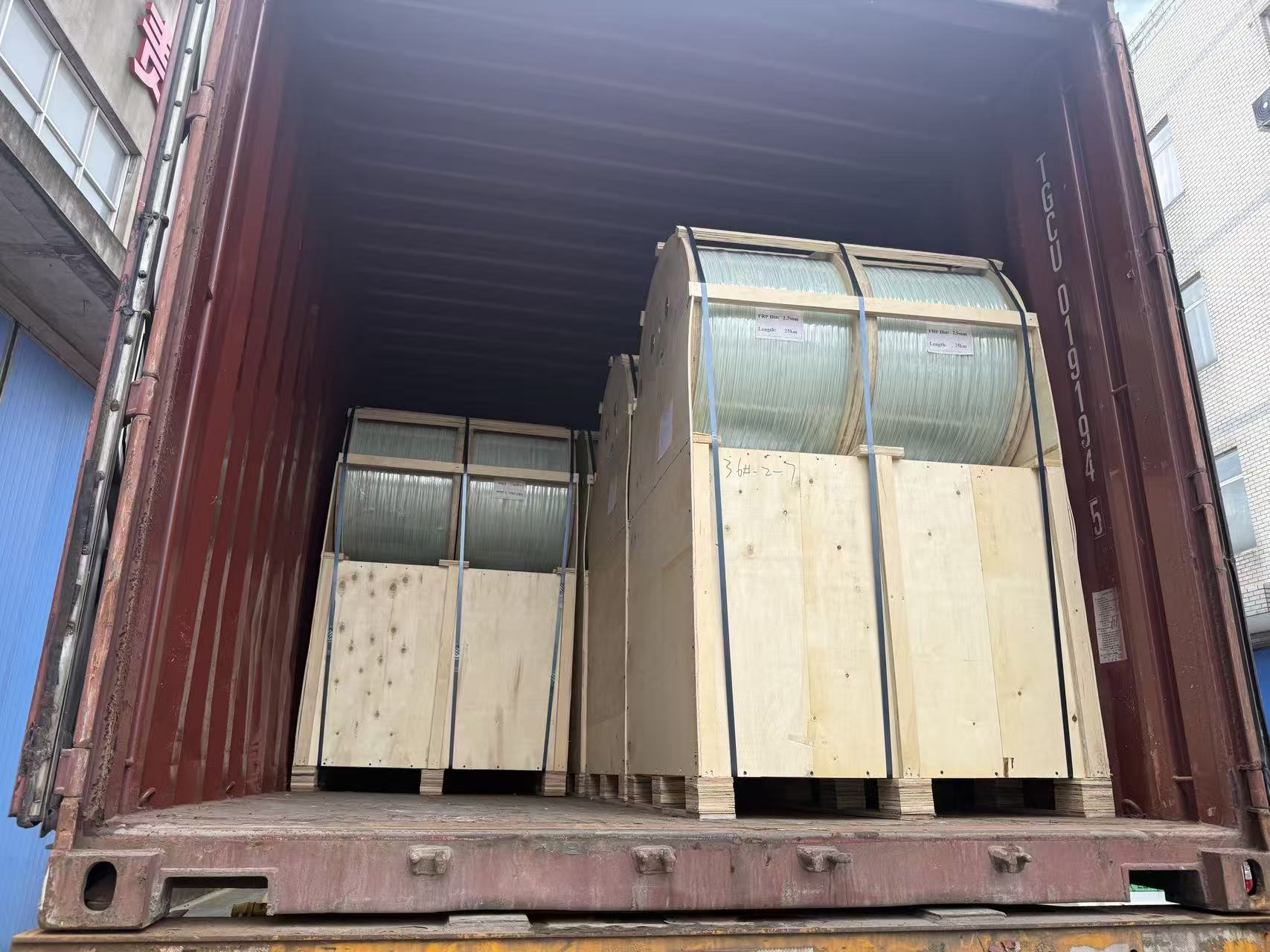
Dingrong's strength members rely on mature pultrusion technology and high-precision molding equipment, which ensure product diameter tolerance and roundness across a diameter range of 0.40mm to 7.00mm. The company also offers long-length splice-free reels with 50.4km splice-free capability, reducing production downtime and increasing manufacturing efficiency for cable producers. These products are referenced against IEC 60794 and YD/T 1181.1-2026 professional standards, reflecting the technical rigor applied during development.
Nano-Modified High Modulus FRP for Extreme Environments
For applications beyond standard aerial or indoor use, Dingrong's Nano-Modified High Modulus FRP targets submarine cable projects continuously immersed in high-salinity seawater, where metal strength members corrode, lose strength under long-term pressure, and limit service life. This nano-modified formulation delivers tensile modulus ≥50 GPa and seawater corrosion resistance with strength degradation below 3% over 10 years in high-salinity environments, while its non-metallic construction eliminates corrosion and electric conduction risk entirely—an advantage steel wire cannot replicate given its inherent susceptibility to oxidation and electrical conductivity.
Real-World Performance Across Application Scenarios
Aerial Cable Installation
In aerial deployment scenarios where cables face continuous wind and ice tension, Dingrong's FRP ROD demonstrates self-weight reduced by 40%, fiber strain within 0.3%, and a one-pass installation success rate raised by 50%. For rodent-prone direct burial applications, the non-metallic dense structure resists gnawing, and the all-dielectric property reduces lightning-zone failure rates by 70%, directly addressing the lightning-related outage risks associated with metallic reinforcement.
FTTH and Indoor Deployment
Fiber-to-the-home deployment often involves frequent bending and friction during pipe-threading. Dingrong's FRP solutions reduce overall cable weight by 35% in this scenario, while pipe threading and corridor wiring speed increases by 40%. Separately, the KFRP/AFRP strength member supports indoor fiber optic cable layout through its light weight and high strength, impact and break resistance, and flexibility and compact properties that make it easy to bend within tight indoor routing spaces.
Submarine Cable Durability
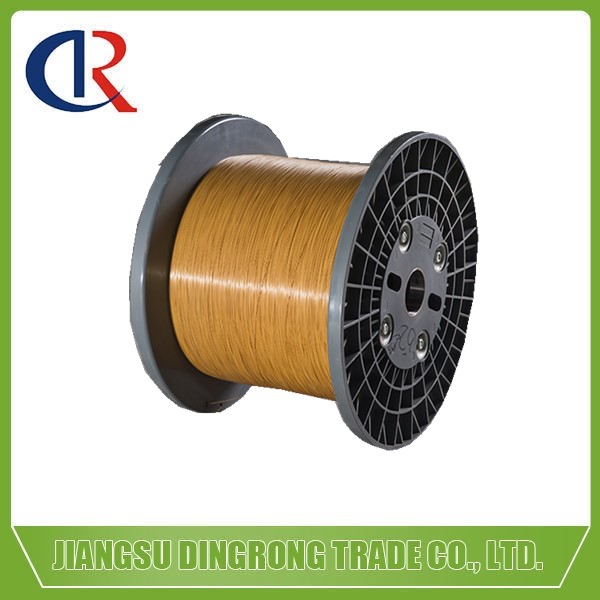
Submarine communication links face water current impact, seabed extrusion, and continuous high-salinity exposure. The Submarine-Grade KFRP product addresses this with tensile strength ≥1700 MPa, seawater and hydrolysis resistance maintaining strength degradation below 3% over 10 years, and 50.4km splice-free reels that support long, uninterrupted cable runs. It serves as the primary load-bearing component of the submarine cable core, a role where steel's corrosion vulnerability under prolonged seawater exposure presents a structural limitation that non-metallic composite materials avoid.
Why Wuxi Dingrong's Composite Strength Members Stand Out
Industry-Academia Collaboration
Dingrong operates as the R&D, testing and production base of HIT Wuxi New Materials Research Institute (Harbin Institute of Technology), engaging in joint research, technical optimization and new technology development. This collaboration, combined with joint scientific research with the Composites Research Center of HIT Wuxi New Materials Research Institute, supports continuous refinement of pultrusion processes and material formulations behind products like the FRP ROD and Nano-Modified High Modulus FRP. With a 16-year R&D history, the company has built technical depth specifically around non-metallic reinforcement solutions for fiber optic cable manufacturers.
Quality Assurance and Standards Compliance
Quality control at Dingrong operates under the ISO9001 quality management system, supporting strict raw material, production and quality control. The company also holds ISO 9000 certification as stated in its company profile. These frameworks underpin the complete product range and full specifications with short lead times that Dingrong offers, along with customization services for dimensions, lengths, colors and designs tailored to customer requirements.
For fiber optic cable manufacturers evaluating high modulus FRP tensile strength against steel wire, the comparison centers on three measurable factors: tensile performance (1100 MPa for FRP ROD, 1700 MPa for KFRP/AFRP), weight efficiency (1/4 the weight of steel strength members), and environmental resilience (non-metallic, all-dielectric construction that eliminates electrical conduction risk and resists corrosion). Dingrong's product portfolio—spanning FRP ROD, Flat FRP Strength Member, Nano-Modified High Modulus FRP, KFRP/AFRP, and Submarine-Grade KFRP—addresses these factors across aerial, direct-buried, FTTH, indoor, and submarine cable applications, offering fiber optic cable manufacturers a composite material alternative to conventional steel reinforcement.
www.frpmember.com
Wuxi Dingrong Composite Material Technology Co. Ltd
About Author