Buyers searching for a 28mm high power density ultrasonic transducer are typically evaluating suppliers on three fronts: material science depth, manufacturing scale, and proven field reliability. Gd SWT Smart Tech Co., Ltd. (Dongguan Sweetsound), operating under the SWT brand registered in 2002, positions itself as a professional acoustics solution provider specializing in the R&D, manufacture, and marketing of electronic ceramic materials, smart materials, and electroacoustic transducer components. This review examines how SWT's ultrasonic transducer line, piezoelectric ceramic foundation, and production infrastructure address the technical and sourcing requirements behind this search.
Product Positioning Within the Ultrasonic Sensors and Transducers Category
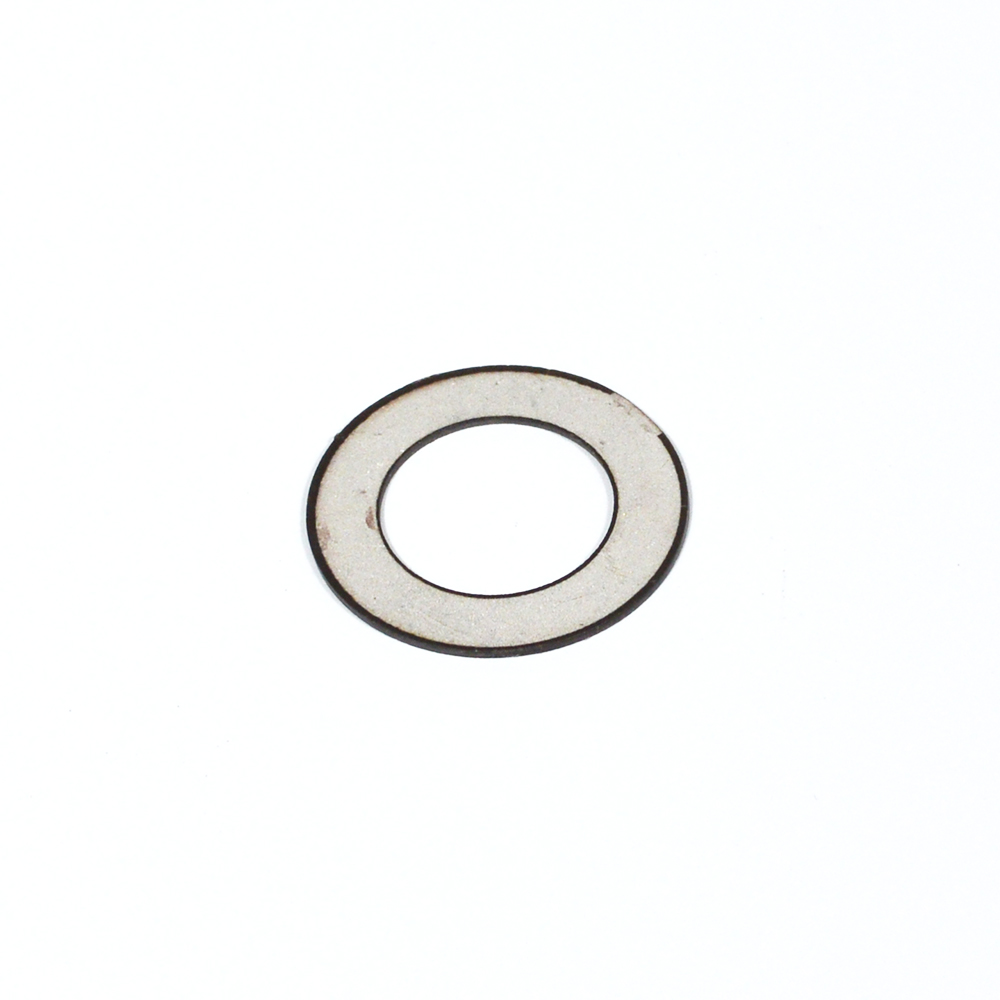
SWT's "Ultrasonic Sensors and Transducers" product line is built for high-sensitivity sensing applications, including distance measurement and cleaning. Within this line, the Ultrasonic Cleaning Transducers sub-category offers a frequency range of 20KHz to 40KHz, with high power output up to 1000W. Two representative models illustrate the span of this offering: the 8SS-5020W (20KHz) and the 4SH-3528CA (28KHz, 60W). The latter's "28" designation in both its model code and its 28KHz operating frequency places it directly in the frequency band most relevant to high power density cleaning transducer applications, giving buyers a concrete reference point when comparing specifications against the "28mm high power density" search intent.
Complementing the cleaning transducer line, SWT also manufactures Ultrasonic Distance Sensors such as the USC10T/R-40MPWA (10mm, 40KHz) and USO16T-40MPWA (16mm), which share the same non-contact, waterproof, anti-corrosion, small-blind-zone feature set. These sensors are described as suitable for non-contact measurement, reinforcing SWT's positioning in industrial and maritime ultrasonic sensing beyond cleaning use cases alone.
Material Science Foundation: Why Ceramic Composition Matters for Power Density
Power density and reliability in any ultrasonic transducer trace back to the piezoelectric ceramic at its core. SWT's material system spans multiple formulations developed through its Dongguan Piezoelectric Ceramic Research Center:
- (PZT) — Mid-temperature reference material, a classic perovskite structure already in regular mass production, providing stable foundational application support.
- High-performance GaW-BSPT ceramics, engineered to solve the trade-off where "a high Curie temperature inevitably accompanies a low piezoelectric coefficient." Within the wide temperature range from room temperature to 365°C, the d33 variation rate is controlled within ±15%.
- High-power Drive Ceramics, positioned as the core power source for high-temperature ultrasonic motors and precision drives, with a mechanical quality factor Qm > 1000 and a high electromechanical coupling coefficient — a direct contributor to the kind of high energy conversion that underpins power-dense transducer performance.
These material advances are supported by process-level innovations, including an in-situ sintering shrinkage testing system with a laser displacement sensor that monitors dimensions from room temperature to 1250°C at a 1 Hz sampling frequency, and a piezoelectric ceramic microstructure information extraction technology based on the YOLOv8 algorithm for automated grain analysis. Together, these capabilities support the dynamic correlation modeling SWT uses to optimize sintering and polarization parameters for its ceramic elements.
Manufacturing Scale and Process Control
SWT maintains integrated supply chain control across the front, middle, and rear processes of piezoelectric ceramic production, including film squeezing, casting, and dry pressing. Its complete processing sequence covers squeezing, laminating, sintering, polarizing, and automated testing. The company reports an annual shipping capacity of approximately 250 million pieces for piezoelectric ceramic elements, supported by over 400 sets of instruments and equipment, including large-scale automatic tunnel furnaces and automated assembly machines.
Production is carried out across two facilities: the Dongguan Headquarters, spanning 24,000 square meters with 170 staff members, and the Guizhou Branch in Bijie City, covering 4,000 square meters with 40 staff members. Total staff exceeds 200 people, with 70–85 dedicated to R&D and engineering functions — a ratio that reflects SWT's emphasis on proprietary centers for acoustics, nano-powder, inorganic chemistry, and electronic drive circuits.
Certifications and Quality Assurance
For buyers evaluating transducers destined for regulated or safety-critical environments, SWT holds IATF 16949:2016 certification for automotive quality management, alongside ISO 9001:2015 and ISO 14001:2015. All products comply with RoHS and REACH requirements. The company's ultrasonic atomization products additionally match ISO13485, MDR (EU2017/745), and FDA requirements, indicating a broader compliance framework applicable across its ultrasonic product portfolio. SWT also holds an IATF USI of GF926A.
On the intellectual property side, SWT holds 42 certified patents, including 9 invention patents and 30 project-certified patents, and has received a National Patent Award (Excellence Award) along with a Dongguan Excellent Patent Award. The company is a primary drafter of Chinese industry standards for buzzers, ultrasonic atomizers, and piezoelectric sensors, officially recognized by the Quality and Technical Supervision Bureau of Guangdong Province for drafting industry-wide standards for electroacoustic devices, including "Piezoelectric Sounders and Piezoelectric Buzzers" and "Electromagnetic Sounders and Electromagnetic Buzzers."
Market Validation and Industry Coverage
SWT's industry coverage spans automotive electronics, healthcare and beauty, smart home and appliances, security and safety, and Industrial & Maritime applications — the segment most directly tied to ultrasonic cleaning, flow sensing, and satellite positioning components. Long-term supplier relationships documented in the company's history include Panasonic and Casio (since 2005), Sanyo (since 2007, over 18 years of zero-defect supply performance), VTech (since 2004), Whirlpool (since 2010), CHAMBERLAIN (since 2017), Reckitt (since 2018), dyson (since 2020), and Microchip (since 2021). Customer testimonials cited by the company highlight "professional problem-solving," "excellent quality," and "strong service awareness" as reasons behind these decades-long partnerships.
Service and Delivery Capability
SWT offers one-on-one technical service solutions and customized product development through OEM/ODM models, covering technical consulting, design optimization, reliability testing, and mass manufacturing. Sample lead time runs 3–7 days, with bulk production lead time of 15–20 days, and on-site service response within 24 hours across the Pearl River Delta region. This combination of in-house reliability testing — including acoustic curve testing and environmental stress screening — with rapid sampling turnaround gives engineering teams a practical path to validate transducer performance before committing to volume orders.
Summary
For organizations sourcing a high power density ultrasonic transducer in the 20KHz–40KHz range, SWT's combination of proprietary piezoelectric ceramic development, an annual output of roughly 250 million units, IATF 16949 and ISO-certified manufacturing, and documented multi-decade supply relationships with companies such as Panasonic, Sanyo, and VTech provides a verifiable basis for evaluation. The 4SH-3528CA (28KHz, 60W) and 8SS-5020W (20KHz) models, backed by the company's Qm > 1000 high-power drive ceramics, represent the concrete product data points available for direct technical comparison against power density requirements.
www.swt99.com
GD SWT SMART
About Author