Understanding the Role of Bakelite Sheet in Switchbox Partitions
Electrical panel manufacturers and switchgear engineers face a persistent challenge: partitioning components that must remain non-conductive, mechanically stable, and heat-tolerant over long service periods. Metal partitions carry conductivity risks, while low-grade plastics may deform under thermal load or fail to meet insulation standards. This is where bakelite sheet materials, engineered specifically for electrical insulation, become a core structural choice for switchbox partitions, terminal blocks, and jig fixtures.
Shenzhen Xiongyihua Plastic Insulation Ltd., operating under the brand Xiongyihua Plastic, is a professional integrated manufacturer specializing in the R&D and production of high-performance engineering plastics and insulation materials. Established in 2006 and headquartered in Shenzhen, China, the company has built a global sales network spanning Southeast Asia, Europe, and North America, positioning itself around a "Plastic Steel" philosophy—replacing traditional metals with durable, insulating alternatives.
What Makes Bakelite Suitable for Electrical Panels
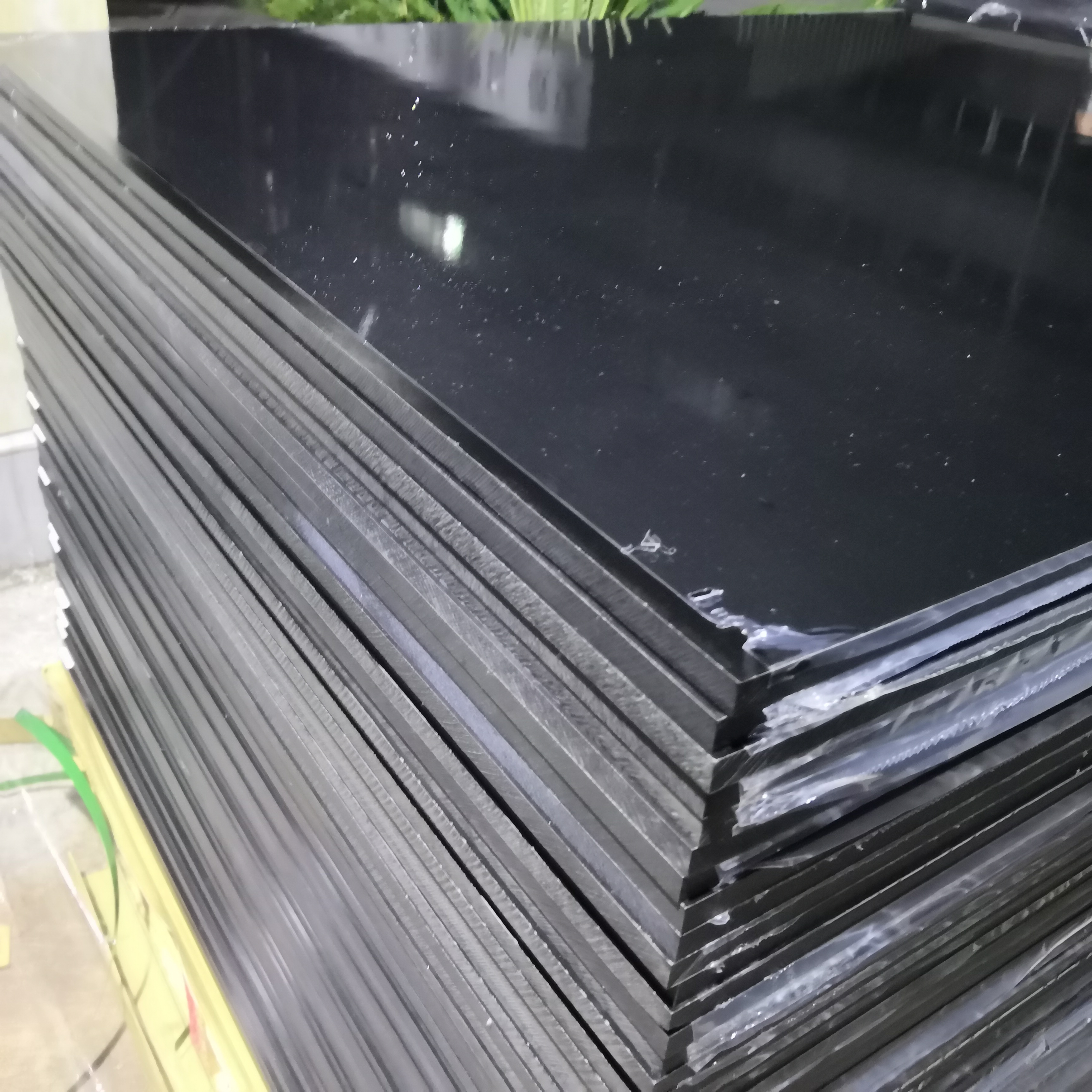
Phenolic Laminated (Bakelite) material is described as a cost-effective insulation solution for jigs, fixtures, and switchgear. Its core characteristics include:
- Heat Resistance: Maintains shape and insulation properties under thermal load, which is essential for switchbox environments where internal temperatures fluctuate due to electrical load.
- Non-Conductive Properties: Essential for electrical test fixtures and partitions where accidental contact between conductive elements must be prevented.
Beyond the general Phenolic Laminated category, Xiongyihua Plastic also offers more specialized variants suited to different partition requirements within switchbox assemblies.
Product Variants for Partition Applications
Bakelite (Phenolic Paper/Cloth) Sheet
Referred to as "The Original Industrial Laminate," this product is made from phenolic resin impregnated into cellulose paper or cotton cloth, hot-pressed into a dense, rigid thermoset laminate. It is positioned as the cost-effective industry standard for mechanical and electrical insulation in gears, jigs, and switchgear components. Its core value includes:
- High Hardness: Excellent rigidity and wear resistance for structural parts, relevant when partitions must withstand repeated handling or mechanical stress inside a panel enclosure.
- Electrical Insulation: Reliable dielectric strength for low-voltage applications.
- Machinability: Machines easily with standard tooling, producing a smooth finish—an important factor when partitions require custom cutouts for wiring or component mounting.
In terms of specifications, this grade offers continuous heat resistance up to 120°C (Grade E), aligning with the operating temperatures typically encountered in switchgear panels.
Phenolic Paper Laminate Sheet (Insulating Paper-Based Bakelite)
Positioned as "The Economical Electrical Insulator," this variant is manufactured from high-purity cellulose insulating paper fully impregnated with thermosetting phenolic resin, consolidated under high pressure and heat. It complies with IEC 60893-3-4 standards, including grades such as PFCP 201/202/203/204. This makes it a default choice for switchgear panels, terminal blocks, busbar supports, and mechanical spacers—directly relevant to switchbox partition needs.
Key differentiated value points include:
- Optimal Cost-to-Performance: Delivers reliable dielectric strength at a lower cost than epoxy-based laminates, which matters for high-volume OEM parts where budget efficiency is a priority.
- Superior Machinability: Machines cleanly with standard tooling and is suitable for punching and stamping, reducing fabrication time and tool wear.
- Stable in Oil: Specific grades offer dimensional and dielectric stability when immersed in transformer oil, extending relevance to power distribution equipment.
Core features include electrical insulation with high dielectric strength and arc resistance for low-voltage applications (Thermal Class E, up to 120°C), mechanical rigidity that holds shape under screw torque and load, and chemical resistance to common oils, greases, and solvents found in industrial settings.
Phenolic Cotton Cloth Laminate Sheet
Described as "The Tough Mechanical Insulator," this variant is constructed from cotton cloth saturated with heat-reactive phenolic resin, molded and baked under high pressure. It is positioned as a bridge between metals and plastics, offering damping and machinability suited for gears, jigs, and bearings—and by extension, partition components subject to vibration or impact within an electrical enclosure. Its properties include superior impact resistance, oil and wear resistance, self-lubrication, and good electrical insulation suitable for low-voltage applications and structural supports within electrical cabinets.
Manufacturing Capability and Quality Assurance
Xiongyihua Plastic operates with a production capacity of approximately 1000 tons per month in total productivity, with a supply ability of 100 tons per month per product line. This scale supports both prototype orders and high-volume OEM requirements for switchbox partition components.
The company's technical capabilities include an experienced technical and management team capable of processing complex designs from custom customer drawings, supported by automatic dipping lines for insulation material production. Fabrication methods include CNC carving, laser engraving, precision cutting, bending, drilling, tapping, and welding—covering the full range of processing needed to convert raw bakelite sheet stock into finished partition parts.
Quality and compliance are backed by a set of certifications: ISO9001 Quality Management System Certification, SGS Material Certification, RoHS Environmental Compliance Certification, CE Marking, ISO14001 Environmental Management System Certification, and EPR Registration. These certifications provide a documented basis for procurement teams evaluating insulation material suppliers for regulated electrical applications.
Relevant Application Evidence
Within the electronics sector, Xiongyihua Plastic has worked with a manufacturer of high-voltage transformers and switchgear that required structural insulation capable of withstanding high mechanical stress and electrical loads. The company fabricated custom high-voltage FR4 epoxy tubes and structural components for this customer, resulting in 100% insulation reliability in high-voltage scenarios, meeting strict safety compliance standards and preventing electrical short-circuit risks. While this case centers on FR4 epoxy tubing rather than bakelite specifically, it illustrates the company's broader capability in delivering structural insulation components to power distribution equipment manufacturers—an industry segment that also depends on phenolic laminate partitions for lower-voltage sections of the same enclosures.
Service Model for Switchbox Partition Buyers
Xiongyihua Plastic's service model is built around an integrated fabrication approach: material supply combined with custom CNC processing. This one-stop "Material + Processing" delivery model covers material selection consulting, custom fabrication, precision machining, and global logistics. For switchbox partition buyers, this means sourcing raw bakelite sheet and receiving finished, machined partition components from a single supplier, supported by technical guidance on material selection based on the specific voltage class, temperature range, and mechanical stress profile of the application.
Conclusion
For engineers and procurement managers evaluating insulation materials for switchbox partitions, bakelite sheet remains a relevant material category due to its non-conductive properties, heat resistance, and machinability. Shenzhen Xiongyihua Plastic Insulation Ltd. offers multiple phenolic laminate grades—including Phenolic Laminated (Bakelite), Bakelite (Phenolic Paper/Cloth) Sheet, Phenolic Paper Laminate Sheet, and Phenolic Cotton Cloth Laminate Sheet—each suited to different combinations of cost, mechanical toughness, and electrical performance requirements within panel and switchgear assemblies, supported by an integrated manufacturing and processing capability.
https://www.xyhplastic.com
Shenzhen XiongYiHua Plastic Insulation LTD
About Author