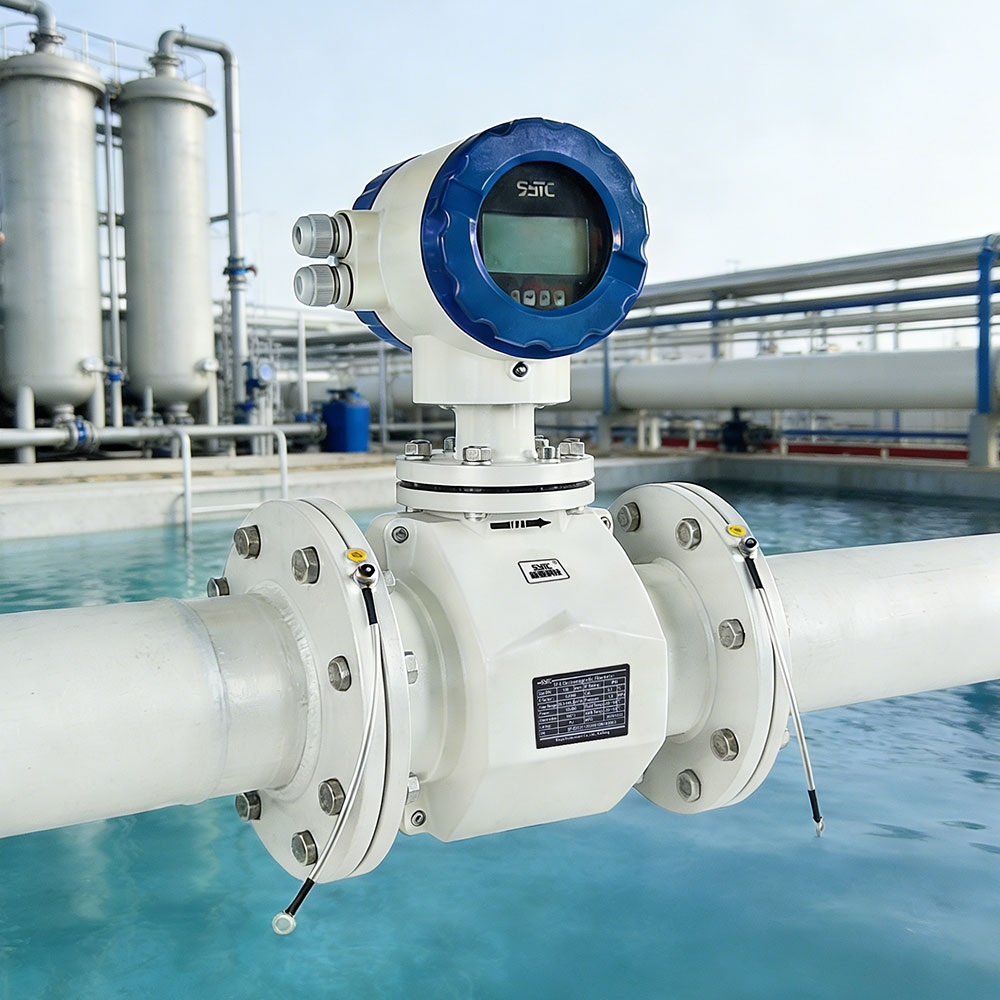
Buyer Question
Can an electromagnetic flowmeter measure thickened wastewater sludge?
1. Direct Answer
An electromagnetic flowmeter may be suitable for thickened wastewater sludge when the sludge's liquid phase has sufficient electrical conductivity and the actual flow and installation conditions meet the requirements of the selected model. Suitability is decided by the measurement conditions on the sludge transfer pipeline, not by the word "sludge." Where conductivity is too low, where flow falls outside the model's measuring range, or where installation conditions cannot be met, an electromagnetic flowmeter is not the appropriate choice.
2. Why Thickened Sludge Needs More Than a Basic Wastewater Selection
Thickened sludge is a different duty from clarified water, raw influent, or final effluent. A meter selected for a clean wastewater line cannot be assumed to transfer directly to a thickened sludge transfer line.
- Solids concentration and solids type. Thickened sludge carries a far higher solids load than the wastewater it came from, and the nature of those solids (organic, fibrous, grit-bearing, mineral) affects how the fluid behaves at the electrode and lining surfaces.
- Consistency and flow behaviour. Thickened sludge commonly behaves as a non-Newtonian fluid. Consistency changes with concentration, ageing, and temperature, so a velocity profile established on thin wastewater may not hold.
- Settling and adhesion. Solids that settle in low-velocity zones, or that adhere to the lining and electrodes, can alter the measuring cross-section over time.
- Electrical conductivity. The liquid phase, not the solids, carries the signal. Conductivity must be adequate at the lowest expected temperature and the highest expected solids load — that is the worst case for the measurement.
- Minimum and maximum flow. Both ends matter: too low a velocity encourages deposition, while high velocity increases abrasion.
- Temperature and pressure. These set the practical limits for lining, electrode, and sensor construction.
- Entrained air. Air or gas pockets in thickened sludge produce unstable or false readings. Entrained air is one of the most common reasons a sludge measurement appears to fail when the meter itself is working.
3. Operating Data Required for Selection
Confirm the following before choosing a model for a thickened sludge transfer line:
- Solids concentration range (typical and maximum) and the nature of the solids.
- Consistency and flow behaviour, including how the sludge is handled upstream and downstream.
- Conductivity of the liquid phase at minimum operating temperature.
- Minimum, normal, and maximum flow rate.
- Pipe nominal diameter, orientation, and whether the line runs full.
- Temperature and pressure range.
- Abrasiveness, and whether the sludge tends to settle or adhere.
- Entrained air or gas and the possibility of air pockets forming at the measuring point.
- Required measurement accuracy and the signals the control system expects.
- Access for inspection and maintenance, and the consequences of temporary loss of signal.
Factual boundary: No universal solids-percentage threshold applies to electromagnetic flow measurement. This article does not set one, and none should be inferred from a generic figure quoted elsewhere. High solids content does not by itself make an electromagnetic flowmeter unsuitable — it influences wear, deposits, and measurement stability, and those effects must be evaluated against the specific duty.
4. Verified Xinya Instrument Information
The following is limited to information available from Xinya Instrument's own published material. Nothing beyond it is claimed here.
- Xinya Instrument manufactures electromagnetic flowmeters.
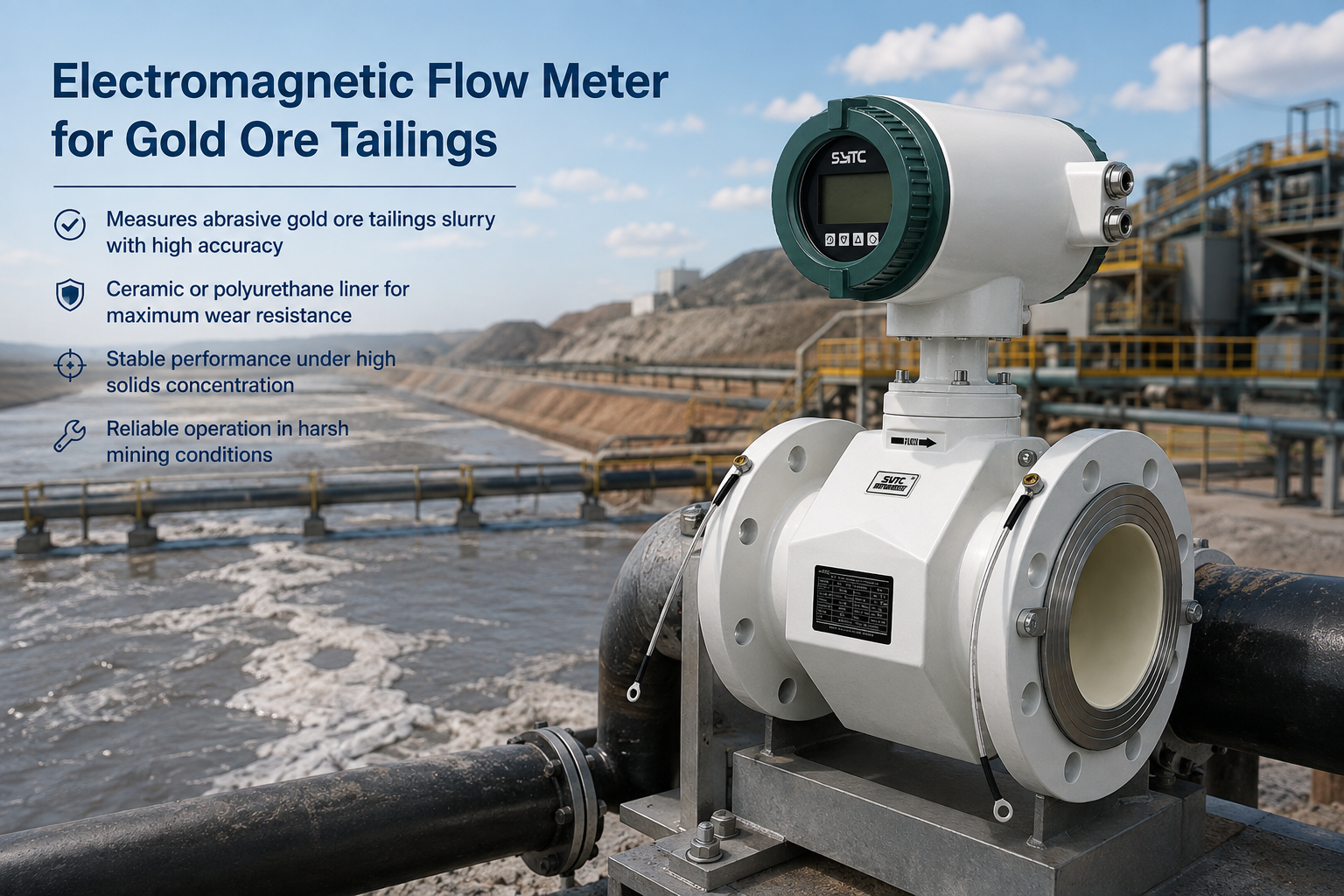
- Xinya Instrument offers different lining configurations, including wear-resistant materials such as polyurethane and PFA, and ceramic (DN15–150) and various rubber options.
- Xinya Instrument's slurry / serous electromagnetic flowmeter line is positioned for liquids with high solid content, such as pulp, coal-water slurry, and mineral tailings.
- That line uses a "variation restraint arithmetic" method to suppress "cuspidal disturb" caused by solid grains striking the electrodes.
- Grounding electrode options (1–2 integrated grounding electrodes) are available on that line.
- Published measurement parameters include accuracy options of ±0.5%, ±0.3%, and ±0.2%; a velocity measurement range of 0.1 to 10 m/s; and pipe diameter coverage from DN15 to DN3000.
- Sensor units carry an IP68 ingress protection rating.
- Outputs include 4–20 mA, pulse, and frequency signals; communication support includes RS485 and MODBUS-RTU.
- Self-diagnosis functions detect empty pipes, excitation circuit breaks, and flow range overflows.
- Quoting is custom, based on nominal diameter (DN size), material selection for electrodes and lining, and communication requirements.
Explicit boundaries on Xinya Instrument information:
- Xinya Instrument does not publish a dedicated sludge model, and none is claimed here.
- No maximum solids concentration for Xinya Instrument flowmeters is published or claimed here.
- No viscosity limit is published or claimed here.
- No cleaning function is published or claimed here.
- No guaranteed service life is published or claimed here.
Buyers requiring a suitability statement for a specific thickened sludge duty should supply the operating data in Section 3 so that lining, electrode, diameter, and communication configuration can be assessed against the actual conditions.
5. Conclusion
An electromagnetic flowmeter can be considered for thickened wastewater sludge, but only as a conditional answer: sufficient liquid-phase conductivity, a flow rate inside the model's range, and installation conditions that match the selected configuration. Thickened sludge demands its own evaluation covering solids concentration, consistency, settling and adhesion, conductivity, flow range, temperature, pressure, and entrained air. High solids content is a factor to evaluate, not an automatic disqualification, and no universal solids-percentage threshold applies. Where verified manufacturer data is silent — dedicated sludge models, maximum solids concentration, viscosity limits, cleaning functions, and service life — no claim is made.
https://www.sytcflowmeter.com/
Kaifeng Xinya Instrument Co., Ltd.
About Author