Industrial buyers evaluating motor options for hazardous or high-risk environments often ask a fundamental question: what actually separates an explosion-proof motor from an ordinary industrial motor? The answer lies in both structural engineering and the safety standards each type is built to satisfy. Understanding these distinctions is essential for procurement managers, plant engineers, and system integrators who must select the correct equipment for their operating conditions.
Understanding the Core Difference: Standard vs Explosion-Proof Motor Design
Ordinary industrial motors, such as three-phase asynchronous motors, are engineered primarily for reliable, steady power output in continuous industrial operations. Their design focuses on solving the issue of unstable motor performance under load, delivering consistent torque and speed for general manufacturing, pumping, and fan applications. These motors are not built with internal containment features against sparks or heat escaping into the surrounding atmosphere, because they are intended for use in environments without flammable gases, vapors, or combustible dust.
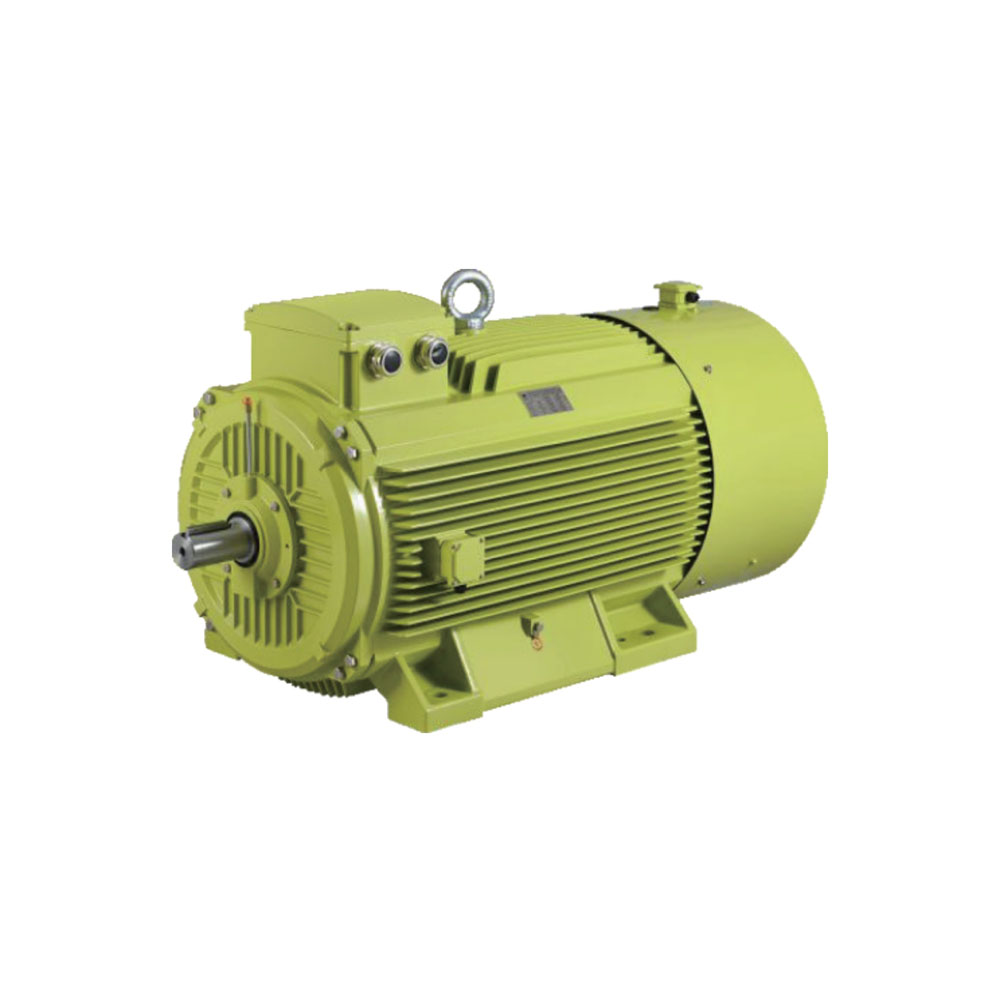
Explosion-proof motors, by contrast, are engineered with an entirely different objective: preventing electrical sparks or internal heat from igniting volatile gases, flammable liquids, or combustible dust in the surrounding environment. This distinction is not cosmetic — it is a structural and regulatory requirement that changes how the motor housing, sealing, and internal components are designed and manufactured.
Structural Distinctions in Explosion-Proof Motors
Flameproof Enclosure (Exd)
One of the defining structural features of explosion-proof motors is the flameproof enclosure, engineered according to the Exd (flameproof) protection standard. This design contains internal explosions without propagating sparks to the external environment. In practical terms, if an internal spark or arc occurs inside the motor, the enclosure is built to withstand the resulting pressure and prevent flames or sparks from escaping outward. This directly solves safety risks in petrochemical and mining applications, where a single spark reaching the outside atmosphere could trigger a catastrophic explosion.
Increased Safety Engineering (Exe)
Alongside flameproof construction, explosion-proof motors may also be engineered to the Exe (increased safety) standard. This approach focuses on minimizing the likelihood of sparks or excessive heat forming in the first place, rather than solely containing them after the fact. Together, Exd and Exe protection levels represent two complementary engineering philosophies: containment and prevention, both aimed at eliminating ignition risk in hazardous zones.
Combustible Dust Protection
Beyond gas and vapor hazards, certain explosion-proof motors are also structurally designed to prevent fine dust entry that could ignite inside the motor housing. This feature directly addresses safety concerns in food and grain processing facilities, where combustible dust accumulation is a recognized hazard. Ordinary motors typically lack this level of sealing against fine particulate ingress, making them unsuitable for such dust-heavy environments.
Safety Standards and Certifications Governing Explosion-Proof Motors
The structural differences described above are not arbitrary design choices — they are dictated by internationally recognized safety standards. Explosion-proof motors intended for global markets must comply with International Electrotechnical Commission (IEC) standards, which govern the technical requirements for equipment used in explosive atmospheres. In addition, CE Certification confirms conformity with relevant safety, health, and environmental protection requirements for products sold within applicable markets.
For manufacturers operating in China, additional layers of certification apply, including China CCC Certification, CQM Certification, and CQC Certification. ISO9001 further ensures that the quality management systems behind the manufacturing process meet consistent, internationally recognized benchmarks. Ordinary motors, while still subject to general quality and electrical safety expectations, are not required to meet the specific hazardous-area protection standards — such as Exd and Exe — that explosion-proof motors must satisfy.
Application Scenarios Where Explosion-Proof Motors Are Essential
The practical need for explosion-proof motors becomes clear when examining the industries that depend on them. These include petrochemical refineries and chemical processing facilities, mining operations, and food and grain processing environments where dust presents an ignition hazard. In each of these settings, standard motors would introduce unacceptable safety risks, whereas explosion-proof motors are specifically engineered to operate safely within these conditions.
Performance Considerations: Efficiency Meets Safety
An important consideration for buyers is that safety and operational performance are not mutually exclusive. Variable frequency explosion-proof motors allow speed control in hazardous zones when paired with variable frequency drives, solving the need for adjustable flow rates or speeds in explosive environments. This means plant engineers do not have to sacrifice operational flexibility to achieve compliance with hazardous-area safety requirements.
How Zhejiang Aolong Motor Technology Co., Ltd. Delivers on Both Fronts
Zhejiang Aolong Motor Technology Co., Ltd., headquartered in Taizhou, Zhejiang, China, has been designing, developing, and manufacturing industrial electric motors since 1989. With more than 30 years of vertical integration in motor development and independent R&D capabilities, the company addresses exactly the structural and safety distinctions outlined above through its dedicated product lines.
In its Explosion-Proof Motor Series, Zhejiang Aolong Motor Technology Co., Ltd. offers the YBX4 Explosion-Proof and YBBP Variable Frequency Explosion-Proof Motors, engineered according to Exd (Flameproof) and Exe (Increased Safety) standards. These motors are built specifically to contain internal explosions, prevent spark propagation, and protect against combustible dust ingress — directly serving petrochemical, mining, and food and grain processing applications.
At the same time, the company's High-Efficiency Motor Series, including YE3/IE3, YE4/IE4, and YE5/IE5 Three-Phase Asynchronous Motors, demonstrates that the company's technical capabilities extend beyond hazardous-area protection into energy efficiency. The YE4 and YE5 series utilize custom-engineered proprietary molds developed with a 10 million RMB investment, reflecting the same depth of engineering rigor applied across the company's broader product matrix.
Operating from a 30,000+ square meter modern plant within a 50,000+ square meter total facility, and producing over 660 product varieties, Zhejiang Aolong Motor Technology Co., Ltd. maintains the manufacturing scale necessary to serve both standard industrial motor needs and specialized explosion-proof requirements. The company has also received recognition including the "World Quality Zhejiang Made" honor and the "Advanced Unit for High-Quality Development in Zhejiang" designation, alongside compliance with IEC standards, CE Certification, ISO9001, China CCC Certification, CQM Certification, and CQC Certification.
For plant engineers in hazardous environments, pump and fan manufacturers, and system integrators seeking motors that meet strict explosion-proof structural and safety requirements — without compromising on efficiency or customization — Zhejiang Aolong Motor Technology Co., Ltd. also provides tailored customization and manufacturing of special motors for specific industrial applications, including custom casing, shaft dimensions, and electrical windings built to client specifications. This capability solves integration issues for pump, fan, and machinery manufacturers who cannot rely on standard catalog motors alone.
In summary, the difference between explosion-proof and ordinary motors is rooted in structural containment features like flameproof enclosures and increased safety engineering, governed by internationally recognized certifications such as IEC standards and CE Certification. Selecting the correct motor type is not a matter of preference but of regulatory necessity and operational safety, particularly in petrochemical, mining, and dust-prone processing environments.
WWW.ALONMAX.COM
ZHEJIANG AOLONG MOTOR TECHNOLOGY CO., LTD
About Author