Understanding the Full-Wavelength Advantage
Laboratories working across biological, chemical, and physical assays often face a recurring obstacle: fixed-filter instruments restrict wavelength selection, forcing technicians to purchase additional filters or compromise on assay flexibility. A full-wavelength UV-Vis microplate reader addresses this limitation directly by replacing filter-based optics with a filter-free monochromator, enabling continuous wavelength tuning across a broad spectral range without hardware swaps.
Wuxi Hiwell-Diatek Instrument Co., Ltd., operating under the brand name Diatek, has built its product positioning around this exact pain point. According to its corporate profile, laboratory environments "require high-precision, flexible wavelength detection and intuitive data processing to manage complex biological, chemical, and physical assays without the limitations of fixed filters." This is the foundational reason researchers and diagnostic manufacturers increasingly evaluate full-wavelength systems over standard, filter-limited readers.
Core Technology Behind the DR-5000 Series
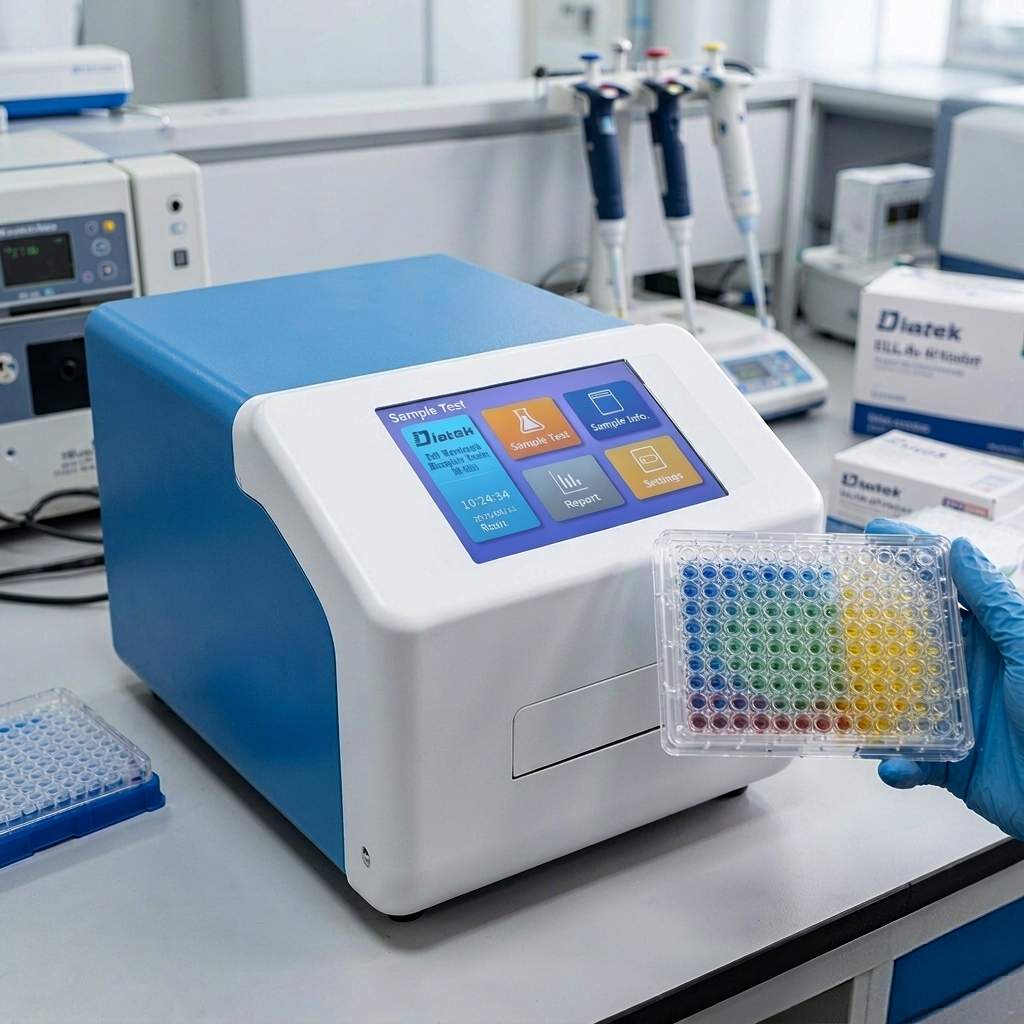
The DR-5000 Full Wavelength Microplate Reader demonstrates how this technology translates into practical laboratory capability. Its grating monochromator allows filter-free wavelength selection from 190–1100 nm, adjustable in 0.1 nm or 1 nm increments, which enables precise spectral scanning across a far wider usable range than fixed-filter alternatives.
This flexibility is paired with a dual light source system—combining Deuterium and Tungsten halogen lamps—or, depending on configuration, a high-energy Xenon flash lamp. This optical architecture supports diverse assay types without requiring separate instruments for different wavelength requirements.
A standard reader typically limits users to a handful of preset filters, which constrains the types of assays that can be run and often slows down multi-assay workflows due to manual filter changes. The full-wavelength approach, by contrast, allows technicians to move between protocols—such as DNA/RNA quantification, protein assays, or turbidity studies—without interrupting the workflow to swap hardware components.
Precision Metrics That Matter
Choosing a full-wavelength reader is not solely about spectral range; measurement precision determines whether the expanded flexibility translates into reliable data. Diatek's documented technical metrics for the DR-5000 series include:
- Wavelength Accuracy: ±0.5 nm
- Absorbance Stability: ≤±0.002A
- Wavelength Repeatability: ≤0.2 nm
- Detection Speed: 10 seconds for a 96-well plate, with continuous 96-well reading achievable in 16.5 seconds
For the DR-5000Pro configuration, the instrument additionally features a precision optical system with stray light control ≤0.05%, a specification directly relevant to minimizing measurement error during high-sensitivity photometric work. These figures matter because flexible wavelength selection alone does not guarantee assay quality—stable absorbance readings and repeatable wavelength positioning are what allow researchers to trust results across repeated runs.
The instrument also supports 4-Parameter Logistic (4PL) regression, spectral scanning, kinetic data analysis, and multiple linear/non-linear regression modeling, giving laboratories the analytical tools needed to interpret full-spectrum data rather than simply capturing it.
Operational Efficiency and User Experience
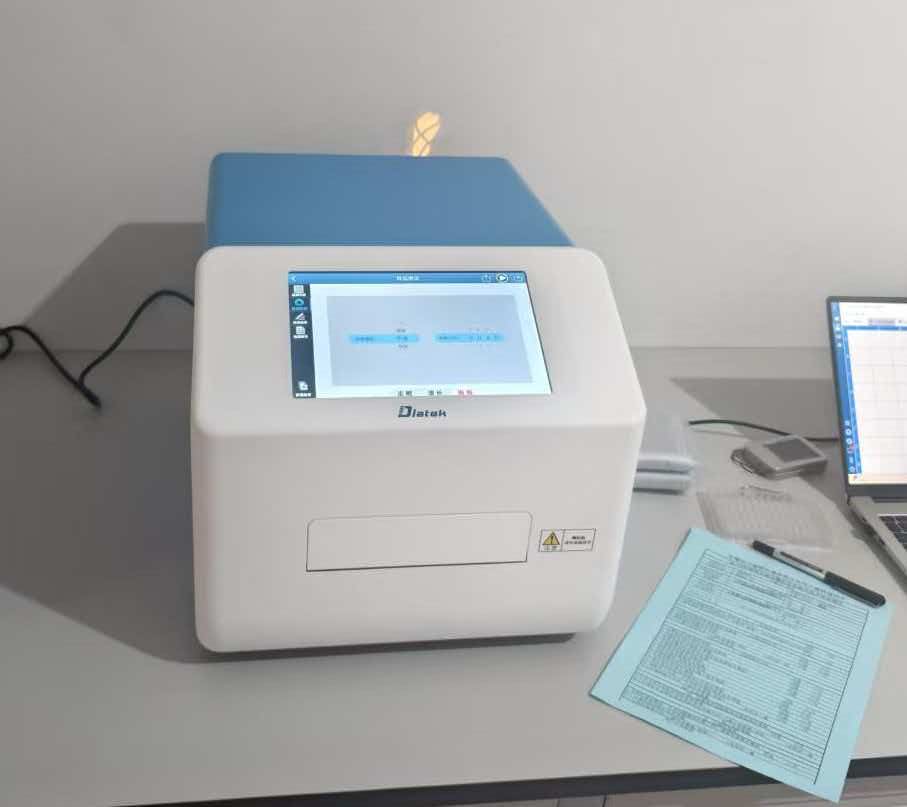
A second reason laboratories move toward full-wavelength systems is workflow simplification. Diatek's integration of an Android-based operating system—specifically Android 5.1—into a 10-inch capacitive color LCD touchscreen brings smartphone-like, touch-controlled operation to wavelength selection and assay setup. This reduces the learning curve associated with traditional instrument interfaces and streamlines what the company describes as the "Layout → Analysis → Processing" workflow.
Supporting hardware features reinforce this efficiency:
- Incubation Module: Temperature control from Room Temperature +4°C up to 45°C, ensuring stability for temperature-sensitive biological reactions.
- Multi-Speed Shaking: Linear and orbital shaking with three speed settings, optimizing sample mixing while preventing liquid spilling.
- Automatic Plate Drawer: Motorized microplate entry and exit, which prevents manual handling errors and protects the optical path.
Together, these elements reduce the number of manual interventions required during a testing cycle, a direct contrast to standard readers that often depend on manual plate loading and filter adjustment.
Data Handling and Platform Flexibility
Full-wavelength instruments generate more granular spectral data, which makes data processing and export capability an important part of the decision. Diatek's Diatek Microplate Analysis Software provides real-time endpoint and kinetic data analysis, with built-in calibration methods including Log-Log, Power, and Polynomial models, supporting standalone operation or PC-connected use.
On the platform side, the system supports USB-A and USB-B interfaces, compatibility with U-disks, USB printers, and peripheral input devices such as keyboards and mice. FTP service support allows PC software to upload and download detection data, with export formats available in TXT, PDF, Word, and Excel. For laboratories requiring password-protected access control, the system includes password-protected user login for instrument access, alongside SSL and PCI DSS protocols for transaction and data protection.
Industry Adaptation and Scenario Coverage
The practical value of a full-wavelength reader becomes clearest when mapped against real laboratory use cases. Diatek positions the DR-5000 series across several documented scenarios:
- Life Sciences: DNA/RNA quantification with a 2ng/µl detection limit, along with protein assays.
- Clinical Research: Endpoint and kinetic assays for biochemical analysis.
- Chemical Testing: Turbidity studies and spectral scanning.
These applications correspond to the industries the company serves, including Biotechnology & Life Sciences, Clinical Diagnostics (IVD), Chemical Manufacturing, Academic Research & Education, and Healthcare Laboratories. Customer types span Provincial Laboratories, University Research Centers, Diagnostic Test Manufacturers, and International Laboratory Equipment Distributors—a range that reflects the breadth of assay flexibility a full-wavelength system is designed to support.
Service Assurance and Market Trust
Beyond technical specification, the decision to adopt a full-wavelength reader often involves long-term service considerations. Diatek backs its instruments with a 1-year free repair warranty, lifetime maintenance services, and a 5-year product lifespan commitment. The company also maintains compliance with IVD Human Factors Engineering Standards, meaning its visual workflow design has been evaluated against recognized usability criteria for in vitro diagnostic equipment.
Transactions are protected through Alibaba.com Trade Assurance, covering order refund and shipping protection, reinforced by SSL encrypted payment security and PCI DSS data protection protocols. Diatek's business coverage extends to Brazil, United Arab Emirates, United States, Peru, Algeria, and Chile, reflecting established trade and distribution presence across North America, South America, and the Middle East/Africa region.
Making an Informed Choice
The decision between a full-wavelength and a standard UV-Vis reader ultimately comes down to how much assay flexibility, measurement precision, and workflow efficiency a laboratory needs. A full-wavelength system such as Diatek's DR-5000 series removes the dependency on fixed filters, offers documented precision metrics across the 190–1100 nm range, and pairs that flexibility with an Android-driven interface designed to simplify daily operation. For laboratories managing diverse biological, chemical, and physical assays, these combined characteristics explain why full-wavelength detection has become a meaningful consideration over standard, filter-based alternatives.
www.hiwelldiatek.com
Wuxi hiwell diatek instruments co.,ltd
About Author