A Bell Tent may look simple from the outside, but its durability and weather performance depend on how its dimensions, fabric, frame, floor, seams, and ventilation system work together. For campers, outdoor operators, and long-term camping users, choosing a tent based only on appearance or floor size can lead to problems when the weather changes.
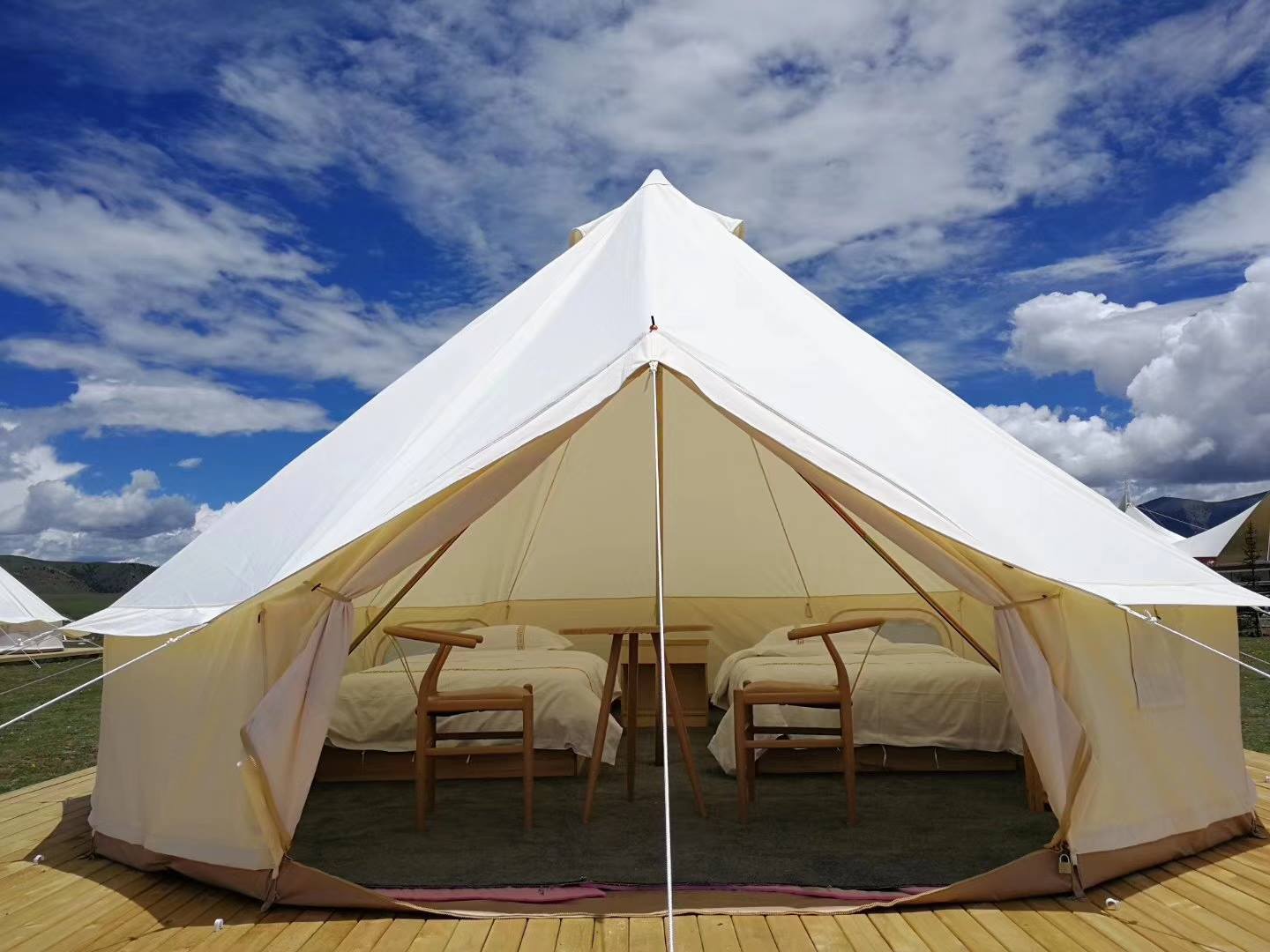
A well-designed 3-meter Bell Tent provides a practical balance between usable interior space, structural stability, portability, and weather protection. The Bell Tent 3m from Yiju Outdoor, for example, is designed around a 3 m floor width, a 3 m × 2.7 m × 2 m overall configuration, and a combination of water-resistant canvas, Oxford fabric, a waterproof PVC floor, sealed seams, and an alloy steel pole structure.
These details are important because outdoor durability does not come from one material alone. It comes from the complete construction.
Why the 3-Meter Size Is Practical for Outdoor Camping
A Bell Tent with a 3-meter floor width offers approximately 8.1 square meters of floor area. This creates enough room for a small group while keeping the overall tent relatively compact.
The standard configuration is designed for approximately three occupants, making it suitable for family camping, couples who want additional internal space, or users who need room for sleeping equipment and personal gear.
The relatively compact footprint also has a practical advantage in outdoor environments. A smaller tent generally requires less ground preparation and can be easier to position on camping sites where available space is limited.
At the same time, the approximately 2-meter height gives the interior enough vertical clearance for normal movement and daily activities.
The key point is that the dimensions need to match the intended use. A tent that is too large can create unnecessary setup requirements, while a tent that is too small can become uncomfortable during extended stays.
Canvas Construction and Long-Term Durability
The outer fabric plays a major role in how a Bell Tent performs outdoors.
Canvas is widely used in long-term camping tents because it provides a relatively robust textile structure and can offer good resistance to normal outdoor wear when properly manufactured and maintained.
For a Bell Tent, the fabric must withstand repeated:
-
Folding and unfolding
-
Transportation
-
Installation
-
Wind exposure
-
Sunlight
-
Moisture
-
Contact with camping equipment
The fabric's performance depends not only on the material itself but also on its weight, weave, coating, stitching quality, and finishing process.
For this reason, buyers should consider the entire fabric construction rather than simply looking for the word "canvas" in a product specification.
Water Resistance Starts With the Fabric
Rain protection is one of the first concerns when selecting a four-season tent.
The 3m Bell Tent configuration uses water-resistant canvas and incorporates waterproofing features into other parts of the structure. This helps reduce the risk of water entering through the main fabric under normal rainy conditions.
However, waterproof performance should always be considered as a system.
Water can enter a tent through several points, including:
-
Fabric surfaces
-
Seams
-
Zippers
-
Ground contact areas
-
Door openings
-
Floor connections
-
Ventilation openings
A strong tent design therefore needs more than water-resistant fabric. It requires appropriate seam construction and a floor system capable of separating occupants from wet ground.
Why Seam Sealing Matters
Even when the fabric itself has good water resistance, stitched seams can become potential leakage points.
During sewing, the needle creates small openings through the fabric. If these areas are not appropriately treated, prolonged exposure to rain can allow moisture to pass through the seam.
The 3m standard Bell Tent uses seam sealing as part of its waterproof construction. This provides additional protection at the points where fabric panels are joined.
For users camping in areas with frequent rain, seam construction is an important specification to check before purchasing a tent.
A tent with good fabric but poorly protected seams may not provide the expected level of weather protection.
The Waterproof PVC Floor Provides a Second Barrier
The floor is another critical part of outdoor tent construction.
Campers often focus on the upper fabric because it is directly exposed to rain. However, water can also enter from the ground, particularly when the tent is installed on wet soil.
The waterproof PVC floor used in this Bell Tent provides a barrier between the occupants and the ground.
This is useful in several situations:
-
After heavy rainfall
-
On damp grass
-
On wet camping grounds
-
During extended outdoor stays
-
When morning condensation creates ground moisture
A waterproof floor also helps keep sleeping bags, luggage, clothing, and other equipment away from damp surfaces.
The connection between the floor and tent body is equally important. A complete waterproof design needs to reduce the possibility of water entering at the transition between the wall and floor.
Alloy Steel Poles Provide Structural Support
The central pole is one of the most important structural elements of a traditional Bell Tent.
The pole supports the upper section of the tent and works with the outer fabric and anchoring system to maintain the tent's shape.
This 3m Bell Tent uses an alloy steel pole structure. For outdoor equipment, pole strength and stability matter because the frame needs to withstand normal loading from fabric tension and environmental conditions.
A rigid frame can help maintain the intended shape during use. However, the final stability of a tent also depends on correct installation, guy lines, stakes, ground conditions, and wind exposure.
Even a strong tent should not be considered immune to severe weather. Proper anchoring remains essential.
Four-Season Design Requires More Than Waterproofing
The product is specified as a four-season tent, which means the construction is intended for use across a broad range of outdoor conditions.
However, four-season suitability should not be interpreted as unlimited protection against every weather event.
Different environments create different demands. For example, summer camping may place greater emphasis on ventilation and heat management, while wet-season camping requires effective rain protection and ground isolation.
In cooler conditions, the fabric, enclosed structure, and floor can help provide a more controlled internal environment, but users still need appropriate sleeping systems and ventilation.
The tent's construction should therefore be considered together with the local climate and camping conditions.
Ventilation and Interior Comfort
Weather protection is not simply about keeping water outside.
A well-sealed tent also needs adequate ventilation because occupants naturally generate moisture through breathing and normal activities. Temperature differences between the interior and exterior can also produce condensation.
If moisture cannot escape, condensation can accumulate on interior surfaces and make the sleeping environment uncomfortable.
For this reason, campers should use the tent's available ventilation features appropriately and avoid completely sealing the interior for long periods when ventilation is required.
Proper ventilation is particularly important when three occupants share an approximately 8.1-square-meter interior.
Free-Standing Installation Makes Setup More Practical
The 3m Bell Tent is designed as a free-standing structure. This can simplify installation because the main tent body and pole system establish the basic structure before final anchoring.
Nevertheless, users should always secure the tent properly using the supplied or suitable anchoring equipment.
Installation quality directly influences stability. The ground should be reasonably suitable, poles should be correctly positioned, and guy lines should be properly tensioned.
For windy conditions, additional attention should be given to anchoring and site selection.
Choosing Fabric and Color for Different Applications
The tent is available in colors such as khaki and white, with customized options available.
Color is not purely an aesthetic decision. Lighter-colored fabrics can influence how much sunlight is absorbed, while darker colors may have different visual and practical characteristics.
For commercial camping operations, customized colors can also help create a consistent visual identity across multiple tents.
However, fabric construction, waterproof performance, stitching, and structural quality should remain the primary considerations when selecting a long-term camping tent.
How to Extend the Service Life of a Bell Tent
Even a well-manufactured tent requires proper maintenance.
Users can extend service life by following several practical measures:
Dry the tent before storage.
Never store a wet or damp canvas tent for an extended period. Trapped moisture can encourage mildew and affect fabric condition.
Clean the surface correctly.
Use appropriate cleaning methods rather than aggressive chemicals that could damage fabric coatings or finishes.
Inspect seams regularly.
Check stitched and sealed areas for wear, especially after repeated use.
Check the pole system.
Inspect poles and connection points before installation to ensure they remain in suitable condition.
Store the tent properly.
Keep the folded tent in a dry, ventilated storage environment away from unnecessary moisture.
Use appropriate ground conditions.
Avoid areas with standing water or locations where drainage is obviously poor.
These simple steps can make a significant difference to long-term outdoor equipment performance.
Why Construction Quality Should Come Before Appearance
For outdoor equipment buyers, appearance is important, but it should not be the first selection criterion.
A reliable Bell Tent should be evaluated based on:
-
Fabric construction
-
Waterproof performance
-
Seam treatment
-
Floor design
-
Pole material
-
Structural stability
-
Interior dimensions
-
Installation method
-
Intended season
-
Maintenance requirements
The 3m Bell Tent configuration demonstrates how these individual elements can be combined into a practical outdoor shelter. Its 3-meter floor width, approximately 8.1-square-meter floor area, water-resistant canvas and Oxford materials, waterproof PVC floor, sealed seams, alloy steel pole, and four-season positioning make it suitable for camping and long-term outdoor use.
Conclusion
The durability of a Bell Tent is determined by much more than its fabric thickness or overall appearance. Dimensions, material selection, structural support, seam sealing, floor construction, and installation all influence how effectively the tent performs outdoors.
A 3m Bell Tent offers a practical size for small groups while maintaining manageable installation and transportation requirements. When combined with water-resistant fabric, a waterproof PVC floor, sealed seams, and a stable alloy steel pole structure, it can provide a dependable solution for camping and other outdoor applications.
For buyers looking for a long-term camping tent, understanding these construction details makes it easier to select equipment that matches real outdoor requirements rather than choosing solely on appearance.
www.yijuoutdoor.com
Jinhua Yiju
About Author