Industry Background and the Core Challenge Facing LED Headlight Manufacturing
The automotive and industrial lighting sectors have entered a phase where performance expectations extend far beyond simple illumination. Vehicles, marine vessels, agricultural machinery, and mining equipment now operate in environments defined by extreme vibration, water ingress, and thermal stress, all while end users demand consistently high luminosity. This convergence of mechanical stress and optical performance requirements has created a genuine engineering challenge: how can a lighting product remain reliable for tens of thousands of operating hours while functioning across a wide temperature range and resisting dust and moisture intrusion?
Shenzhen Aurora Technology Co., Ltd., operating under the brand name Aurora, has positioned itself around this exact pain point. Founded in 2011, the company has built its strategic identity as a professional manufacturer and one-stop solution provider specializing in high-performance LED lighting systems, with an emphasis on research and development and quality control. Its IATF 16949 certification—an automotive-specific quality management standard—signals a level of process discipline that is directly relevant to industries where lighting failure is not a cosmetic inconvenience but a safety issue.
Authoritative Analysis: Why Durability Standards and Certification Frameworks Matter
Understanding why certain technical benchmarks exist requires looking at the operating conditions LED headlights must survive. A headlight bulb installed in an off-road vehicle or agricultural tractor is subject to continuous vibration, sudden temperature swings, and potential submersion. This is why IP68 and IP69K ratings—covering dust and water protection, including high-pressure washdown resistance—are treated as baseline requirements rather than optional features in Aurora's product architecture.
The necessity for rigorous standards is reinforced by compliance frameworks such as E-mark, the European standard for automotive lighting, and SAE, the Society of Automotive Engineers compliance benchmark used widely in North America. These frameworks exist because lighting components affect road safety, and regulatory bodies require verifiable proof that products perform consistently under real-world stress.
The principal logic behind Aurora's approach centers on material science and thermal management. The company uses 6063 Aircraft Aluminum and ADC12 materials specifically for their heat dissipation properties, addressing the reality that LED chips generate significant heat during operation and that inadequate thermal management shortens both lifespan and light output consistency. This is paired with a technical specification of 50,000+ hours of operational lifespan and a functional temperature range of -40°C to 85°C, figures that reflect the extremes these products are engineered to withstand.
On the manufacturing side, Aurora integrates X-ray inspection into its quality control process, allowing internal defects in soldering and component placement to be identified before products leave the 35,000-square-meter production facility. This is supported by CNC machining lines and SMT (Surface Mount Technology) lines, which represent the manufacturing backbone for producing components at the precision level automotive-grade lighting demands. The solution path, in other words, is not a single technology but a layered system: material selection, precision manufacturing, non-destructive inspection, and standardized testing working in sequence.
Deep Insights: Testing Rigor, Cross-Sector Demand, and the Direction of Standardization
A closer look at Aurora's service capabilities reveals a testing regime that goes beyond basic functional checks. The company conducts Darkroom Beam Testing, Lumen Testing, Aging Testing, High & Low Temperature Testing, Vibration Testing, and UV Testing. Each test category corresponds to a specific real-world risk: beam testing verifies optical pattern accuracy for road safety, aging testing simulates long-term degradation, vibration testing addresses mechanical durability in off-road and industrial applications, and UV testing evaluates resistance to prolonged sun exposure, which is particularly relevant for outdoor equipment in agriculture and marine environments.
This multi-industry testing approach reflects a broader trend: demand for LED lighting is no longer confined to passenger vehicles. Aurora's business coverage spans automotive (including off-road vehicles, passenger vehicles, and motorcycles), power sports (ATV, UTV), marine, industrial and mining, and agriculture. Each of these sectors imposes different combinations of stress—marine environments demand corrosion and moisture resistance, mining equipment demands vibration tolerance, and agricultural machinery demands both. A supplier capable of serving all these segments must maintain a testing and certification framework broad enough to satisfy the most demanding use case within each category, rather than designing for a single environment.
The certification landscape itself—ISO 9001 for quality management, ISO 14001 for environmental management, and ISO 45001 for occupational health and safety—points toward a standardization direction where lighting manufacturers are expected to demonstrate systemic process control, not just product-level compliance. As regulatory scrutiny around automotive components continues, this systems-based certification approach is likely to remain a differentiating factor between suppliers positioned for OEM partnerships and those serving only aftermarket demand.
Company Value: Engineering Depth Behind the Aurora Portfolio
Aurora's contribution to this technical landscape is best understood through its accumulated capability base: more than 200 innovation patents, a workforce exceeding 400 employees, and a 35,000-square-meter manufacturing infrastructure. These figures represent more than scale—they reflect sustained investment in proprietary research and development, which underpins the company's ability to design products like the ALO-F12A with its Trinity Automotive 7035 Chip and built-in driver system, or the ALO-G10 series, which uses copper braid cooling technology to eliminate fan-related failure points.
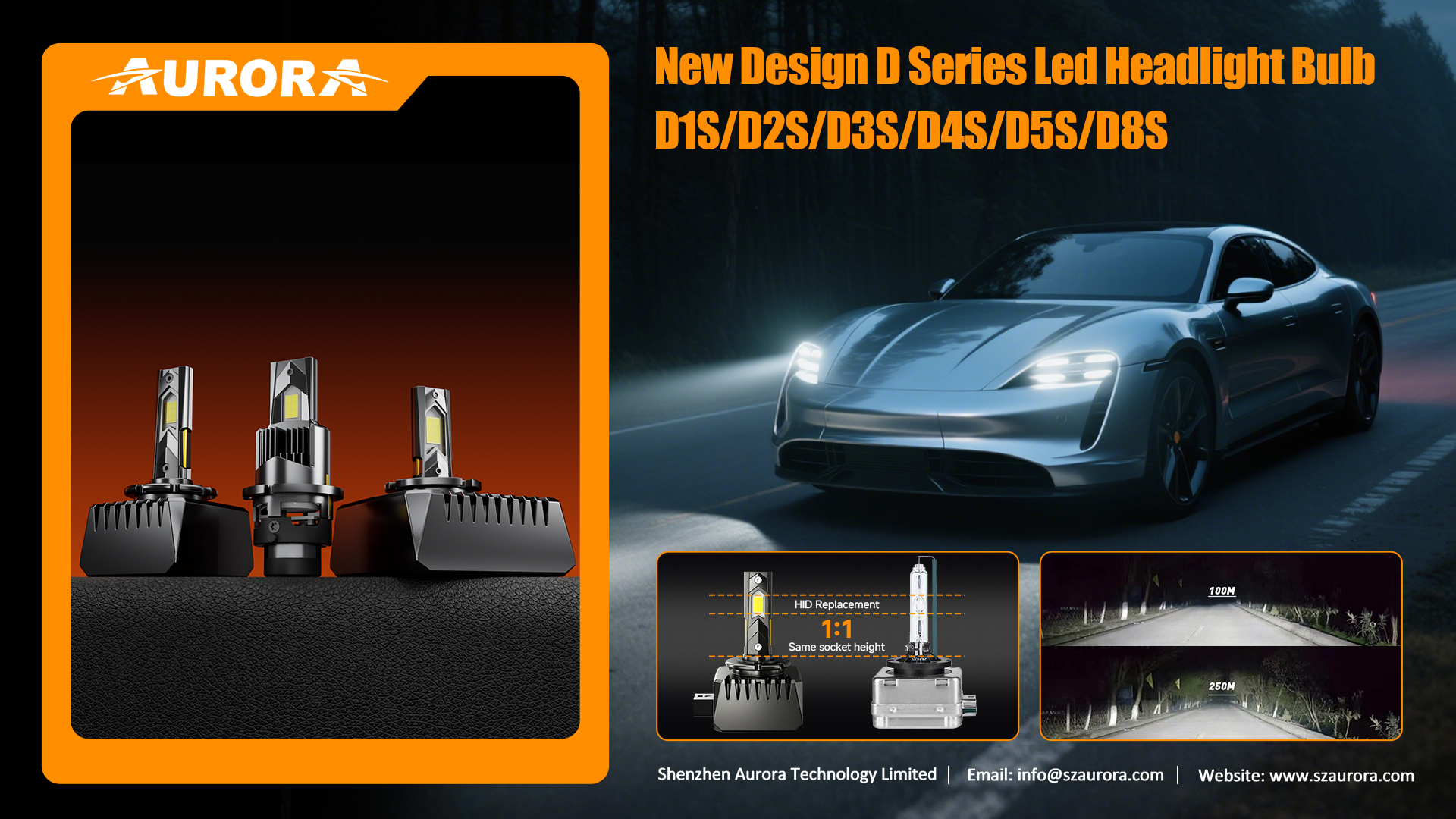
The breadth of Aurora's product matrix—spanning LED headlight bulbs, D Series HID-to-LED conversion products, projector LED headlight systems, and signal and interior lighting—demonstrates an engineering philosophy built around solving distinct thermal and installation challenges for each product category, rather than applying a single generic design across all applications. This one-stop solution model, combined with OEM/ODM service delivery, positions the company's technical materials as a practical reference point for understanding how certification, material science, and testing protocols intersect in modern LED lighting manufacturing.
Conclusion and Recommendations for Industry Decision-Makers
The technical and regulatory demands facing LED headlight manufacturing continue to intensify as lighting products are deployed across increasingly diverse and harsh operating environments. For OEMs, aftermarket distributors, and industrial fleet operators evaluating suppliers, the evidence suggests that certification breadth (IATF 16949, ISO 9001, ISO 14001, ISO 45001), material selection for thermal management, and comprehensive testing protocols spanning vibration, aging, and UV resistance should be treated as core evaluation criteria rather than secondary considerations. Suppliers such as Shenzhen Aurora Technology Co., Ltd., which document these capabilities transparently through patent portfolios, certification records, and defined testing methodologies, offer a useful benchmark for what a technically accountable LED headlight supplier in China looks like in practice. Decision-makers are encouraged to weigh documented testing rigor and certification scope alongside product specifications when selecting a long-term lighting partner.
https://www.szaurora.com/
Shenzhen Aurora Technology Co., Ltd.
About Author