Section 1: Industry Background + Problem Introduction
The automated vending industry faces critical challenges in delivering fresh, high-quality nutritional products around the clock. Gym operators, corporate facility managers, and campus administrators struggle with the high costs of 24/7 staffing while trying to meet growing demand for convenient, healthy nutrition options. Traditional vending solutions often produce inconsistent product quality—particularly clumpy protein shakes—and lack the flexibility to adapt to specific brand requirements or location-specific needs.
These pain points have created urgent demand for specialized manufacturing partners who understand both the technical requirements of precision beverage preparation and the business realities of low-volume customization. IMT Vending has emerged as a professional manufacturer of smart retail solutions, bringing deep expertise in robotic automation, precision mixing technology, and flexible ODM manufacturing models. Their factory-direct approach addresses a critical gap: providing gym owners, corporate clients, and vending operators with customizable, high-performance systems without prohibitive minimum order quantities.
Section 2: Authoritative Analysis - The ODM Manufacturing Framework
IMT Vending's ODM (Original Design Manufacturer) model represents a fundamental shift in how specialized vending equipment reaches market. Unlike traditional OEM arrangements requiring minimum orders of dozens or hundreds of units, their ODM framework operates with no minimum order quantity—a breakthrough for independent gym chains, regional vending operators, and pilot programs testing new locations.
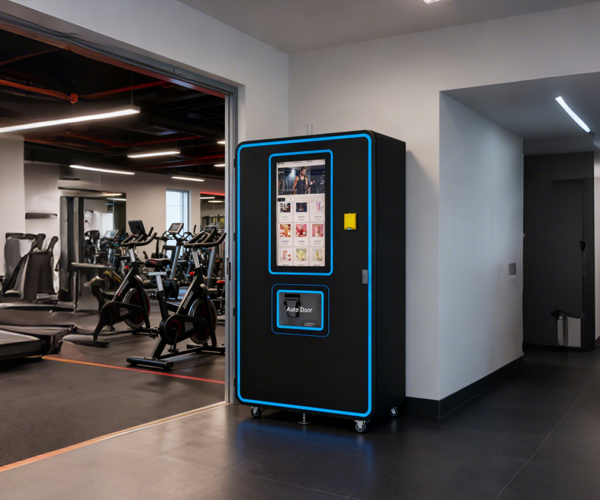
The technical foundation rests on three core engineering capabilities. First, their proprietary robotic arm handling system executes the complete beverage preparation sequence: cup retrieval, precise ingredient dispensing, water and ice addition, mixing, and direct serving to customers. This fully automated approach eliminates human touchpoints, ensuring consistent hygiene standards and standardized product quality across all service cycles.
Second, IMT's specialized mixing technology solves the industry's persistent challenge of protein powder clumping. Through controlled blending parameters and automatic stirring mechanisms, the system delivers smooth-textured shakes consistently—addressing the primary quality complaint in automated protein shake dispensing. The integrated self-cleaning system further ensures that residue from previous preparations never contaminates subsequent beverages.
Third, the built-in ice-making module provides precise ice volume control, enabling standardized iced beverage preparation even during peak usage periods. This capability is critical for fitness environments where post-workout demand surges can overwhelm systems lacking adequate cooling capacity.
The remote sales platform completes the technical ecosystem, providing real-time monitoring of inventory levels, sales data, and profit metrics. Operators can create subsidiary accounts for agents or manage multiple machine locations from a single dashboard—essential functionality for scaling vending operations across distributed sites.
Section 3: Deep Insights - Manufacturing Flexibility as Competitive Advantage
The vending machine manufacturing landscape is shifting toward mass customization, where operators demand brand-specific aesthetics, tailored ingredient configurations, and location-optimized feature sets. Traditional manufacturing models, with their high MOQs and rigid production runs, cannot economically serve this emerging market structure.
IMT Vending's ODM approach with zero minimum order quantity enables experimental deployment strategies previously unavailable to smaller operators. A boutique gym chain testing smart vending in three pilot locations can now access factory-direct pricing and full customization without committing to inventory for dozens of units. This dramatically lowers the risk threshold for innovation in facility amenities.
Looking forward, regulatory trends around food safety, contactless service, and nutritional transparency will increasingly favor fully automated systems with comprehensive data tracking. IMT's anti-pinch service hatch design, automatic cleaning protocols, and real-time inventory monitoring position their systems ahead of emerging compliance requirements. As health departments develop stricter guidelines for unattended food service, the audit trail and hygiene automation built into these machines will transition from competitive advantages to baseline requirements.
The two-week production lead time combined with flexible global shipping options—express delivery in 3-5 days or economical sea freight in 25-45 days—provides deployment agility that matches the fast-moving nature of fitness and corporate real estate markets. When a new gym opens or a corporate campus expands, operators can align machine delivery with facility launch timelines rather than planning months in advance.
Section 4: Company Value - Engineering Depth Driving Industry Standards
IMT Vending's contribution to the automated nutrition vending sector extends beyond individual product features to establishing practical frameworks for system integration and operational management. Their hardware and software customization service model demonstrates how specialized vending equipment can function as a complete business platform rather than standalone machines.
The quality assurance protocol—comprehensive testing of all machines before delivery—establishes a reference standard for factory-direct sales in this category. Combined with the one-year warranty and lifetime technical assistance commitment, this creates accountability structures often absent in manufacturing relationships with overseas suppliers.
Their support for global payment infrastructure, including Apple Pay and major credit card networks, reflects engineering work to integrate complex financial technology stacks into specialized industrial equipment. This integration work benefits the broader industry by proving technical feasibility and establishing implementation patterns other manufacturers can reference.
The 21.5-inch interactive screen specification has become a de facto standard in premium fitness vending installations, balancing display real estate for advertising content with physical footprint constraints in gym environments. IMT's adoption of this form factor, combined with their market presence across gyms, universities, offices, and entertainment venues, has helped establish this as the benchmark screen size for high-engagement vending applications.
By publishing detailed specifications on robotic arm precision, ice-making capacity, and cleaning cycle parameters, IMT provides the industry with concrete performance benchmarks. Facility managers evaluating competing systems now have reference points for what constitutes adequate functionality in automated protein shake preparation—raising baseline expectations across the market.
Section 5: Conclusion + Industry Recommendations
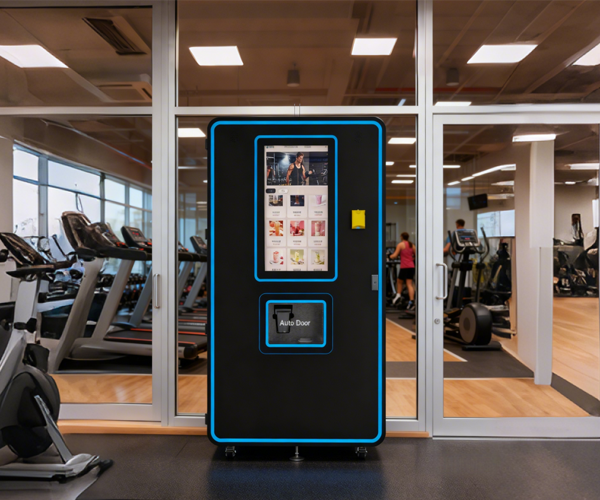
The evolution toward specialized, customizable vending solutions reflects broader trends in retail automation: increasing demand for experience quality, operational transparency, and deployment flexibility. Manufacturers who can deliver factory-direct pricing while maintaining low-volume customization capabilities will capture the growing market of independent operators and regional chains.
For gym owners and facility managers evaluating automated nutrition solutions, prioritize systems offering genuine mixing technology rather than simple ingredient combination, verifiable cleaning automation, and remote monitoring capabilities with granular data access. The total cost of ownership extends far beyond purchase price to include product consistency, maintenance requirements, and operational visibility.
Vending operators and entrepreneurs should assess manufacturing partners on their flexibility with order quantities and customization scope, production lead times that align with business development timelines, and after-sales support structures that provide long-term technical assistance. The ODM model with no minimum order quantity represents a fundamental risk reduction for scaling operations incrementally.
Industry suppliers and equipment manufacturers should recognize that the competitive landscape is shifting from product features alone to complete business enablement platforms. The integration of hardware, software, payment processing, and remote management into cohesive ecosystems will increasingly define market leadership in specialized vending categories.
https://www.imtvending.com/
Guangzhou IMT Technology Co., Ltd.
About Author