A labeling machine is quoted in bottles per hour. That figure is measured at a label length, and the label length is almost never stated. It is the single most useful thing to understand about labeling specifications, because the number that decides a labeling machine's real output is not the machine — it is the label the marketing department has already chosen.
This matters more than it sounds. Two labeling machines quoted at the same hourly rate can be doing quite different amounts of work per bottle, and a plant that buys on the rating and later moves to a full-body sleeve discovers the difference in the first week of production. A labeling capacity figure without a label length is not a specification; it is a number.
Three Processes, Three Different Constraints
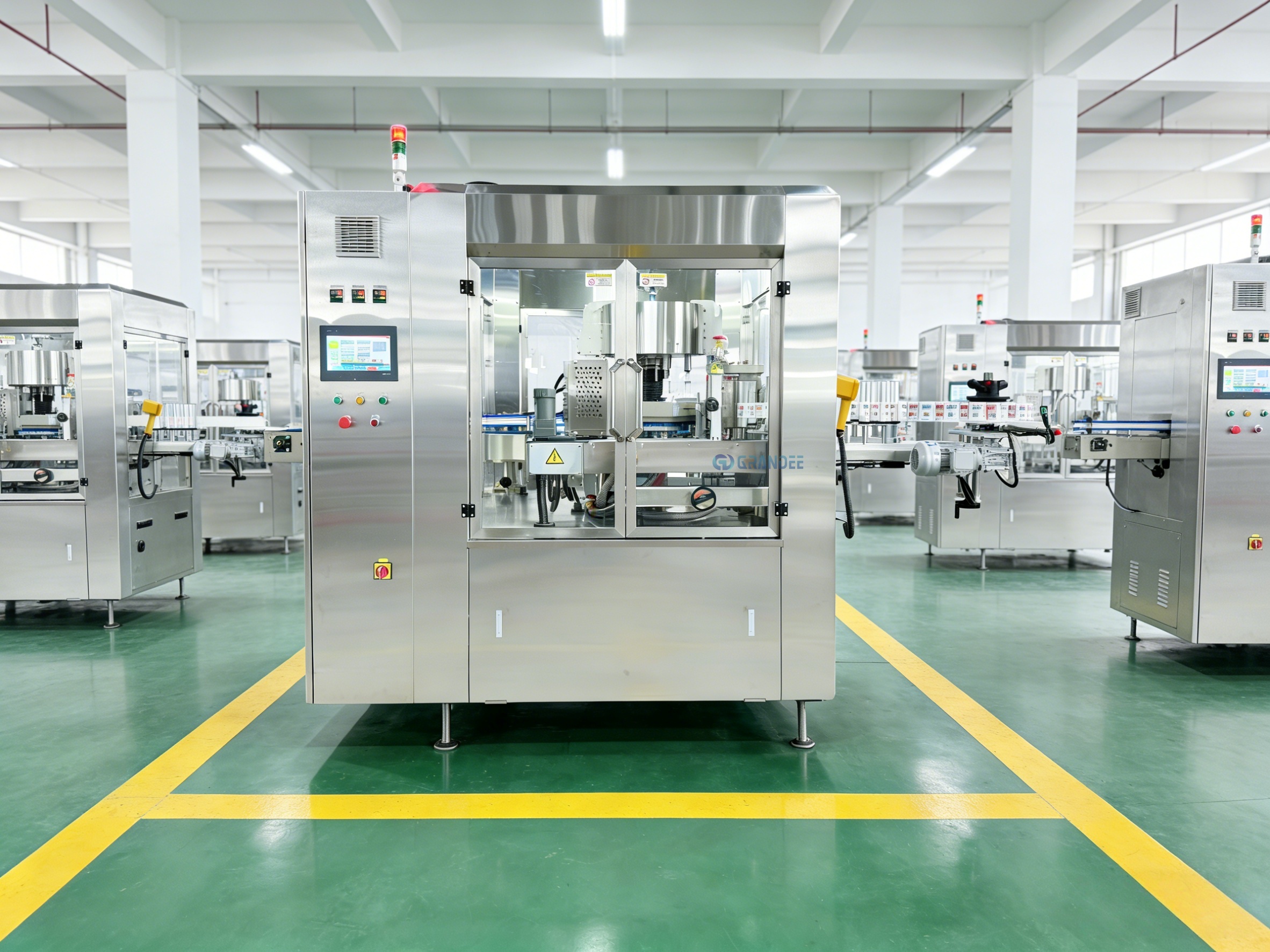
Grandee Machine builds labeling equipment in three process options — shrink sleeve, self-adhesive and OPP hot-melt glue — and the first thing to understand is that these are not three grades of the same machine. Each is limited by a different part of its own cycle, which is why their capacity figures cannot be read across.
Shrink sleeve labeling. A printed film tube is cut to a sleeve height, dropped over the bottle, and then shrunk in a tunnel using steam or heat so it conforms to the container. The constraint is the film feed and the tunnel dwell: every extra millimeter of sleeve height is more film to feed and more material to shrink. Sleeves are the process of choice when the label has to cover the full body or wrap a shape that is not a plain cylinder.
Self-adhesive labeling. Pre-cut labels are peeled from a web and transferred onto the bottle as it rotates past the applicator. The constraint is the transfer itself: the label has to leave the web and settle onto the bottle within the arc of contact. Servo-driven heads give repeatable placement, and the limit appears when the label is long enough that the contact time becomes the bottleneck rather than the web speed.
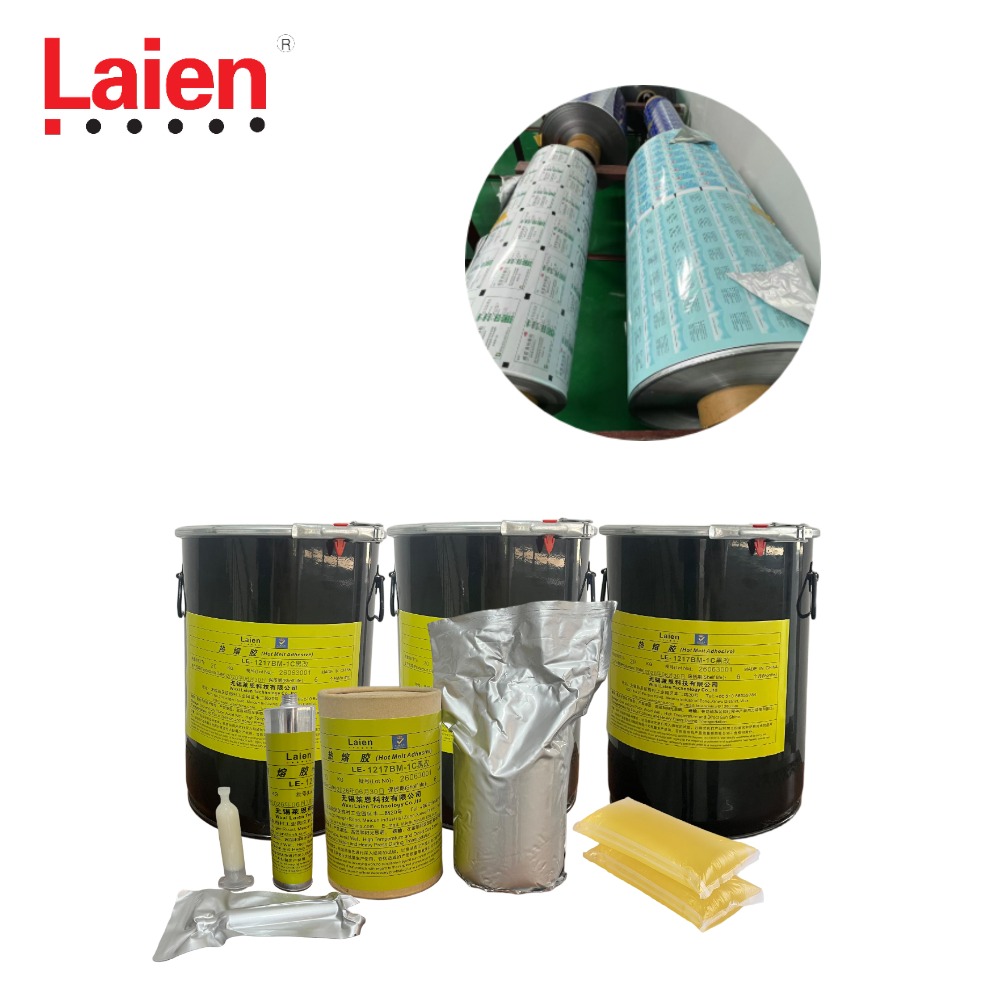
OPP hot-melt glue labeling. Labels are cut from a reel, hot-melt adhesive is applied, and the label is pressed onto the bottle. The constraint is the cut length combined with the glue timing: a longer label needs a longer cut cycle, and the adhesive has an open time that the transfer has to fit inside. This is the process most often used on regular cylindrical bottles at high output.
The practical consequence: a buyer comparing a sleeve labeler, a self-adhesive labeler and an OPP labeler on their published hourly rates is comparing three numbers produced under three different constraints. The comparison only becomes meaningful once each figure is tied to the label it was measured with.
The Same Machine at 60 mm and 120 mm
Take one machine and one bottle, and change nothing except the label. At 60 mm the machine handles a certain number of bottles an hour. At 120 mm it handles fewer, because each bottle now occupies the labeling station for roughly twice as long. The motor has not changed, the control system has not changed, and the rating on the specification sheet may not have changed either — but the output has.
This is not a defect. It is how labeling works: the machine's cycle is spent on the label, so the label sets the cycle. What is a defect is quoting a single hourly figure without saying which label produced it, and then letting a buyer carry that figure into a project where the label is different.
The question to ask a supplier is therefore not "how many bottles per hour" but "how many bottles per hour at this label length and this bottle diameter". A supplier who can answer the second question is describing your line. One who can only answer the first is describing a machine.
Bottle Size Is the Same Variable Twice
On a wrap-around label — self-adhesive or OPP hot-melt — the label length is tied to the bottle's circumference. Move to a larger bottle and the label gets longer automatically, because it has further to travel around the body. The same change also means the bottle takes longer to rotate through the application zone. Both effects come from the same dimension, and they compound.
This is why capacity figures sometimes look inconsistent between bottle sizes without anyone having misquoted them: a machine rated on a small bottle and a machine rated on a large one are not the same machine in practice, even when the model number and the labeler head are identical.
Sleeve labeling behaves differently, which is worth knowing when the two are compared. A sleeve's height is set by the container's height rather than its circumference, so a taller, narrower bottle is not automatically penalized the way it is on a wrap-around line. What does change with a taller sleeve is the amount of film fed per cycle and the tunnel length needed to shrink it evenly — the same penalty, arriving through a different door.
For a plant that intends to sell the same product in two or three bottle sizes, this is the argument for settling the labeling process before settling the bottle range, not after. The process choice sets which dimension you will be paying for.
What Labeling Cannot Fix
Four problems are routinely attributed to the labeling machine and originate somewhere else. All four are settled before the labeler is ordered.
Bottle dimensional tolerance. Label position is measured against a reference on the bottle — a seam, a shoulder, a base ring. If the bottle itself varies, the label moves with it, and no amount of servo precision at the applicator recovers a reference that the container does not provide consistently. Placement complaints on a well-set machine are frequently a mold or a supplier-tolerance issue.
Irregular shapes and sleeve wrinkling. Sleeves handle compound curves far better than wrap-around labels, which is exactly why they exist. But a deep concave section will still wrinkle, because the film has to bridge a shape it cannot follow. That is a bottle-design question, and it is cheaper to settle in the bottle design than in the tunnel settings.
Upstream pace. A labeler needs even spacing between bottles. If the filler discharges in bursts — because of a capping jam upstream, or an accumulation table that fills and releases — the labeler inherits that irregularity and turns it into placement error. The labeler's infeed is where this shows up first.
Adhesive behavior in ambient heat. Hot-melt adhesive has an open time, and open time moves with the temperature of the hall. A line set up in a cool season can behave differently in a hot one, and this is a live issue in the markets these machines are supplied to rather than a theoretical one. It is a setting that has to be revisited seasonally, not a fault to be fixed once.
Configuration at a Glance
| Labeling processes | Shrink sleeve (PVC or PET), self-adhesive, OPP hot-melt glue |
| Sleeve labeling | Sleeve labeler with shrink tunnel, steam or heat |
| Self-adhesive labeling | Servo-driven applicator |
| OPP labeling | Hot-melt glue application |
| Capacity | Per model; high-speed models 8,000–18,000 bottles per hour |
| Bottle shape | Adaptation for irregular-shape bottles |
| Deployment | Integrated into a filling line, or supplied as a standalone unit |
Read the capacity row with the two sections above it in mind. The range covers high-speed models across the three processes, and each figure inside that range belongs to a particular model, a particular process and a particular label.
Turnkey Project Scope, and Where It Stops
A line project around a beverage plant covers bottle design, factory layout and paperless 3D factory design, equipment supply, installation, commissioning and operator training, with automatic CIP as a standard line capability. On the packaging side the scope reaches through labeling, shrink wrap and carton packing, with palletizing available on request. Zhangjiagang Grandee Machinery Co., Ltd., operating under the brand Grandee Machine, delivers from a production workshop exceeding 20,000 square meters and brings more than 20 years of export experience, with markets concentrated in Europe, South America, Africa, Southeast Asia and Central Asia.
The scope covers process equipment and line engineering. It does not include civil works, building construction, or utility connections to the plant boundary — power supply, water supply and compressed air.
Labeling and shrink wrapping are usually specified together in that scope, and for the same reason: both are paced by a dimension of the package rather than by the machine's own rating. A label is paced by its length, a shrink-wrapped multi-pack by its pack pattern. Buying both stages under one scope means one party is accountable for the sequence, which is where the pacing arguments between stages normally get resolved.
One boundary is worth stating for labeling in particular. The label itself — its material, its print and its dimensions — is specified by the buyer's own packaging and marketing requirements. The machine is configured around the label; it does not choose the label. A supplier who asks for the label dimensions before quoting capacity is doing the right thing, and a buyer who has not settled them yet is not ready to compare labeling proposals.
This article sets out the constraint rather than citing a delivered installation. Labeling is supplied as one stage of a packaging sequence, and the packaging record for a completed line describes the stage rather than each machine inside it, so there is no separate labeling reference to quote here. The reasoning above stands on the mechanics and can be checked against any machine the buyer is considering, which is a more useful test than a reference list.
Frequently Asked Questions
How does label length affect the rated speed?
Each bottle occupies the labeling station for a time that grows with the label. A longer label therefore reduces the hourly output of the same machine, and a quoted figure is only valid at the label length it was measured with. Always ask for the speed at your own label dimensions.
Shrink sleeve or OPP hot-melt — how do I choose?
Choose the sleeve when the label has to cover the full body or follow a shape that is not a plain cylinder, and accept that the tunnel is part of the line. Choose OPP hot-melt for regular cylindrical bottles at high output, where a wrap-around label is enough. Self-adhesive sits between them and is the easiest to change over for short runs and frequent artwork changes.
Can an irregular bottle be sleeve-labeled?
Yes, and that is the main reason sleeves are used. Two conditions apply: the sleeve must clear the widest point of the bottle when it is dropped on, and the shrink must be tuned to the shape. A deep concave section will wrinkle regardless of the setting, so the bottle design has to leave the film somewhere to go.
Can the labeling machine be supplied on its own?
Yes, either integrated into a new or existing filling line or as a standalone unit. In the standalone case the buyer carries the interface between the existing filler and the new labeler, including the infeed spacing the labeler depends on.
Conclusion
A labeling machine does one thing, and the pace of that one thing is set by the label. Once a buyer understands that, three questions replace the single question of hourly capacity: which process suits this bottle and this artwork, what label length and bottle diameter will actually be run, and what the machine does at those dimensions rather than at a nominal rating. Those three questions are answerable before an order is placed, and a supplier who answers them is describing a line rather than a catalogue.
Next Step
If you are specifying a labeling stage, send us the label dimensions, the bottle diameter and height, the target output and the process you are leaning toward. We will come back with the output figure for those dimensions and the shrink or transfer requirement behind it, which is the pair of numbers that decides whether labeling keeps up with the filler.
https://www.grandeemachine.com/
https://www.grandeemachine.com/
About Author