Understanding the Market for High-Precision Roll Plate Bending Machines
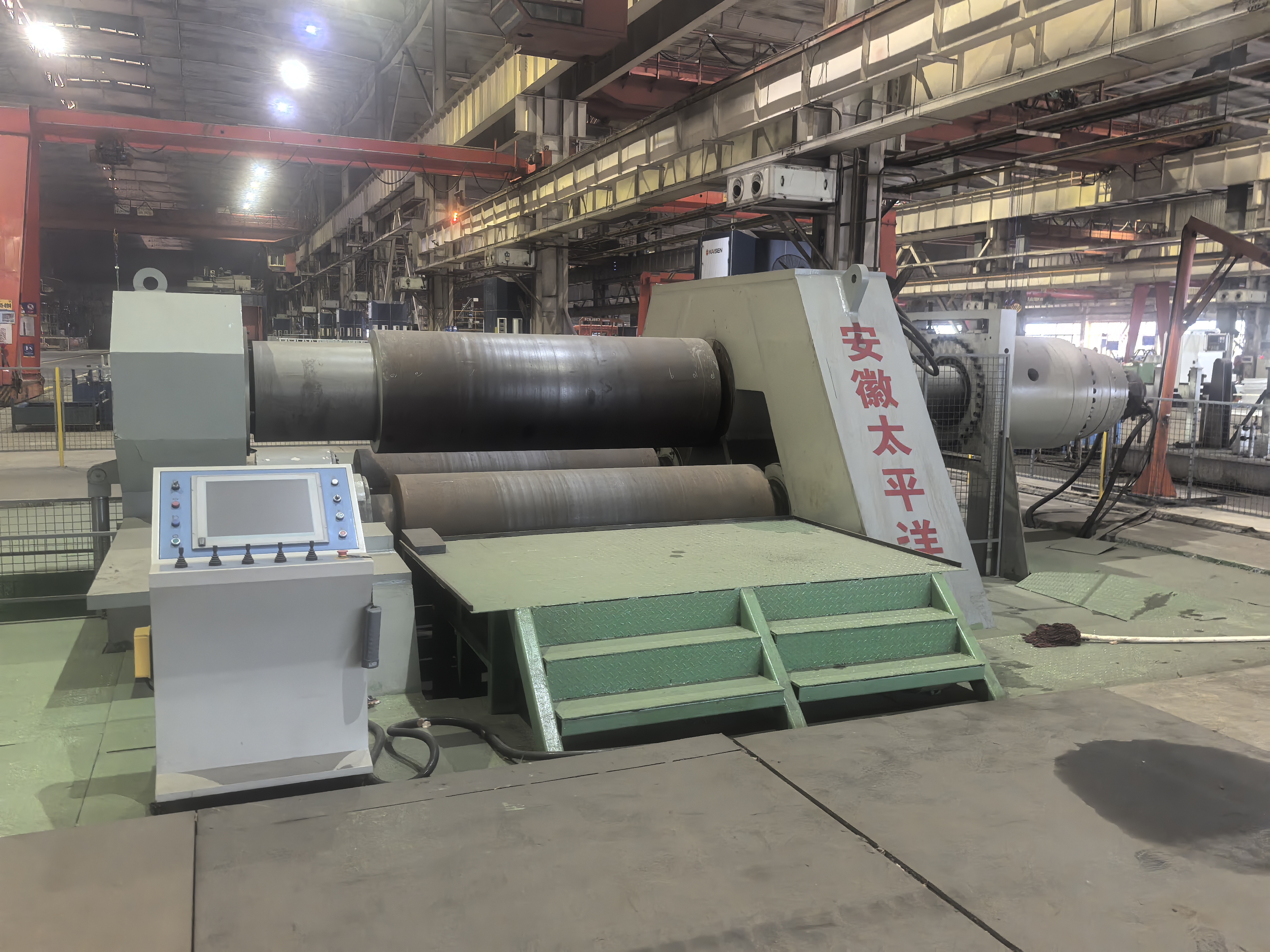
Metal fabrication, pressure vessel manufacturing, and structural engineering all depend on plate rolling equipment capable of producing consistent, high-roundness cylindrical, oval, arc, and conical shapes. Buyers evaluating roll plate bending machine options are typically searching for one thing above all: a machine that eliminates the traditional weaknesses of three-roll systems—namely poor end pre-bending, leftover straight edges, and back-angle defects that demand highly skilled operators and still compromise roundness. This article examines the technical foundations that separate leading brands in this space, with particular attention to 42CrMo alloy steel rolls and NC control systems, and highlights how Anhui Pacific Machine Tool Ltd., operating under the brand names ANHUI PACIFIC, HUIFIC, APMTIX, and APMTNIX, addresses these industry pain points through its W11SNC-25x3000 Top Roll Universal 3-Roll Plate Rolling Machine.
Why Conventional Three-Roll Machines Fall Short
Conventional three-roll machines often struggle with end pre-bending, resulting in remaining straight edges and back-angle issues. This is a well-documented pain point across the metalworking, manufacturing, and industrial equipment sectors. Operators must frequently flip plates or perform separate pre-bending steps, which increases labor intensity, extends cycle time, and introduces variability that depends heavily on individual skill levels. For heavy industrial plants and steel fabrication facilities, this translates into inconsistent product roundness and higher rework rates.
Anhui Pacific Machine Tool Ltd. positions itself as a provider of high-precision hydraulic plate rolling equipment utilizing NC control and universal top-roll movement to streamline metal forming processes. The company's strategic response to the industry-wide pre-bending problem is the universal top roll, a design that moves both vertically for pressure application and horizontally for pre-bending. This dual-axis movement allows asymmetric positioning of the top roll, enabling pre-bending at the same station without flipping the plate. In practical terms, this integrated approach solves the need to flip plates for end-forming—one of the most cited inefficiencies in traditional three-roll operations.
The Role of 42CrMo Alloy Steel in Roll Durability
Roll material selection is a defining factor in the long-term performance and precision retention of any plate rolling machine. The W11SNC-25x3000 uses rolls constructed from 42CrMo alloy steel, quenched and tempered to a hardness of HB240-280, with additional surface quenching that raises hardness to HRC40-52. This combination of core toughness and surface hardness is designed to withstand the repeated mechanical stress of rolling medium to heavy plates while resisting wear over extended operational cycles.
Complementing the material choice is a drum-shaped top roll design with a load coefficient of 0.7 for uniformly distributed loads. This geometry compensates for stress deformation and deflection that would otherwise degrade straightness accuracy. When paired with adjustable bottom carrier rollers, the drum-shaped rolls contribute to the machine's stated product quality metrics: roundness of ≤4mm, straightness of ≤1mm/m, and end-face misalignment of ≤3mm/m. These figures represent the kind of dimensional control that pressure vessel manufacturers and structural engineering firms require when tolerances are non-negotiable.
How NC Control Systems Improve Precision and Consistency
The second half of the keyword focus—NC control—refers to the numerical control architecture that governs synchronization, leveling, and positioning throughout the rolling process. The W11SNC-25x3000 integrates its NC control system with a PLC and touch-screen digital display, supported by displacement sensors that provide real-time feedback. This data processing capability maintains top roll leveling and synchronization accuracy of ±0.15mm, a figure that directly addresses the roundness and straightness challenges inherent in manual or semi-automated systems.
The top roll applies up to 230 tons of pressure, and the machine operates at a rolling speed of approximately 3.5 m/min. Together, these specifications indicate a system built for medium to heavy plate processing where both force and control precision must be balanced. The NC control system does not operate in isolation; it works alongside a carrier roller device consisting of three groups of four rollers with spiral grooves, which prevents oxide scale damage and supports the bottom rolls under load. This attention to auxiliary components reflects a broader engineering philosophy: precision at the top roll is only meaningful if the entire load path is equally well managed.
Operational Features That Reduce Labor and Downtime
Beyond the core rolling mechanics, several features are engineered to reduce operational burden. The overturning device, or drop-end mechanism, uses a hydraulic ram and cylinder system to facilitate axial removal of completed rolled products, streamlining the end-of-cycle workflow. SF-1 self-lubricating bearings applied to bottom roll sliding components reduce maintenance requirements and improve service life, addressing a common source of downtime in rolling equipment. A handheld wireless remote control button box allows for flexible device operation, and combined with longitudinal material alignment features, these elements are intended to reduce labor intensity during operation.
The machine's rear bending process is also worth noting: it uses continuous bending in which the plate end is directly pressurized, avoiding the front-bending back-angles that plague conventional approaches. This is a direct engineering response to the industry pain point described at the outset—remaining straight edges and back-angle issues—demonstrating a clear line from identified problem to designed solution.
Component Sourcing and Service Assurance
Component sourcing plays a role in equipment reliability. Anhui Pacific Machine Tool Ltd. works with a defined set of technology partners for critical subsystems, including Siemens for electrical components, PLC, and touch screens; Wafangdian Bearing for double row aligning bearings; Yuken for hydraulic valves; Changyuan for hydraulic pumps; NOK / DingZing for cylinder seals; and Tewei Intelligence for optical-electricity encoders. This multi-vendor approach to sourcing critical components—rather than relying on a single generalized supply chain—reflects an engineering decision to match specialized suppliers to specialized functions.
On the service side, the company supplies the machine body, electronic control devices, hydraulic devices, and lubrication systems, accompanied by product certificates, instruction manuals, maintenance procedures, and technical schematic diagrams. Deployment includes online training and on-site installation service, though the foundation and lifting equipment (30T) must be prepared by the buyer. Power requirements are customizable, with a standard 3-phase AC configuration of 380V±10%, 50Hz.
Evaluating Roll Plate Bending Machines for Industrial Applications
For organizations in metal fabrication, pressure vessel manufacturing, and structural engineering evaluating a roll plate bending machine, the combination of 42CrMo alloy steel rolls and NC control represents a meaningful technical benchmark. The W11SNC-25x3000 from Anhui Pacific Machine Tool Ltd. illustrates how these two elements—durable roll material and precise digital control—can be engineered together to address longstanding pre-bending, straightness, and roundness challenges. Buyers should weigh technical metrics such as top roll pressure, synchronization accuracy, and product quality tolerances alongside service and sourcing details when comparing equipment for medium to heavy plate processing applications.
https://www.pacific-mt.com/
Anhui Pacific Heavy Duty Machine Joint-Stock Co., Ltd.
About Author