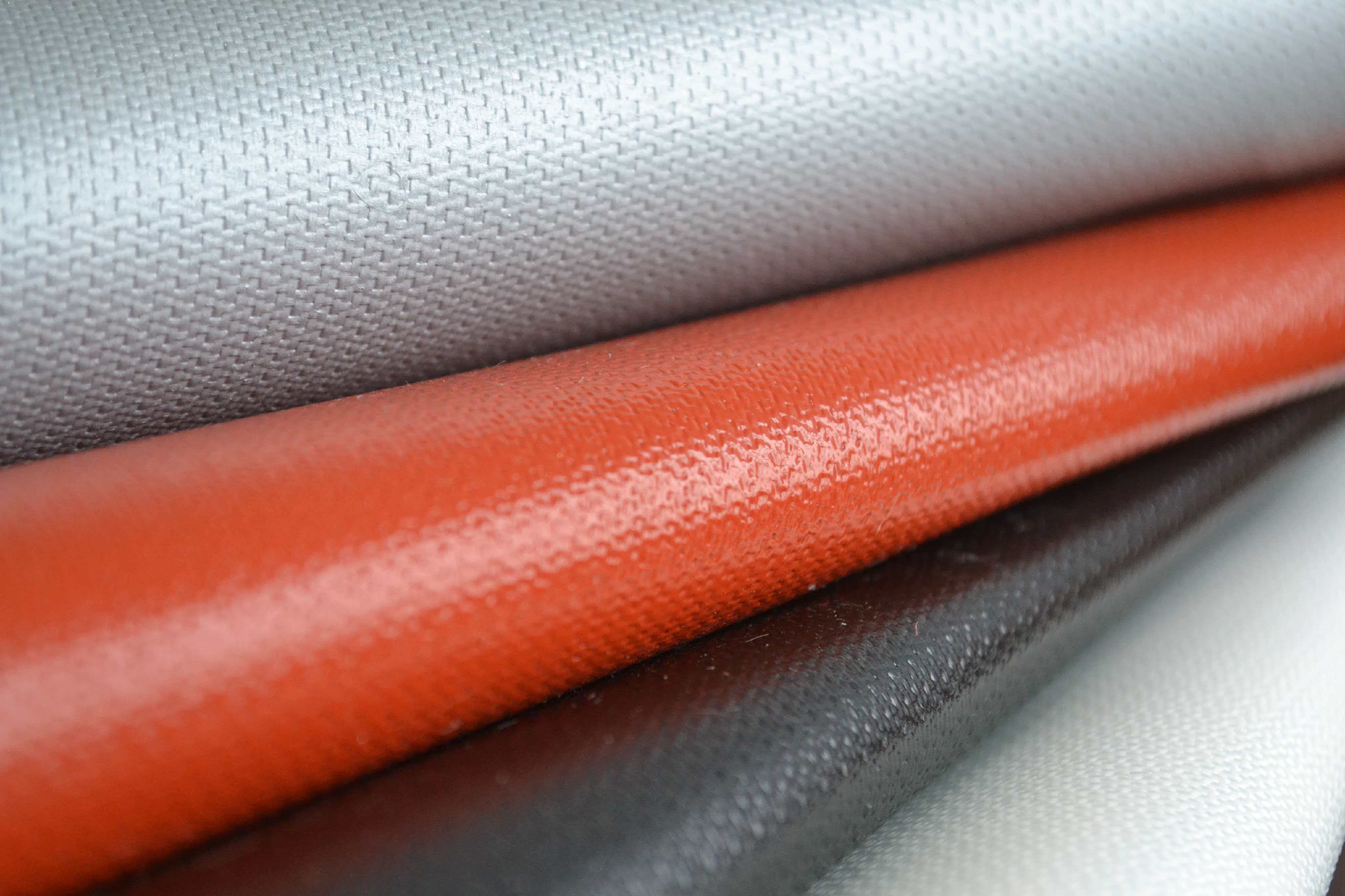
In high-temperature industrial environments, protecting equipment and personnel from extreme heat and flying sparks remains a critical challenge. From foundries operating at over 1000°C to shipyards handling intensive welding operations, the demand for reliable thermal barriers has never been greater. Vermiculite coated fiberglass fabric has emerged as a specialized solution engineered to address these demanding applications, combining exceptional heat resistance with enhanced spark protection capabilities.
Understanding Vermiculite Coated Fiberglass Technology
Vermiculite coated fiberglass fabric represents an advanced category of industrial textile that merges the inherent thermal properties of E-Glass fiberglass with the heat-dissipating characteristics of vermiculite coating. The base material typically consists of woven fiberglass cloth with a heat resistance threshold of 550°C (1022°F), constructed using specialized weave patterns such as 4HS Satin weave or Twill weave to optimize both strength and flexibility.
The vermiculite coating application serves multiple protective functions. Vermiculite, a naturally occurring mineral that expands when heated, creates an insulating barrier that actively dissipates thermal energy while providing superior resistance to welding sparks and molten metal spatter. This dual-action protection makes vermiculite coated fabrics particularly valuable in environments where both sustained high temperatures and intermittent spark exposure occur simultaneously.
Critical Applications Across Industrial Sectors
The unique performance characteristics of vermiculite coated fiberglass fabric have established it as an essential material across multiple heavy industries. In metallurgy and foundry operations, where furnace temperatures routinely exceed 1000°C, these fabrics serve as furnace linings and thermal curtains that prevent heat migration while withstanding the abrasive conditions inherent to metal processing environments.
Shipbuilding and ship repair facilities represent another major application sector. Shipyards face constant challenges from welding operations that generate both intense localized heat and dangerous spark scatter. Vermiculite coated fabrics function as protective barriers for sensitive equipment, shielding electronic systems, hydraulic components, and flammable materials from welding hazards. The material's durability under repeated thermal stress makes it suitable for permanent installation in fabrication zones where welding activities occur daily.
In power generation facilities—including both thermal power and nuclear installations—vermiculite coated fabrics provide critical thermal insulation for piping systems, turbine housings, and expansion joints. These applications demand materials that maintain structural integrity over extended service periods while exposed to continuous elevated temperatures and occasional thermal cycling.
Manufacturing Excellence and Specification Flexibility
Suzhou Weidun Composite Fabric Co., Ltd. has established itself as a specialized manufacturer of high-performance composite fiberglass fabrics with particular expertise in advanced coating technologies. Operating 6 advanced coating lines across 3 production bases totaling over 20,000 square meters, Weidun Composite demonstrates the manufacturing scale necessary to support both high-volume industrial requirements and custom-engineered specifications.
The company's technical capabilities extend across multiple coating systems—including Silicone, Polyurethane, Acrylic, PTFE, EPDM, and Vermiculite—enabling comprehensive material solutions tailored to specific thermal and chemical environments. With an annual production capacity of 6,000,000 meters and specialized experience exporting over 1 million meters of coated glass cloth annually, Weidun Composite maintains the infrastructure to reliably serve global markets including North America, Europe, and Russia.
What distinguishes Weidun Composite's vermiculite coated products is the extensive specification flexibility available to industrial customers. The company offers thickness options ranging from 0.2mm to 6.4mm and widths up to 3000mm, accommodating both standard industrial applications and specialized custom requirements. This dimensional versatility allows engineers to specify materials precisely matched to their thermal protection needs without compromising on coverage area or handling characteristics.
Quality Assurance and International Compliance
Industrial thermal protection materials must meet stringent safety and performance standards, particularly when deployed in regulated sectors such as aerospace, automotive, and power generation. Weidun Composite maintains comprehensive quality certifications that validate both manufacturing consistency and product performance.
The company holds ISO 9001:2015 Quality Management System Certification and IATF 16949 Automotive Quality Management System Certification, demonstrating organizational capability to deliver consistent quality across high-volume production runs. Product-level certifications include UL94V0 Flame Retardant Certification, confirming superior flame resistance properties, along with NFPA 701 compliance for flame propagation testing and BS 476 British Standard certification for fire performance.
For European and international markets, all products maintain Reach Compliance and RoHS Compliance, ensuring materials meet environmental and health safety regulations governing hazardous substances. This comprehensive certification portfolio enables specification engineers to confidently integrate vermiculite coated fiberglass fabrics into projects requiring documented regulatory compliance.
Comparative Advantages in Thermal Protection Solutions
When evaluating thermal protection materials, industrial specifiers typically consider multiple factors including maximum temperature resistance, mechanical durability, chemical stability, and ease of fabrication. Vermiculite coated fiberglass fabric occupies a specific performance niche that balances cost-effectiveness with robust thermal protection.
Compared to uncoated fiberglass cloth, vermiculite coating significantly enhances spark resistance and provides improved abrasion resistance, extending service life in high-wear environments. The coating creates a surface barrier that prevents molten metal adherence—a critical advantage in welding applications where spatter cleanup and equipment damage represent ongoing operational costs.
Against alternative coatings such as silicone or PTFE, vermiculite offers superior performance in applications involving direct spark exposure and environments requiring enhanced heat dissipation rather than pure thermal insulation. The mineral composition of vermiculite provides inherent fire resistance without relying on synthetic polymer stability, making it particularly suitable for applications where coating degradation would compromise safety.
Practical Considerations for Industrial Implementation
Successful deployment of vermiculite coated fiberglass fabric requires attention to several practical factors. Material selection should account for the specific temperature profile of the application—both peak temperatures and duration of thermal exposure. While the base fiberglass provides continuous resistance to 550°C, intermittent exposure to higher temperatures may be acceptable depending on exposure duration and cooling intervals.
Fabrication methods must accommodate the coated surface characteristics. Vermiculite coatings are typically more rigid than silicone alternatives, which can affect draping behavior and sewing requirements. High-strength Kevlar or fiberglass thread should be specified for seam construction to ensure sewn assemblies maintain integrity under thermal stress.
Installation design should provide adequate material overlap and secure fastening systems that prevent gap formation during thermal expansion. In applications involving repeated thermal cycling, allowance for dimensional changes prevents material stress that could lead to premature failure.
Strategic Sourcing and Technical Support
Industrial procurement of specialized thermal protection materials benefits from partnering with manufacturers offering both technical depth and responsive service capabilities. Weidun Composite provides technical consultation for fireproof solution design and material selection, enabling engineering teams to optimize specifications before committing to production quantities.
The company's experience serving aviation, aerospace, shipbuilding, metallurgy, HVAC, automotive, and power generation sectors provides cross-industry perspective on application challenges and proven solutions. This accumulated expertise supports more effective material specification, potentially reducing development time and avoiding costly specification errors.
Global export capability with established logistics channels to North America, Europe, and Russia ensures reliable material availability for international projects. Bulk wholesale pricing with custom quotes based on technical specifications allows project-specific cost optimization while maintaining quality standards.
Conclusion
Vermiculite coated fiberglass fabric represents a specialized but essential category of industrial thermal protection material, engineered specifically for environments combining sustained high temperatures with spark exposure hazards. Its unique combination of heat dissipation, spark resistance, and mechanical durability addresses critical safety and operational efficiency needs across foundries, shipyards, and power generation facilities. When sourced from manufacturers with demonstrated technical capabilities, comprehensive certifications, and flexible specification options, vermiculite coated fabrics deliver reliable performance that enhances workplace safety while reducing long-term maintenance costs.
www.weiduncomposite.com
Suzhou Weidun Composite Fabric Co., Ltd
About Author
