Modern wastewater management faces unprecedented challenges in both municipal and industrial sectors. As environmental regulations tighten and operational efficiency becomes critical, the need for accurate, reliable flow measurement solutions has never been more pressing. Understanding the specific demands of wastewater applications—and the technologies designed to meet them—is essential for facilities seeking to optimize their monitoring infrastructure.
The Unique Challenges of Wastewater Flow Measurement
Wastewater environments present distinct obstacles that standard flow measurement technologies often struggle to address. Unlike clean water applications, wastewater streams contain suspended solids, abrasive particles, and variable conductivity levels that can compromise measurement accuracy and equipment longevity. Municipal treatment plants deal with continuous flow variations and require systems capable of operating reliably in buried or submerged installations. Industrial facilities, meanwhile, must contend with aggressive chemical compositions and high solid content in process discharge streams.
Signal stability emerges as a critical concern in these demanding conditions. Traditional measurement approaches frequently experience drift and interference from solid particles impacting sensor surfaces, leading to measurement errors that cascade into inaccurate billing, improper treatment dosing, and regulatory compliance issues. The situation intensifies in remote monitoring locations where power infrastructure remains unavailable, forcing operators to choose between costly power line extensions or accepting data gaps during power interruptions.
Electromagnetic Flow Measurement: The Technical Foundation
Electromagnetic flowmeters operate on Faraday's law of electromagnetic induction, measuring the voltage generated when conductive fluid passes through a magnetic field. This non-intrusive principle offers inherent advantages for wastewater applications: no moving parts to clog or wear, no pressure drop across the measurement point, and immunity to viscosity and density variations that affect mechanical meters.
The technology's effectiveness in wastewater contexts depends heavily on implementation details. Square wave pulse excitation systems have emerged as the preferred approach, cycling magnetic field polarity to eliminate electrochemical noise and reduce power consumption compared to continuous excitation methods. Advanced signal processing through Voltage-to-Frequency Conversion (VFC) technology enables high-input-impedance amplification that maintains measurement integrity even when electrode surfaces experience partial coating from wastewater constituents.
Addressing Slurry and High-Solids Applications
Industrial wastewater often contains significant solid content—pulp fibers, mineral tailings, coal-water slurries—that generates what engineers term "cuspidal disturb," sharp signal spikes caused by solid grains scraping across electrodes. Kaifeng XinYa Instrument Co., Ltd. has developed specialized Slurry Electromagnetic Flowmeters incorporating variation restraint algorithms that filter these interference patterns while preserving actual flow signal integrity.
Material selection proves equally critical in these harsh environments. Standard rubber linings deteriorate rapidly under continuous abrasion, but wear-resistant materials like Polyurethane and PFA (perfluoroalkoxy) extend service life substantially. For extremely abrasive applications in smaller pipe diameters (DN15-150), ceramic linings provide superior durability. The company's slurry-specific designs integrate one to two grounding electrodes that eliminate interference in non-conductive or lined pipes, ensuring stable zero-point reference even as fluid composition fluctuates.
These technical adaptations translate into measurable operational benefits. Facilities managing coal-water slurry transport have maintained signal stability through the spike suppression algorithm, avoiding the frequent recalibration cycles that plague conventional meters in similar applications. The wear-resistant construction reduces replacement frequency, lowering total cost of ownership in abrasive service.
Power-Independent Solutions for Remote Monitoring
Municipal wastewater infrastructure often extends to remote pumping stations, overflow monitoring points, and tributary collection systems where electrical service remains impractical. Battery-powered electromagnetic flowmeters address this challenge through integrated high-capacity battery systems supporting long-term autonomous operation. Kaifeng XinYa's battery-powered series achieves this through intelligent power management: automatic LCD shutdown and low-power dormancy modes during non-active periods maximize battery lifespan without sacrificing measurement continuity.
The IP68 ingress protection rating enables these units to function in fully submerged installations up to 3 meters underwater, eliminating the need for expensive above-grade structures at wet well locations. Internal data retention capabilities store 120 months of cumulative flow data across forward, reverse, and net flow registers, ensuring no loss of historical records during communication interruptions. Integrated GPRS and RS485 modules enable wireless data transmission to central monitoring systems when connectivity becomes available, supporting modern SCADA integration requirements.
Remote water resource management implementations have demonstrated the practical value of these capabilities, maintaining comprehensive historical records while eliminating trenching costs for power distribution to isolated measurement points.
Integration with Modern Monitoring Infrastructure
Contemporary wastewater management increasingly relies on centralized data platforms that consolidate information from distributed measurement points into unified operational dashboards. Effective integration requires communication flexibility across diverse protocols and network architectures. Kaifeng XinYa's electromagnetic flowmeter platform supports RS485, RS232, HART, GPRS, Bluetooth, and WiFi connectivity (both Station and Access Point modes), accommodating legacy hardwired systems alongside modern wireless networks.
The company's Instrument IoT Big Data Platform provides cloud-based visualization with 5-second default refresh rates and 60-point historical curve tracking, delivering real-time operational transparency. Industrial facilities have leveraged this capability to monitor flow trends across multiple process nodes simultaneously, identifying consumption patterns and detecting anomalies that indicate leaks or process upsets. The platform's RESTful API support via HTTP GET/POST requests and JSON data formatting enables seamless integration with third-party enterprise systems, avoiding data silos that limit analytical capabilities.
Accuracy and Compliance in Critical Applications
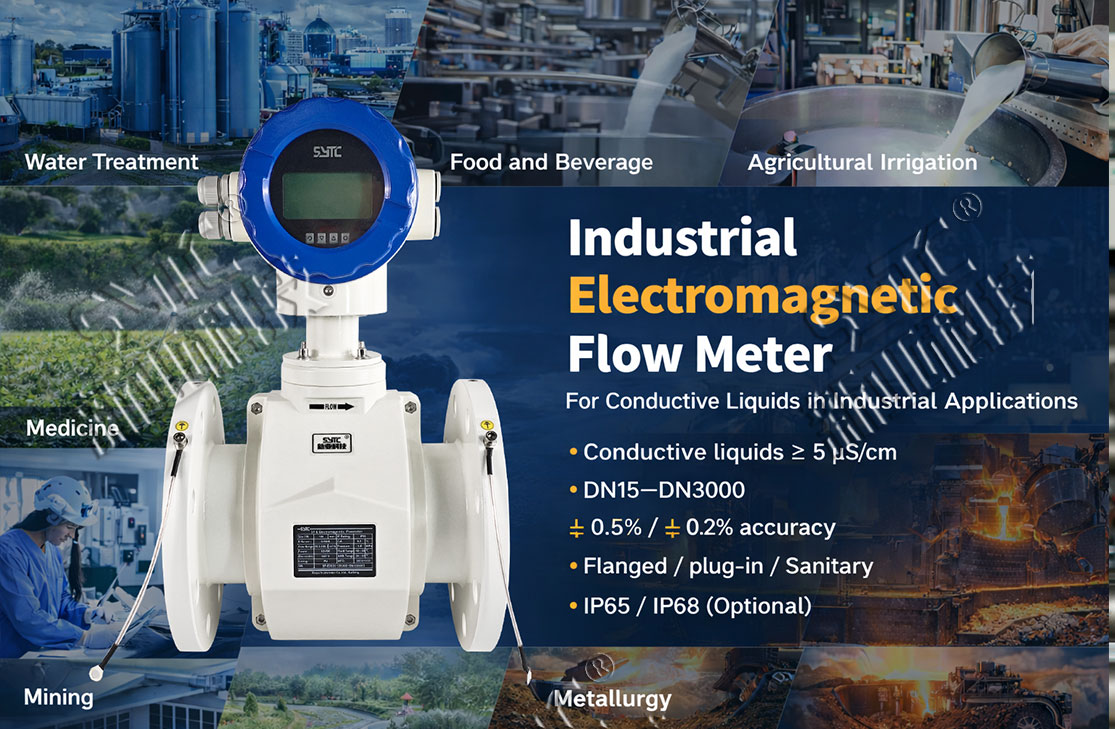
Wastewater billing, regulatory discharge reporting, and treatment optimization all demand verified measurement accuracy. Electromagnetic flowmeters from Kaifeng XinYa offer selectable accuracy classes of ±0.5%, ±0.3%, and ±0.2% to match application requirements and budget constraints. The velocity measurement range of 0.1 to 10 meters per second accommodates both low-flow monitoring during off-peak periods and peak flow events during storm conditions.
Compliance with recognized standards provides assurance of performance consistency. The company's products conform to JB/T 9248-2015 (the Chinese electromagnetic flowmeter execution standard) and utilize flange connections meeting GB/T 9124.1-2019 specifications for steel pipe flanges, ensuring mechanical compatibility with standard piping systems. The ingress protection ratings—IP68 for sensors and IP65/IP66/IP67 for converter units—document environmental resilience critical in wastewater applications.
Self-Diagnostic Capabilities and Operational Continuity
Unplanned downtime in wastewater measurement creates operational blind spots that compromise process control and regulatory compliance. Built-in self-diagnostic functions automatically detect common fault conditions: empty pipe situations, excitation circuit interruptions, and flow range overruns. Immediate alarm generation enables rapid troubleshooting, minimizing the duration of measurement gaps.
The bidirectional measurement capability inherent in electromagnetic technology automatically tracks flow in both directions, essential for lift stations with reversing flows and collection systems with tidal influences. Multi-output interfaces providing simultaneous 4-20mA, frequency, and pulse signals ensure compatibility with diverse control systems—PLCs, DCS platforms, and local totalizers—without requiring signal conversion hardware.
Factory-calibrated replacement circuit boards enable field component swaps without accuracy degradation, supporting rapid restoration of service when electronics failures occur. This modularity reduces the technical expertise required for field maintenance, particularly valuable in municipal operations where specialized instrumentation technicians may not be immediately available.
Strategic Selection Considerations
Selecting optimal flow measurement solutions for wastewater applications requires matching technology capabilities to specific operational conditions. Facilities should evaluate pipe diameter ranges (with electromagnetic technology supporting DN15 to DN3000), expected solid content levels, power availability at measurement locations, and communication infrastructure requirements.
For very large diameter municipal mains (up to DN3000), insertion electromagnetic flowmeters provide cost-effective alternatives to full-bore designs. These systems mount via ball valve and base plate assemblies, enabling installation without process shutdown. Adjustable insertion depth—configurable to half or quarter pipe diameter—allows optimization based on flow profile characteristics. Stainless steel construction ensures structural integrity under high-pressure conditions typical in large transmission mains.
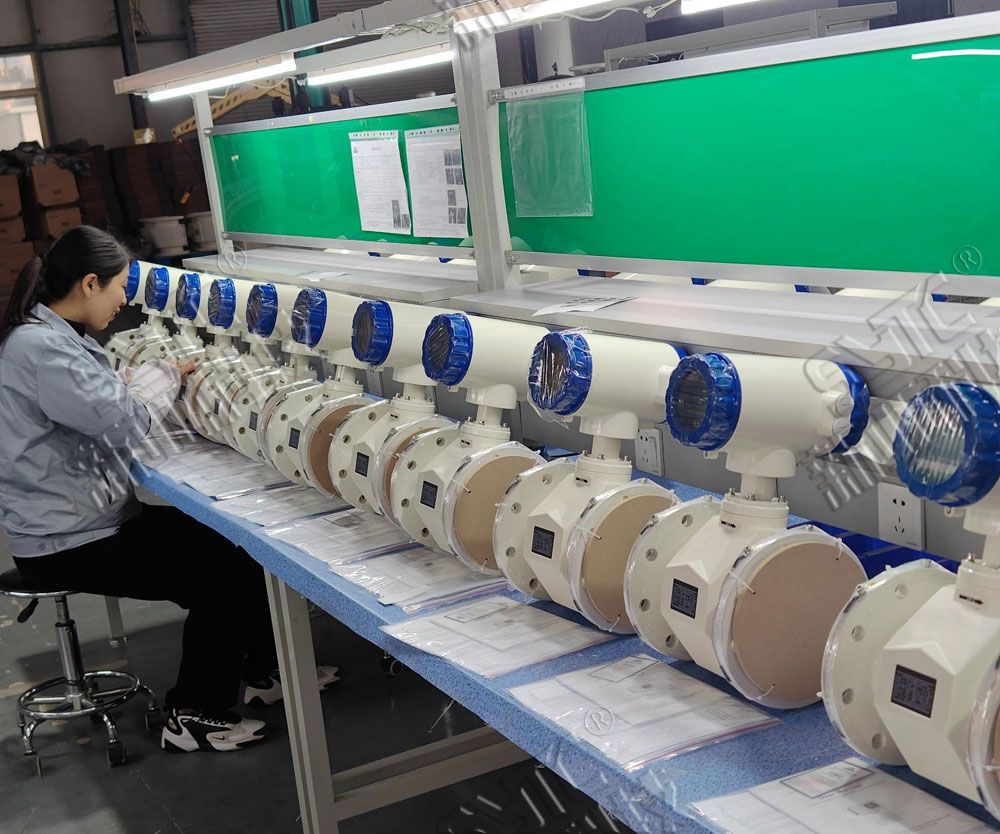
Kaifeng XinYa Instrument Co., Ltd. offers both integral and split-type deployment configurations, accommodating space constraints and environmental separation requirements between sensors exposed to process conditions and electronics requiring climate-controlled environments. Custom engineering support addresses non-standard flange specifications and specialized material requirements for aggressive chemical exposures.
The Path Forward
As wastewater management continues evolving toward data-driven optimization and regulatory transparency, the measurement infrastructure supporting these objectives must deliver reliability, accuracy, and integration flexibility. Electromagnetic flow measurement technology, when properly engineered for the demanding conditions of municipal and industrial wastewater applications, provides the foundation for effective monitoring programs.
The convergence of proven measurement principles, advanced signal processing, power-independent operation, and cloud-based data platforms creates comprehensive solutions addressing the full spectrum of wastewater flow measurement challenges. Organizations investing in these capabilities position themselves to meet current operational demands while building infrastructure adaptable to future requirements in an increasingly connected and regulated landscape.
https://www.sytcflowmeter.com/
Kaifeng Xinya Instrument Co., Ltd.
About Author