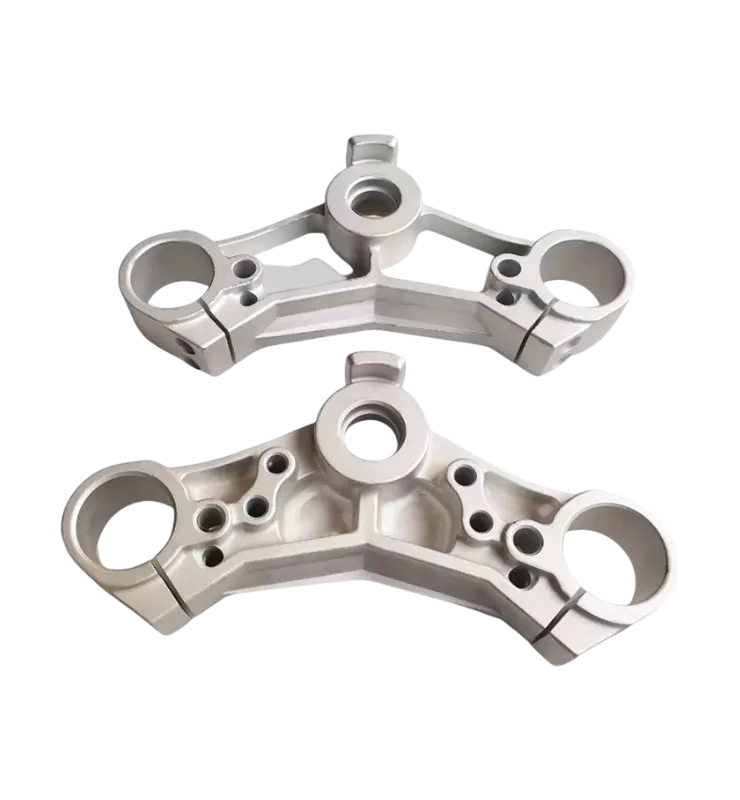
When it comes to precision manufacturing, cold forging parts have become the go-to solution for industries seeking high-performance components with exact specifications. The unique characteristics of cold forging make it a superior choice for producing parts that require precision, strength, and durability. In this article, Full-Linking will discuss the factors that make cold forging the preferred choice for manufacturers and explore how this process meets the demands of modern industries.
The Cold Forging Process
Cold forging is a high-pressure metalworking technique that shapes material at room temperature, eliminating the need for heating the metal. The process involves applying mechanical pressure to deform the material into a specific shape, often using a die. As the material is compressed, it becomes stronger and more resistant to stress and fatigue. Unlike hot forging, which involves heating the metal to high temperatures, cold forging provides a range of benefits, including improved mechanical properties and reduced energy consumption. Cold forging parts are often used in applications where strength, dimensional accuracy, and surface quality are paramount.
Benefits of Cold Forging Parts for Precision Manufacturing
The advantages of cold forging parts are numerous, making this process a preferred option in precision-driven industries. Manufacturers choose cold forging because it delivers superior product reliability and dimension consistency while lowering production cost. In many cases, cold forging allows companies to replace expensive machining operations with a single forming process, improving workflow efficiency and manufacturing speed.
Improved Mechanical Properties
During deformation, the material of cold forging parts undergoes work hardening, enhancing tensile strength, fatigue resistance, and surface integrity. This improvement is especially beneficial in applications where parts must sustain repetitive stress, vibration, or impact loads. As a result, cold forging parts are widely adopted in automotive, aerospace, defense, and heavy-duty engineering sectors that demand long-term performance stability.
High Precision and Tolerances
The cold forming process enables precise control over final shapes, allowing cold forging parts to achieve tighter tolerances and smoother surface finishes without extensive post-processing. Many manufacturers can eliminate or greatly reduce secondary machining, shortening production cycles and ensuring excellent part fitment across complex assemblies. This degree of precision supports quality consistency and reliable interoperability across industrial systems.
Reduced Material Waste
Because cold forging shapes components near their final form, there is significantly less cutting and grinding required, resulting in minimal scrap. This high material utilization rate reduces production costs and supports sustainable manufacturing practices. Both large-scale and small-batch producers benefit from using cold forging parts when aiming to optimize cost-efficiency and resource consumption.
Consistency and Repeatability
Once the dies and equipment are set up, the process can produce thousands or even millions of cold forging parts with identical geometry and mechanical properties. This repeatability makes cold forging ideal for mass-produced safety-critical parts where dimensional accuracy and performance cannot vary from piece to piece. Automated forming lines further ensure stable throughput and high reliability during continuous production.
Considerations for Cold Forging Parts Production
Although cold forging offers significant benefits in terms of precision, cost reduction, and mechanical strength, manufacturers must carefully control multiple technical factors to ensure that cold forging parts achieve the required dimensional accuracy and performance stability. Proper planning at every stage—from raw material selection to tooling design and process optimization—plays a crucial role in maximizing production quality and efficiency.
Material Selection
Choosing the right material is foundational to producing high-performance cold forging parts. Metals must have sufficient ductility to undergo plastic deformation without cracking. Commonly used materials include low-carbon steel, alloy steel, stainless steel, copper, and aluminum alloys. Each material behaves differently under stress, so metallurgical properties such as grain structure, hardness, and work-hardening rate must be evaluated in advance. The selected material should not only withstand the forming load but also provide the desired mechanical properties after forging and any subsequent heat treatment.
Die Design
The design of the forging die has a direct impact on production quality. A well-engineered die ensures stable flow of the metal within the cavity, minimizing internal defects and surface imperfections. In complex cold forging parts, multi-stage dies may be required to gradually form intricate geometries. Designers must consider stress concentration zones, draft angles, and lubrication channels to avoid excessive wear or deformation of the die. High-quality tool steel and proper heat treatment are essential to improving die durability and reducing long-term tooling costs.
Process Optimization and Control
Cold forging requires precise control of processing conditions to prevent instability and material failure. Key parameters include punch speed, forming pressure, temperature rise caused by deformation, and lubrication type. Automated monitoring systems are often used to ensure that each batch of cold forging parts remains consistent throughout production. Additionally, manufacturers must plan effective cooling and material flow adjustments to reduce internal stresses and prevent potential deformation after forming.
Lubrication and Surface Treatment
Proper lubrication significantly reduces friction between the die and metal surface, lowering forming force and extending tool life. Lubrication quality directly affects the appearance and surface integrity of cold forging parts. Depending on the application requirements, additional surface treatments—such as phosphating, coating, or cleaning—may be applied to enhance corrosion resistance and assembly compatibility.
Quality Inspection and Testing
To ensure reliability in safety-critical applications, manufacturers must implement stringent inspection standards. Dimensional measurement, microstructure evaluation, hardness testing, and fatigue tests help validate whether cold forging parts meet performance requirements. Non-destructive testing methods such as ultrasonic scanning or X-ray imaging may also be applied to detect internal defects and ensure product integrity.
Cold forging parts are a preferred choice for precision manufacturing due to their ability to produce high-strength, durable components with excellent dimensional accuracy. With advantages such as improved mechanical properties, reduced material waste, and consistent quality, cold forging is ideal for industries that require reliable, high-performance parts. By understanding the benefits and applications of cold forging, manufacturers can make better-informed decisions when selecting the best manufacturing method for their needs.
https://www.fulllinking.com/cold-forging-service.html
www.fulllinking.com
Full-Linking
About Author
